
REVIEW · BARCELONA CITY TOURS
Barcelona’s Dark History Walking Tour in El Raval
Dark stories start at a church door. This 2-hour walking tour in El Raval pairs dark legends with real buildings, from mercy houses to the city oldest church. I like how the route mixes story time with quick, street-level context so the neighborhood feels explainable, not just spooky.
The best part for me is the guide. Andreas or Owen (Eoghan) deliver vivid, story-driven explanations that keep the tone fun but the details grounded. You also get a smart mix of sights, like the Casa de la Misericòrdia, the Keith Haring mural at MACBA, and Bar Marsella, then Romanesque Sant Pau del Camp and south Raval street art. One consideration: the themes are grim, and most of the 2-mile walk is outdoors in a gritty area, so dress for weather and pick your comfort level.
Key Things to Look For on This El Raval Dark History Walk
- A vampire legend anchored to specific places, not vague folklore
- Casa de la Misericòrdia and abandoned children, where the story leans into what people believe happened after hours
- MACBA + the Keith Haring mural, a political message you can see up close
- Hospital of la Santa Creu grounds, including a macabre garden setting tied to past shows and spells
- Bar Marsella’s old-school creative legacy, with names like Dalí, Gaudí, and Picasso
- Sant Pau del Camp’s Romanesque walls, plus the troubled legend people associate with this 1,000-year-old church
El Raval After Dark: What This Walk Teaches You to Notice
Barcelona has its light and its shadow. This tour is built for the shadow side, in El Raval, where the streets feel older than the buildings around them and where stories cling to corners.
What I like is the way the guide connects legend to visible details. You are not only hearing about the macabre, you are also learning how the neighborhood’s institutions, art, and nightlife culture shaped what people remember. You walk away with names and places you can later look up on your own, and with a better sense of why the area got its reputation.
You also get a tour rhythm that works. You are moving at a leisurely pace over about 2 miles, with stops that range from church architecture to modern art to street scenes. That mix matters because it keeps the experience from turning into one long ghost story. It becomes more like a guided read of the city, where every location adds a paragraph.
You can also read our reviews of more walking tours in Barcelona


Where You Start at Sant Pere Nolasc, and How the 2-Mile Route Feels
You meet outside the church of Sant Pere Nolasc Mercedaris, in Plaça de Castella. The timing is simple: the tour runs for about 2 hours, and you should check availability to see starting times.
The walking pace is leisurely, but it is still a walking tour. Expect narrow streets and uneven sidewalks typical of older neighborhoods. Because the tour runs rain or shine, plan on wearing shoes that handle Barcelona sidewalks well, not just the pretty ones.
This is an English live tour with wheelchair accessibility listed, so it is designed for visitors who want a guided overview without needing special transportation logistics. Since the tour is focused on outdoors sights and guided stops, it is also easier to slot into a day compared to tours that depend on timed museum entries.
Stop by Casa de Misericòrdia de Barcelona: Mercy, Abandonment, and Unfinished Stories
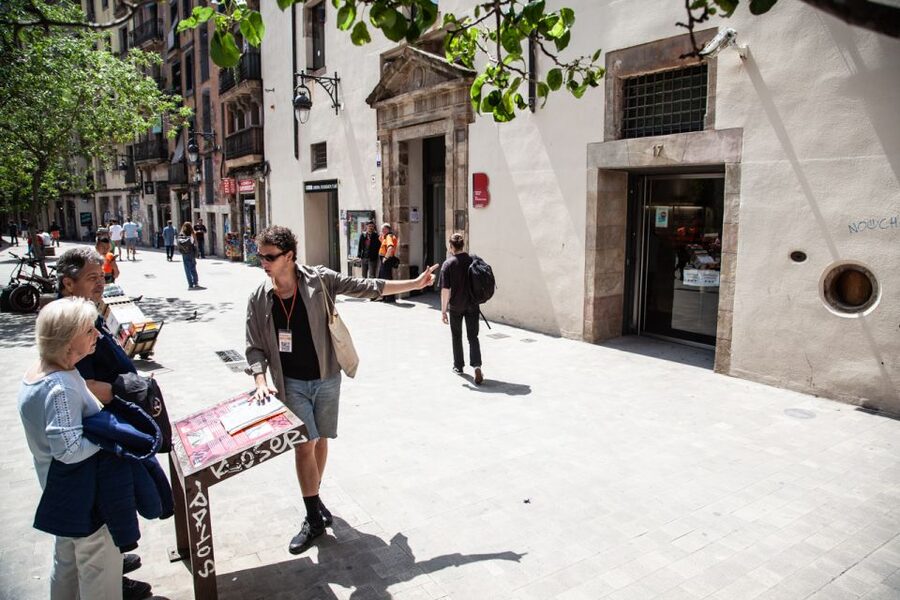
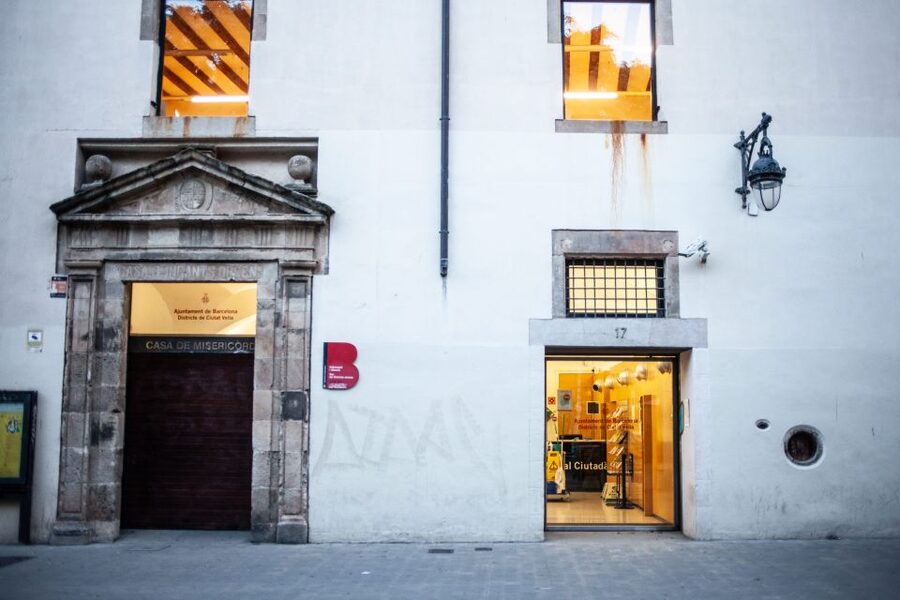
One of the most talked-about stops is Casa de la Misericòrdia de Barcelona, a former place of mercy tied to the story of children who were abandoned. The guide explains it in a way that stays memorable without requiring you to believe everything at face value.
Here is what makes this stop worth your attention: the building type itself is part of the lesson. Mercy institutions were built with a purpose, but the way people used them, and what happened to children once they entered the system, leaves a legacy. The tour leans into the eerie details people associate with the place, including the claim that some children still walk the halls. Even if you treat that as legend, you still get a sharper understanding of how harsh social systems can echo for generations.
Practical tip: this is the kind of location where you might want your phone charged. The architecture and the street surroundings help you visualize what you are hearing.
MACBA and the Keith Haring Mural: Public Art as Political Evidence
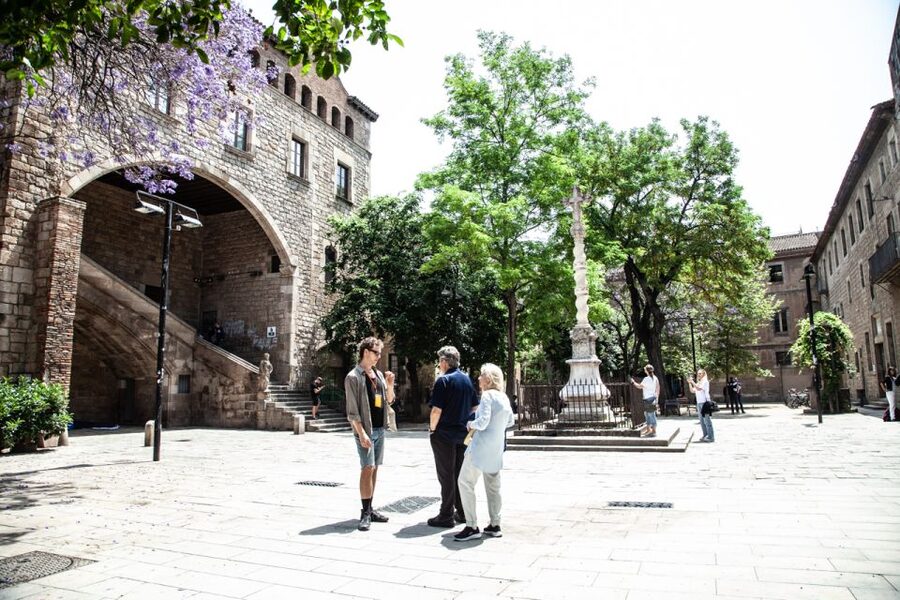
Next up, you head toward the MACBA, the Barcelona Museum of Contemporary Art. The stop includes one of the most important public artworks in the city, a mural created by Keith Haring.
The mural is described as whimsical stick characters with a politically charged message, and I love this kind of tour choice because it breaks the idea that street culture and political messages only show up in slogans. You get to see how a globally recognized artist’s work sits inside local conversations, in the middle of everyday neighborhood life.
This is also where you start noticing how El Raval keeps layers. The tour moves from a historic mercy setting into a modern art museum environment, then back out again. That shift matters, because it shows you the neighborhood is not frozen in time. It is always being reinterpreted.
A Vampire Stops Along the Way: Legend, Serial Crime, and City Myth
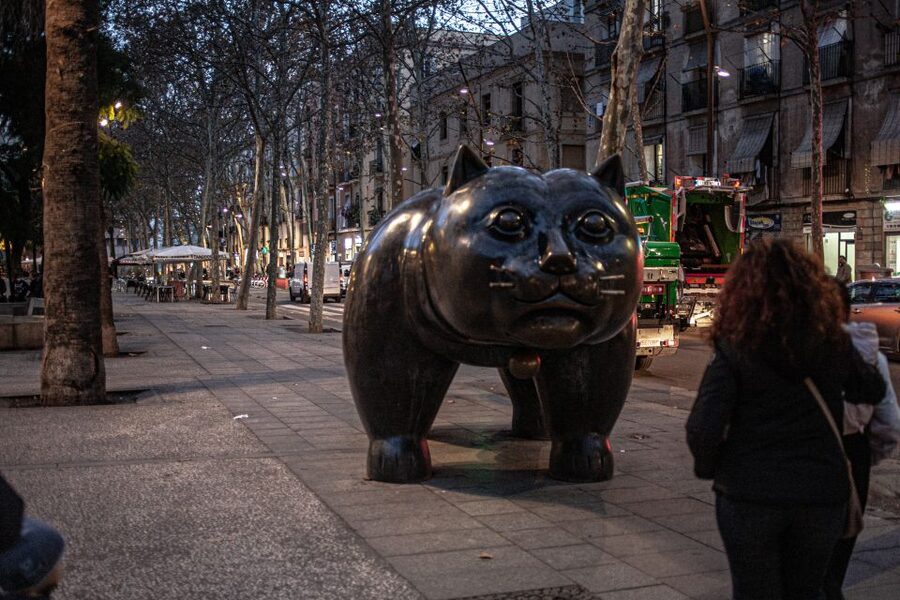
Then comes the part you probably expected to hear about, the vampire legend of the Raval. The tour points you to the place the Vampire of Raval used to live, and it frames the story in a way that blurs lines between life and legend.
The guide connects the legend to Barcelona’s most infamous serial killer. That is the core reason this stop hits harder than generic horror walking tours. It is not only about bats, blood, and dramatic storytelling. It is about how fear becomes narrative, and how cities build myths around real people and real violence.
If you are sensitive to true-crime themes, this is the moment to check in with yourself. I would not call it gory, but the topic is undeniably dark, and you are walking through a neighborhood where the past has not stayed neatly in the past.
You can also read our reviews of more historical tours in Barcelona


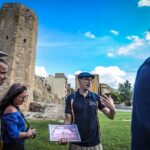
Old Hospital de la Santa Creu: Grounds, Garden, and “Spells” in Plain Sight
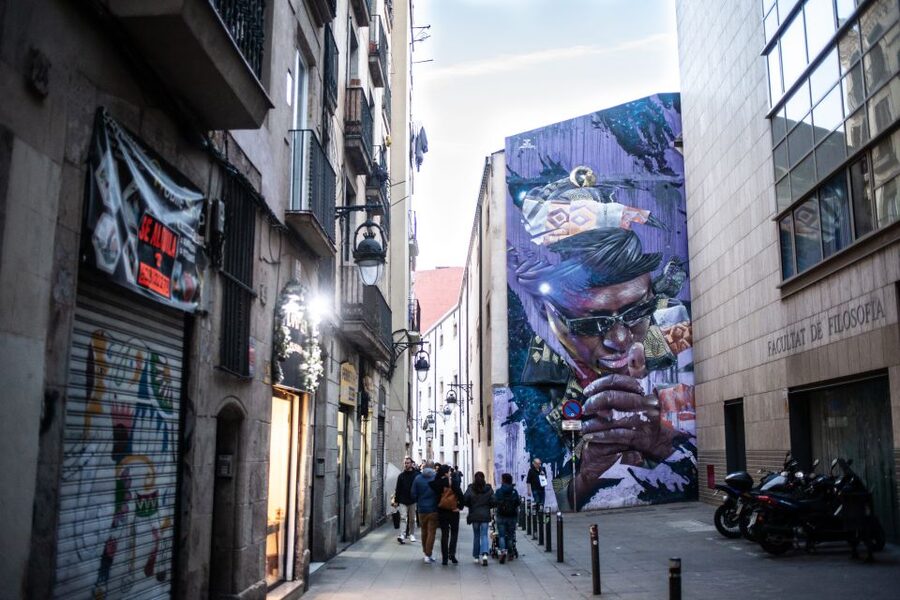
Another major stop is the old Hospital of la Santa Creu. You wander the grounds, including a garden area where the tour says shows and spells of the most macabre once took place.
Even if you approach it with a “tell me more” attitude rather than full belief, this kind of site works. Hospitals, especially old ones, are heavy places. They force you to confront the idea that medicine and social control often shared the same walls. The tour’s macabre framing adds a layer of theater to that reality, helping you remember the emotional tone of the location.
Drawback to consider: you will spend some time outdoors around this complex area. If it is hot, windy, or rainy, take that seriously and bring water or a small umbrella.
Bar Marsella: More Than a Drink Stop, It’s a Creative Landmark
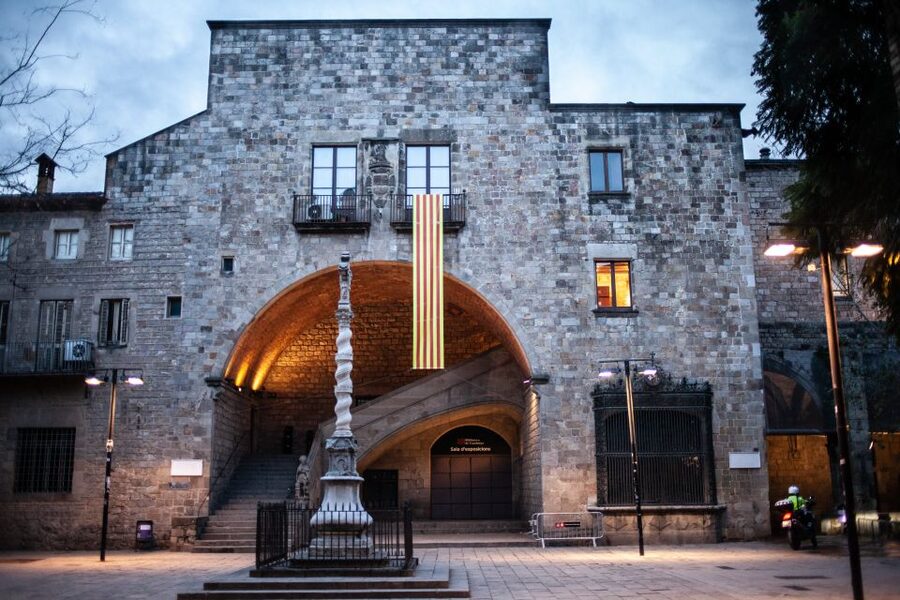
From old hospitals you slide into the oldest bar in town, Bar Marsella. The tour describes it as opening over 200 years ago, and it highlights how it became a preferred watering hole for Barcelona’s creative minds, naming Dalí, Gaudí, Picasso, and more.
This stop is smart for two reasons. First, it gives you a breather from heavier topics. Second, it reminds you that El Raval was not only about suffering and fear. It was also a magnet for artists and thinkers, people who shaped the city’s culture in ways far from the most brutal headlines.
I recommend treating this as a look, not just a check-in. Stand where the guide points out, take in the bar’s longevity, and think about how a neighborhood’s identity gets built in places where people meet and talk.
Sant Pau del Camp: Barcelona’s Oldest Church and Its Troubled Legend
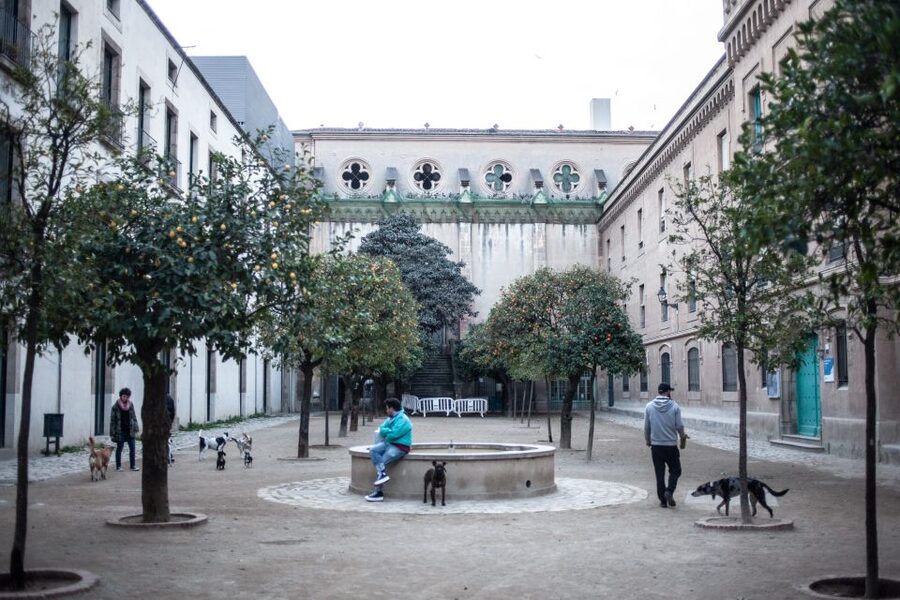
The tour then moves to Sant Pau del Camp, described as a Romanesque church over 1,000 years old and the city’s oldest church. It is an architectural stop, but it is also a story stop, because the tour says it hides a troubled past tied to a local legend.
This is one of the best locations on the walk because it balances age and intimacy. Romanesque churches feel human-scale even when they are ancient. You can look at shapes, entrances, and stonework while the guide ties in the local legend that people connect to the place.
If you like historical religious buildings but get impatient with tours that only recite dates, this one tends to keep momentum. You are not just hearing about time. You are hearing about why a place mattered to locals, and why it kept mattering even after the original context changed.
The Three Chimneys and South Raval Street Art: Where the Neighborhood Shows Off
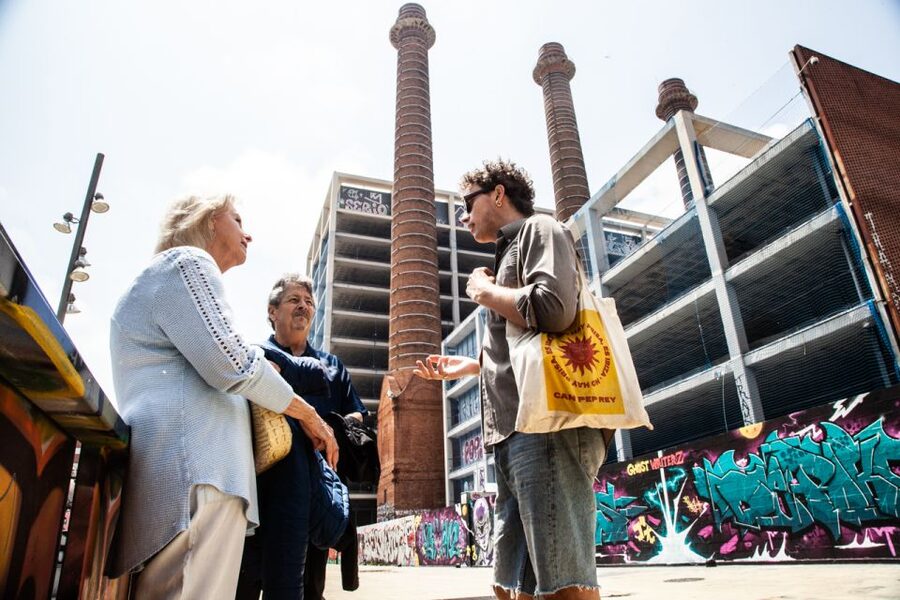
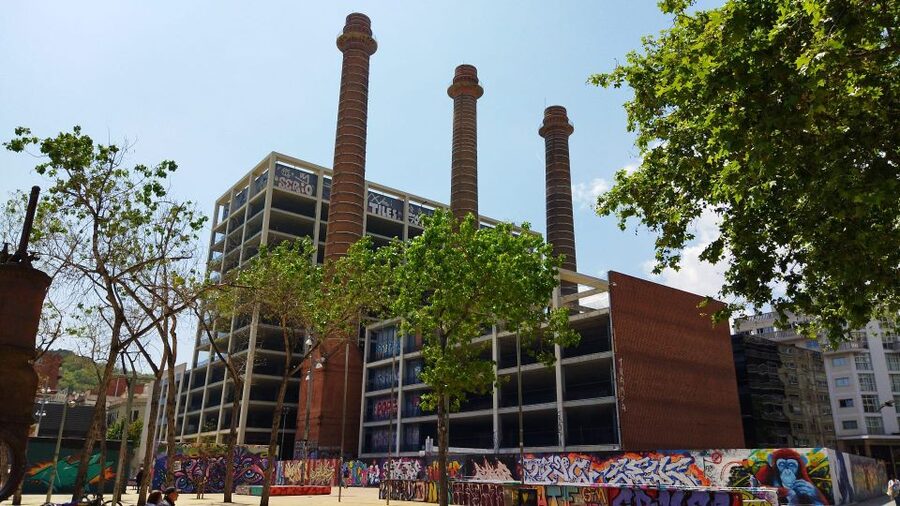
As the tour heads toward the end, you get to the south side of Raval and the area around the Three Chimneys, finishing at the Jardins de les Tres Xemeneies. The tour frames this part with tales of clubs, cabarets, and casinos that were major attractions a century ago, noting that some of them have survived into modern day.
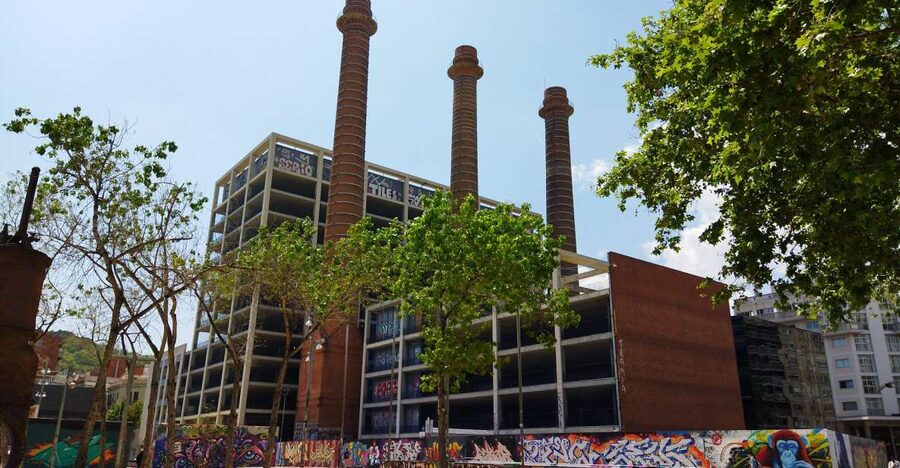
This is also where the street art comes in. Near a former power factory, you can see colorful graffiti that is constantly changing. If you are lucky, you might even see street artists at work, which is one of those chances you cannot plan but can benefit from being there on the right day.
Why this part matters: it turns the neighborhood into something active in your mind. You see art and hear nightlife-era stories next to the city’s industrial remnants. That combination helps you understand why El Raval remains a cultural magnet today. It is not just decay. It is also output.
Price and Value: What $33 Buys You in 2 Hours
At $33 per person for a 2-hour walking tour, the value is mostly about the guide and the specificity of the stops. This is not a ticketed museum experience where you are paying for entrance fees. The listing includes a guided tour, and the rest is street-level exploration with commentary that ties places together.
So the question becomes: do you want your Barcelona trip to include a guided story of how El Raval got its reputation, not just how it looks in photos? If yes, $33 is reasonable for what you get: multiple major landmarks, named art, a church that goes back over 1,000 years, and a bar with a multi-century reputation.
You should also consider the tour length and walking distance. About 2 miles at a leisurely pace is manageable for most visitors, but it is still real walking. If you prefer short, minimal-walking sightseeing, choose accordingly.
Who This Tour Suits Best (And Who Might Skip It)
This is a good fit if you like:
- Dark urban stories with real place names and concrete stops
- A guided mix of older sites, modern art, and street culture
- Getting context for a neighborhood beyond the usual postcard version
- English-language storytelling that keeps moving
It might be less ideal if you:
- Dislike true-crime or grim themes tied to serial killing and local legend
- Prefer purely architectural tours with no horror framing
- Need a lot of sitting time, because it is built around walking and exterior viewing
If you love seeing how Barcelona’s art, religion, and institutions overlap in one neighborhood, this walk will feel like it was designed for you.
Should You Book the Dark History Walking Tour in El Raval?
I think you should book if you want an El Raval experience that feels specific and guided. The standout element is the storytelling quality from guides like Andreas and Owen (Eoghan), praised for being vivid and exciting while still informative. The route also does something practical: it gives you more than one kind of “dark.” You get legend, institutions, art with political messages, and a real sense of how the neighborhood’s entertainment history shaped what remains today.
Skip it if you want light, family-friendly sightseeing with no grim references. In that case, El Raval might still be worth visiting, but you would likely prefer a different tour style.
If you do book, show up ready for outdoor walking, bring comfortable shoes, and approach the stories as part folklore and part local memory. That blend is exactly what makes this neighborhood tour work.
FAQ
How long is the Barcelona Dark History Walking Tour in El Raval?
The tour lasts about 2 hours, and you should check availability to see starting times.
Where does the tour start?
You meet your guide outside the church of Sant Pere Nolasc Mercedaris, in Plaça de Castella, 08001, Barcelona.
What sites are included on the route?
The tour includes stops such as Casa de Misericòrdia de Barcelona, the Keith Haring mural at MACBA, the old Hospital of la Santa Creu, Bar Marsella, and Sant Pau del Camp, plus the finish area at Jardins de les Tres Xemeneies.
Is the tour wheelchair accessible and offered in English?
Yes. The tour is listed as wheelchair accessible and it’s a live English guided tour.
What is the price, and what does it include?
The price is $33 per person. What’s included is the guided tour.
Do I get a full refund if I cancel?
Yes, you can cancel up to 24 hours in advance for a full refund.
More Walking Tours in Barcelona

More Tours in Barcelona



More Tour Reviews in Barcelona
Not for you? Here's more nearby things to do in Barcelona we have reviewed








More Barcelona City Tours worth opening.
 ★ 4.4Park Güell Admission TicketFrom $2576,534 reviews
 ★ 4.7Casa Batlló Entry with Self-Audioguide TourFrom $3425,359 reviews
 ★ 4.424 or 48-Hour Hop-On Hop-Off Bus TourFrom $3920,872 reviews
 ★ 4.7Park Guell Guided Tour with Skip The Line EntryFrom $3117,563 reviews
 ★ 5.0Barcelona in 1 Day: Sagrada Familia, Park Guell,Old Town & PickupFrom $12013,541 reviews
 ★ 4.3Barcelona Aquarium: Entry TicketFrom $3113,335 reviews
 ★ 4.8Sagrada Familia Skip-the-Line Entry Ticket & TourFrom $6712,789 reviews
 ★ 4.4FC Barcelona Museum “Barça Immersive Tour” TicketFrom $3510,944 reviews
Continue by place or experience