
REVIEW · MONTJUIC TOURS
Barcelona Panoramic Walking Tour – Discover Montjuic
Montjuïc is the Barcelona climb you remember. This tour strings together World Fair 1929 architecture, Olympic-era context, and viewpoint stops in a way that feels like learning the city from above, not just sightseeing from streets. I also like the small-group pace and the way guides bring the hill’s stories to life, with real moments for photos along the way. The main drawback is simple: it is uphill walking in direct sun, so bring your best shoes and plan for some effort.
You start in the area of the German Pavilion from the 1929 World Fair, then work your way up using local escalators and hill paths. Along the way you’ll get nature and city views side by side, before finishing down in Poble Sec for that energetic, pinchos-focused stretch on Calle Blai.
Key things I’d mark on your mental map
- Small-group feel (max 15, often up to 10), so questions and pacing feel human.
- World Fair 1929 sites and viewpoints around the Magic Fountain area, built for photos.
- Olympic history with context, including the Alternative People’s Games from 1936.
- Cementerio de Montjuïc as a quiet, fascinating stop with free entry.
- Calle Blai pinchos zone to end the hill with food-crawl energy (food not included).
- Guides like Michael and Christian bring humor plus serious local context.
Entering Montjuïc Through the German Pavilion (World Fair 1929)
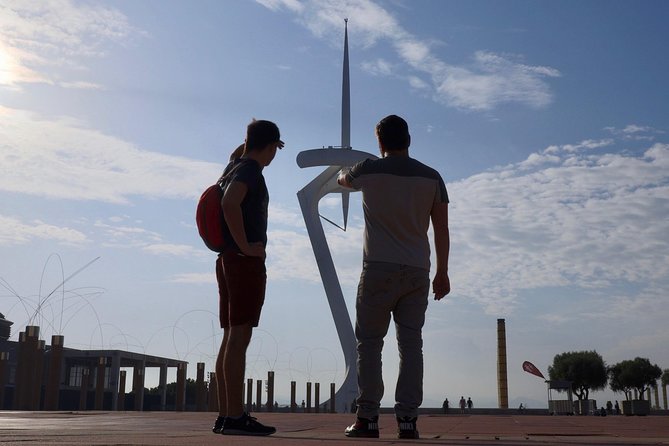
The tour begins at Av. de Francesc Ferrer i Guàrdia, 7 (Sants-Montjuïc), right by the German Pavilion from the 1929 World Fair. This is a smart start. You get your bearings in an area tied to Barcelona’s big “show the world” moment, not just its modern postcard version.
The German Pavilion’s design gets called timeless Bauhaus for a reason. You’ll see why it mattered back then, and why people still stop for a quick look today. The stop is short, about 5 minutes, and admission tickets are not included, which means you’ll focus more on the exterior and the story than waiting around for a longer museum-style experience.
From there, you head uphill. The walking portion is the heart of the day. You’ll climb up the hill’s first section while learning about the fair and spotting photo angles that make Montjuïc feel like a balcony over Barcelona.
What I like here is the way the tour teaches you to read the hill. Instead of treating Montjuïc as one big viewpoint, you experience it as layers: architecture, expo-era ambitions, then the city beyond it.
You can also read our reviews of more walking tours in Barcelona


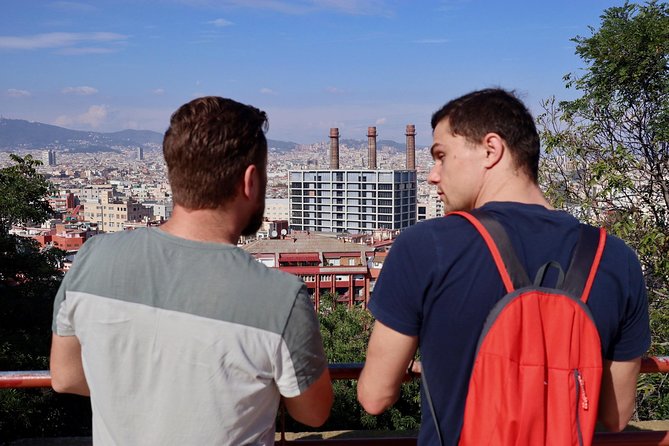
Climbing Toward the Magic Fountain Views, Using Local Escalators
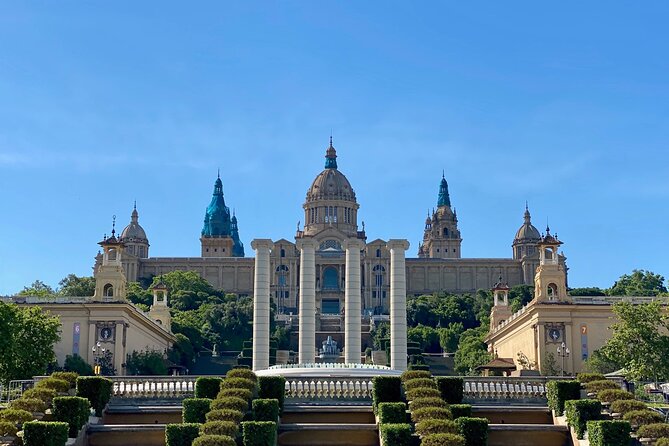
Once you start moving, you’ll use local escalators for the first part of the hill. This matters because it breaks the climb into something manageable instead of a nonstop stair burn.
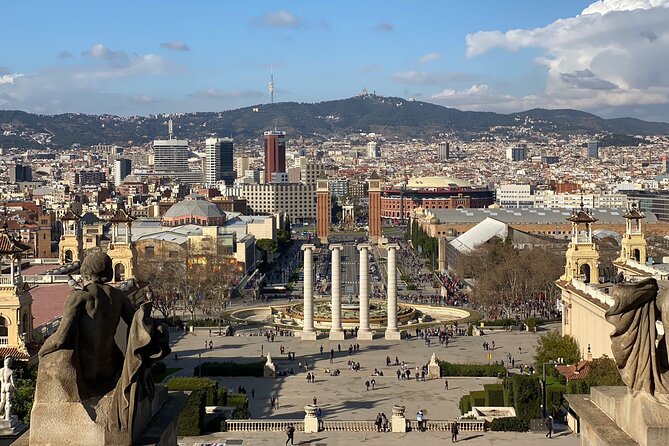
As you go, you’ll discover the famous Magic Fountain area from viewpoints along the route. You’re not just looking at it from one angle. You’ll get little pauses that help you understand how the grounds connect to the expo sites above and around the hill.
There’s also a practical upside to this segment. It’s where the “wow” factor builds, but it’s still close enough to the start that you’re not exhausted right away. Even if you’re not an architecture nerd, the Magic Fountain zone is the kind of visual anchor that makes the rest of the tour easier to follow.
A small caution: one of the most repeated real-world notes from past participants is the sun. A lot of Montjuïc paths here get direct light with limited shade, especially as you climb. So I’d pack sunscreen and a hat and assume you’ll need them.
World Fair 1929 Grounds to Olympic-Era Changes
After the Magic Fountain viewpoint moments, you cross more of the 1929 World Fair area. This section works as a bridge. It helps you connect what Barcelona tried to show the world in 1929 to what it later staged for the Olympics in 1992.
The hill’s story isn’t one era. It’s reuse. It’s reinvention. And the tour gives you that continuity without turning it into a lecture.
If you like travel that feels grounded in place, this is where Montjuïc becomes more than a viewpoint. You start to notice how spaces were designed for crowds and spectacle, and how those same spaces can now be used for walking and looking, away from the center’s main foot traffic.
Lluís Companys Olympic Stadium and the 1992 Games Context
Stop two is the Lluís Companys Olympic Stadium, with about 20 minutes allocated on site. Entry is free.
You’ll learn about the 1992 Olympic Games sites, but the tour also adds a deeper layer: the Alternative People’s Games of 1936, described as a protest event against the Nazi Games in Germany. That context is important. It changes how you see the stadium facilities. This isn’t just sports architecture. It’s political history and international signals, all tied to Barcelona’s later role on the world stage.
A practical note: the tour does not promise an inside visit. Past participants specifically noted that you get a good look at the Olympic facilities without going inside. That can be a good thing, especially if you’re trying to keep the day moving and save your energy for the rest of the hill.
Cementerio de Montjuïc: A Quiet Break With Big Views Nearby
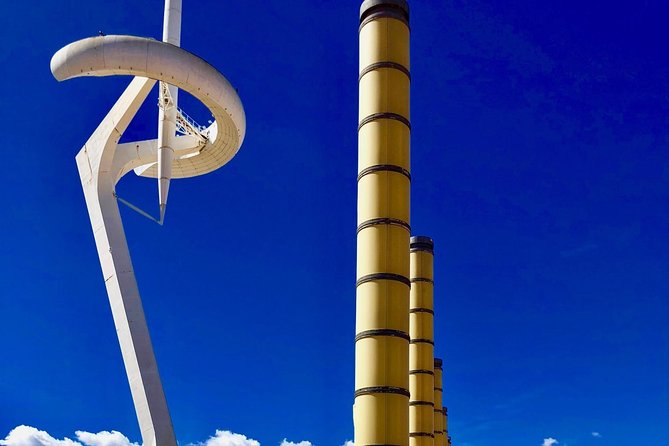
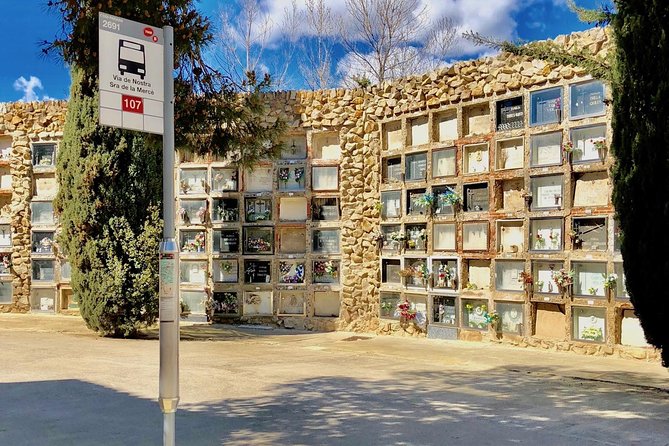
Then you head to Cementerio de Montjuïc for roughly 10 minutes. Entry is free.
This stop is short, but it’s one of the most memorable types of places on the hill. A cemetery forces a different mood than fountains, stadiums, and expo grounds. You get a glimpse into how Barcelona uses the hill not only for celebration, but also for remembrance and long-term perspective.
If you’re the kind of person who likes travel that surprises you, this is a strong payoff. It’s different, and it’s the kind of stop you often miss when you only do the fast center routes.
The main consideration is emotional and personal. If cemeteries feel heavy for you, keep an eye on your pace and whether the quiet moments help or distract.
The Hill as a Natural Watch Tower and Fortified Space
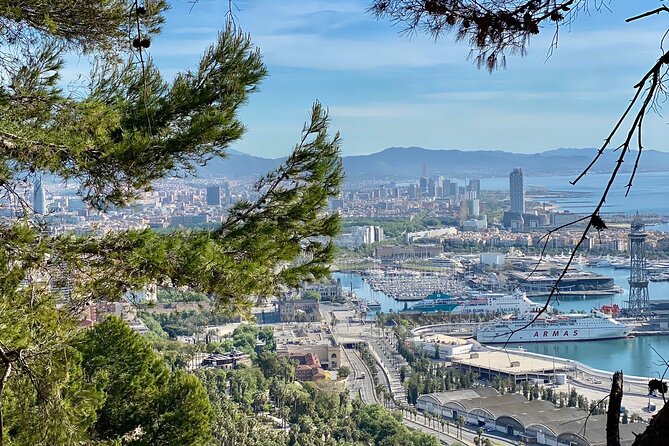
Between major landmarks, the tour explains why Montjuïc matters geographically and strategically. You’ll learn how the hill works as a natural watch tower and how it was fortified with fortresses, both in medieval and civil war history.
This matters because it gives the walking route meaning. When you climb higher, you’re not just burning calories. You’re moving into the same sightlines that made this hill useful long before modern viewpoints and city buses.
This is also where the guide’s style really shows. In past tours with Michael and Christian, the best moments seemed to be the ones where history connects to what you can see right now: the angles, the distances, the way the city spreads out below.
If you want a tour that teaches you how to look, this is the section.
Downhill Energy on Calle Blai, Ending With Pinchos Bars
The tour ends in the Carrer de Blai (Poble Sec area), with the official finish near the pinchos streets. You’ll spend about 30 minutes here, and admission is free.
Calle Blai is a good finale because it changes the atmosphere. You go from hill paths and history to a more multicultural neighborhood feel, with pinchos bars that are a variation of tapas that became fashionable here. Food itself is not included, so think of this as time to taste what sounds good, not a planned meal.
I like ending this way. If you end at a viewpoint only, you still have to deal with the crowds and the decision fatigue of where to eat. Ending at a street known for small plates makes it easier to continue the evening with momentum.
Walking Pace, Sun, and How to Plan Your Shoes
This tour is for a moderate fitness level. The route is partly steep, and you’ll be walking enough that the tour notes it is not for people who can’t walk at least 5 miles on partly very steep ground.
Also, there is a minimum age of 6, due to the length of walk and uphill walking.
Here’s what that means in real life. You should expect:
- uphill sections where you slow down
- stairs or steep steps in parts (even with escalators early on)
- direct sun for stretches, with little shade
Based on participant feedback, one very useful tip is to wear plenty of sunscreen. I’d treat Montjuïc like an outdoors day, not a shaded museum experience.
For footwear, go with comfortable, grippy shoes. This is one of those tours where a bad shoe choice turns “great views” into “just get me back down.”
Group Size, Guide Style, and Why It Feels Personal
A key part of the value here is the group size. The tour is described as small group, and it lists a maximum of 15 travelers, with highlights also calling it up to 10. Either way, this isn’t a big bus crowd.
In the tours led by Michael and Christian, participants describe the guides as passionate and enthusiastic, with a friendly, personal touch. Michael is specifically noted for being enthusiastic and extremely knowledgeable, and also for using humor to make the route feel alive. Christian is also praised for delivering a lot of information while keeping the tour moving at a good pace.
Why you should care: on a steep hill route, group size affects everything. Less crowd means fewer bottlenecks at viewpoints. It also means your guide can adjust pacing if someone needs a breather.
Price and Value: What $50.57 Covers, and What It Doesn’t
The price is $50.57 per person for about 3 hours.
That price sounds like a lot until you see what you’re buying:
- a professional guide
- access to a route that strings together multiple landmarks, viewpoints, and a food street finish
- a walking plan designed to keep you away from the “everyone goes here” center
Entry fees are not included for the German Pavilion area, and the stops at the Olympic Stadium and Cemetery are listed as free. Food and drinks are not included unless something is specified by your booking.
So think of this as a history and scenery tour, not an all-inclusive meal. If you want a full pinchos crawl day, budget for what you eat at Calle Blai.
On value, I also like the realistic time length. Three hours is enough to feel like you did something substantial on Montjuïc, but short enough that you can still handle dinner plans without scrambling for the last bus or train.
Practical Logistics So You Can Enjoy It
Here are the details I’d anchor on before booking:
- Start: Av. de Francesc Ferrer i Guàrdia, 7 (Sants-Montjuïc)
- End: Carrer de Blai (Poble Sec / nearby green metro line)
- Duration: about 3 hours
- Tour language offered: English
- Ticket type: mobile ticket
- Maximum group size: up to 15 travelers
Weather note: the tour depends on good weather. If it gets canceled due to poor conditions, you should be offered a different date or a full refund. Also, it has free cancellation up to 24 hours in advance.
One more planning tip. Since the walk includes uphill ground, bring water. It’s not listed as included, and the sun note from past participants is loud and clear.
Should You Book This Montjuïc Walking Tour?
Book it if you want a Montjuïc experience that’s more than a single viewpoint stop. I think this tour is especially worth it when:
- you like history that connects to what you can actually see
- you want Olympic-era and expo-era stories, not just generic sightseeing
- you prefer a small group over crowded city center tours
- you’re okay with uphill walking and direct sunlight
Skip it, or at least reconsider, if:
- you struggle with steep grades or cannot walk around 5 miles on partly very steep ground
- you dislike cemeteries as a setting
- you need a fully shaded or low-effort outing
If you’re fit enough to handle the climb, this is one of the most efficient ways to see Montjuïc in a single morning or afternoon block, with viewpoints, architecture context, and a good landing spot for dinner.
FAQ
How long is the Barcelona Panoramic Walking Tour – Discover Montjuic?
It is about 3 hours.
Where does the tour start and end?
It starts at Av. de Francesc Ferrer i Guàrdia, 7, Sants-Montjuïc, 08038 Barcelona and ends on Carrer de Blai (near Poble Sec).
Is food included in the tour price?
Food and drinks are not included, unless specified.
What’s included in the price?
A professional guide is included.
Are there admission fees during the tour?
Admission for the German Pavilion is not included. The Lluís Companys Olympic Stadium and Cementerio de Montjuïc stops are listed as free.
How fit do I need to be?
The tour is for moderate physical fitness. It is not recommended if you cannot walk for at least 5 miles on partly very steep ground.
What is the minimum age?
The minimum age is 6 years.
How big is the group?
The tour has a maximum of 15 travelers (and it is described as a small group, up to 10 in the highlights).
What languages are offered?
The tour is offered in English.
Is the tour affected by weather?
Yes. This experience requires good weather. If canceled due to poor weather, you should be offered a different date or a full refund.
More Walking Tours in Barcelona

More Tours in Barcelona


More Tour Reviews in Barcelona
Not for you? Here's more nearby things to do in Barcelona we have reviewed









More Montjuic Tours worth opening.
 ★ 5.0Barcelona all included: Sagrada, Park Güell, Montjuic & GothicFrom $1192,169 reviews
 ★ 4.7Walking tour with Montjuic Castle & Cable CarFrom $64832 reviews
 ★ 4.6E-Bike Tour with Montjuic Cable Car & Boat RideFrom $191817 reviews
 ★ 4.5Old Town, Montjuic Castle, Cable Car Small Group TourFrom $66445 reviews
 ★ 4.8Montjuic Hill E-Bike TourFrom $48386 reviews
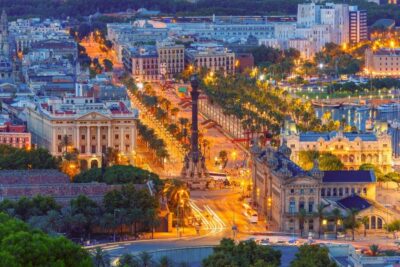 ★ 3.9Montjuïc Cable Car Ticket with Audio GuideFrom $32270 reviews
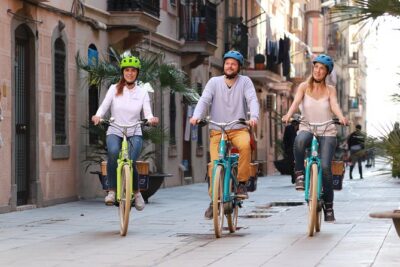 ★ 4.5Barcelona E-Bike Guided Tour with Montjuic HillFrom $47241 reviews
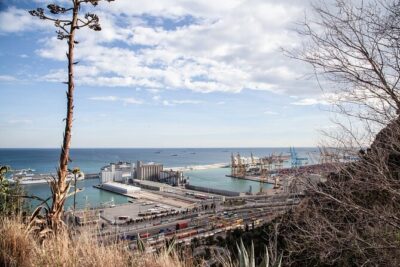 ★ 5.0Montjuïc Walking Tour With Optional Flamenco ShowFrom $35196 reviews
Continue by place or experience