
REVIEW · BARCELONA GAUDI TOURS
Gaudi’s Modernist Legacy: Small Group Walking Tour
One good walk can change how you see a city. This small-group modernist tour gives you a clear, story-driven way to understand Barcelona’s architecture, from grand avenues to Gaudí’s biggest statements. You get expert context as you move through the city, and the guide helps you notice the details that most people miss.
I especially love how the tour builds meaning fast, so Casa Batlló and La Pedrera stop being random photo spots and start feeling like chapters in one design obsession. You’ll also appreciate the max 12-person group size, which makes it easier to ask questions and take your time without getting swallowed by the crowd.
One consideration: entry to major sites is not guaranteed on every stop, and Sagrada Familia in particular often involves ticketed entry. If you want inside access, plan to confirm what you will physically enter on your chosen date and time.
Key things I’d bet on before you go
- Small group focus (max 12), so your guide can react to what your group finds interesting
- Gaudí and modernism context, not just building names and dates
- Passeig de Gràcia landmarks, including Casa Batlló and the UNESCO-era lineup
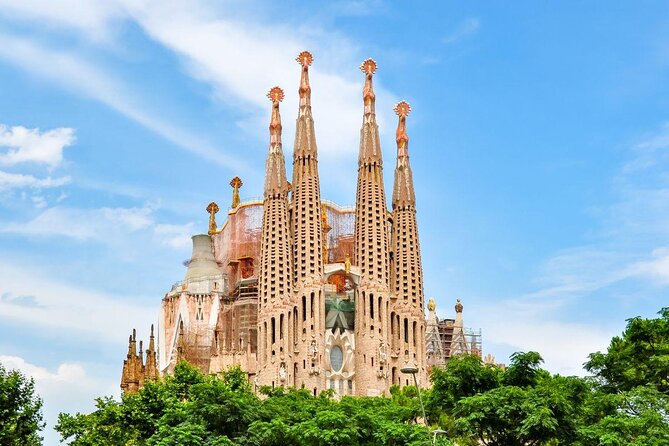
- Sagrada Familia as the emotional finale, timed for a strong first impression
- Guides with real energy, with names like Jose Carlos, Montse, Antonio, Alfredo, and Roberto showing up in recent experiences
- Mobile tickets for easier check-in
Why this modernist walk works in 2.5 hours
Barcelona’s modernist architecture can feel overwhelming if you only rely on selfies and signage. This tour is built to solve that. You get a guided path that links styles to people, and people to big ideas, so you walk away with a mental map, not just a camera roll.
The timing is smart too. At about 2.5 hours, you hit the core buildings on and around the city’s most famous modernist corridor, then end at Sagrada Familia, where the atmosphere does the heavy lifting. It is a great way to get your bearings on a first visit, even if you later return to see anything in more depth.
And yes, you are walking. The “small group” part matters here. You will likely move at a pace where your guide can stop, point, and explain without constantly rushing you off the sidewalk.
You can also read our reviews of more walking tours in Barcelona



Where you start and how the route is set up
The tour starts at Carrer de Fontanella, 2 (Ciutat Vella) and finishes at Sagrada Família (Eixample). That end point is a big deal because it helps you avoid that classic problem: you finally care about the architecture, and then you still have to figure out your next transport step.
You will also find it easy to plug into your day. There are many start times available, and the meeting area is near public transportation. That means you can usually match this to your Sagrada Familia plans, museum time, or dinner reservation window.
The big idea behind the itinerary: modernism as a story
This isn’t a tour that just recites facts. It’s structured like a guided understanding of modernism in Barcelona, then it crescendos into Gaudí. Each stop adds one piece to the puzzle, whether that is a lesson about design pioneers, a look at craft traditions, or a deeper read of how nature and symbolism show up in stone.
That approach is what makes the buildings feel different. Even if you have seen images before, you start recognizing patterns, materials, and design choices as you go.
Stop 1: Passeig de Gràcia, luxury avenue and learning street
You kick things off on one of Barcelona’s most famous avenues. Passeig de Gràcia is where the city shows off, with standout houses and high-end boutiques. The best part of starting here is that it sets a tone: modernism was not timid. It wanted attention.
Your guide uses this stretch to help you connect what you see on the street to what the buildings are trying to do. You also get practical tips for nearby dining, and several guides in recent experiences have been helpful with restaurant suggestions after the tour.
What to watch for on this portion:
- Contrasts between neighbors, so you can see how each architect made different choices
- Street-level details you might ignore if you are only scanning for big facades
Possible downside: because this is a high-profile avenue, you may have busy sidewalk moments. The small group size helps you stay oriented, but it will not feel like a quiet neighborhood walk.
Stop 2: The modernist pioneer taught Gaudí’s mind
Next you look at a house associated with Domènech i Montaner, presented here as a key figure and teacher of Gaudí at university. That connection is smart, because it stops you from thinking Gaudí appeared fully formed. You learn about a modernist movement in Barcelona as something with roots and mentors.
This stop is less about one jaw-dropping twist and more about understanding influence. Once you place Gaudí inside a wider network, later buildings make more sense.
Why I like this part: it gives you a baseline. When you later see Gaudí’s signature organic forms, you can recognize them as a continuation and a reaction, not just a random aesthetic.
Stop 3: A modernist-style chocolate stop you can actually take home
You then pause at a modernist house connected to Barcelona’s famous chocolate makers. This is a practical break that still fits the theme, because it shows modernism in everyday life, not only grand monuments.
If you love food souvenirs, this is where you can turn the tour into a real takeaway. You get a chance to buy chocolate you can bring home, which is more fun than yet another magnet.
Watch-outs: this is not a full meal stop. The tour does not include food or drinks, so treat it as a snack and shopping moment rather than a sit-down break.
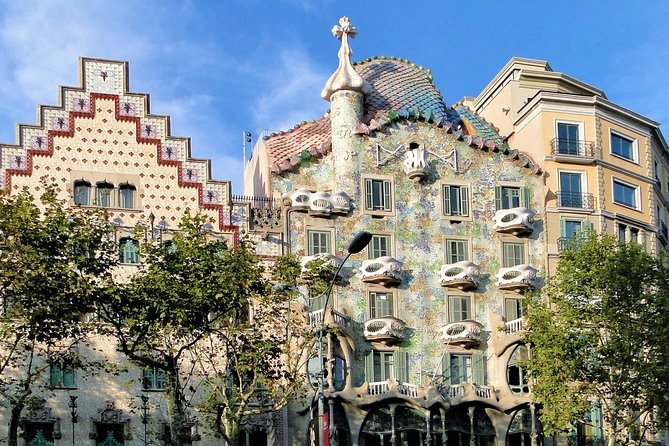
Stop 4: Casa Batlló and the fantasy of Gaudí on Passeig de Gràcia
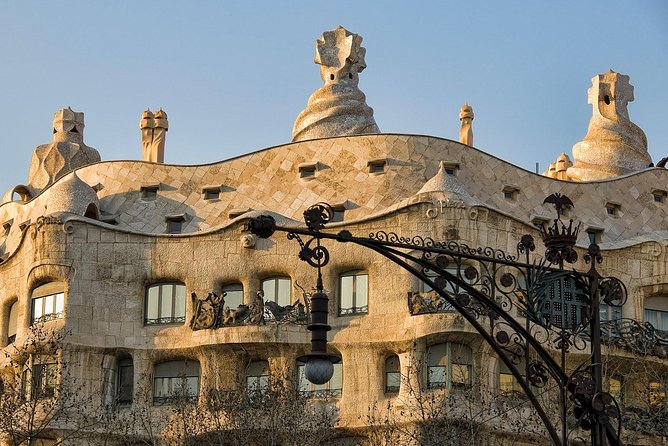
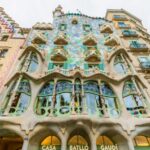
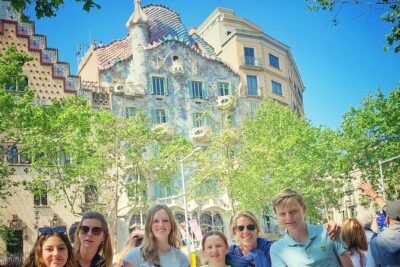
Then comes one of the stars, Casa Batlló, highlighted for its color and fantasy. This building is often described as theatrical, and the key is that your guide explains why. You learn how Gaudí’s design choices create meaning through form, ornament, and contrast with neighboring buildings.
It is placed halfway up Passeig de Gràcia, and the contrast matters. You can look at adjacent facades and see how each modernist project pushed in its own direction. That helps you read the street like a living design gallery.
If you have limited time in Barcelona, this is one of the moments I would personally prioritize. The building looks better when you understand it, and the walking format gives you multiple angles as you move.
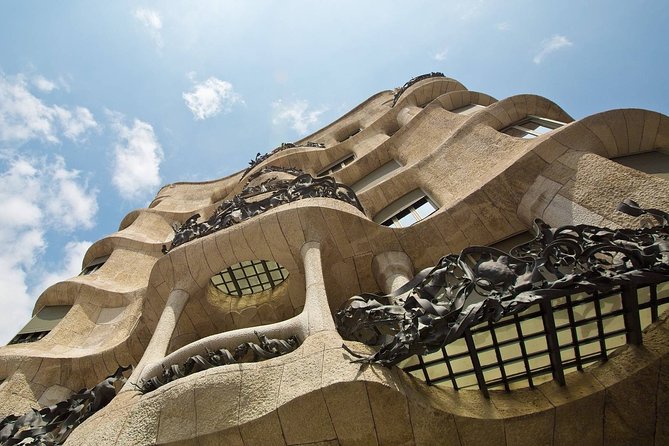
Stop 5: Casa Milà (La Pedrera), UNESCO and nature’s influence
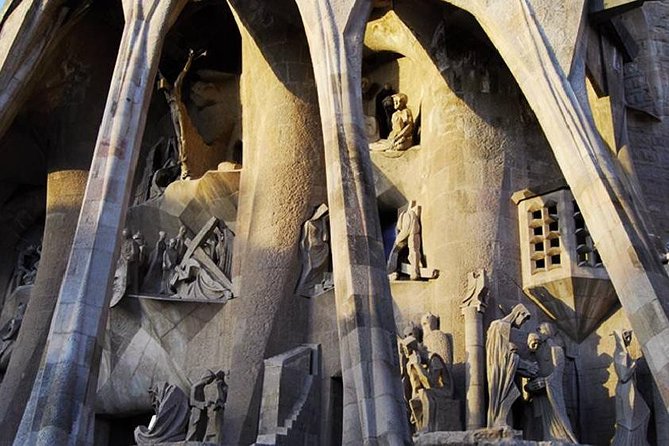
After Casa Batlló, you continue to Casa Milà (also known as La Pedrera), discussed as a UNESCO World Heritage Site and presented as the culmination of Gaudí’s career. You also learn about how it responded to new social needs, without losing Gaudí’s obsession with nature and organic forms.
This stop is useful because it turns the building into a “how does it work?” lesson. Even from outside, you can start noticing how Gaudí’s shapes are not just decoration. They are tied to how people lived and moved, and they reflect nature as an ongoing inspiration.
One practical note: because the tour is outdoors and time is limited, you may not have a long sit-in-still moment. If you want extra photo time here, you will usually get it best when your guide builds pauses around your group.
Stop 6: St George legend and other Barcelona symbolism
Along the way, you pass one more modernist architectural gem and hear the legend of St George, the patron saint of Barcelona and many other cities. This kind of stop is not just trivia. It shows you how Catalan identity and symbolism can be built into the design language of the city.
It also changes how you look at details. When you connect a story to a facade element, you start seeing architecture as communication, not just stonework.
Final stop: Sagrada Familia and the emotional payoff
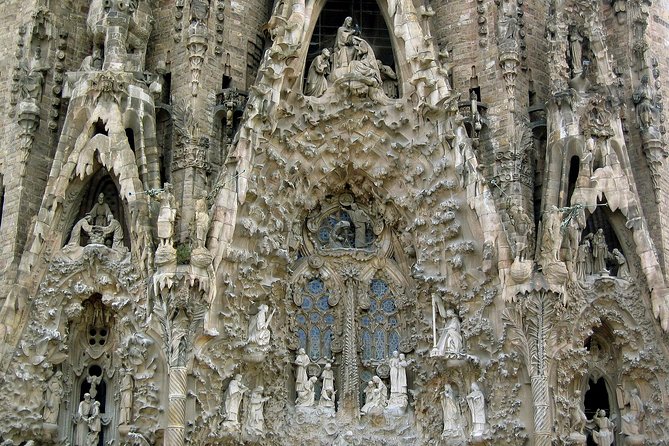
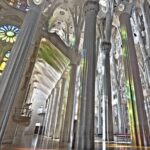
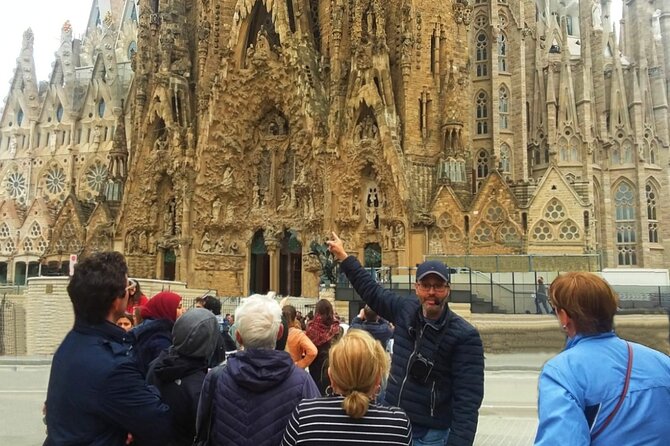
The tour ends at Sagrada Familia, described as Gaudí’s life project and one that leaves a lifelong impression. Even if you have read about it before, seeing it at the end of a guided modernist walk hits differently.
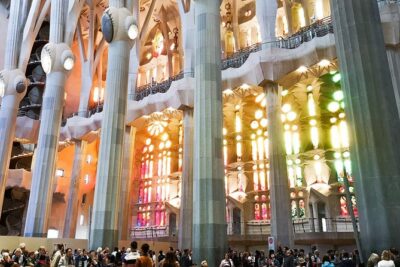
This is where your understanding clicks. By the time you arrive, you already learned what modernism was aiming for, how the movement relates to Gaudí, and how nature and symbolism show up in the city’s architecture. Then Sagrada Familia meets you with organic shapes, stained glass light, and a symbolic facade.
Also, this is the stop where you should manage expectations about entry. Some tour experiences focus on exterior viewing, and Sagrada Familia typically involves ticketed entry for inside access. So if you care about being indoors, make sure your plan accounts for that.
Price and value: $22.01 for a guided modernist map
At $22.01 per person for about 2 hours 30 minutes, this is priced like a value-first architecture intro. You are not paying for a long, multi-day itinerary. You are paying for guidance that turns scattered sights into a coherent storyline.
Where the value comes from:
- Professional guide who explains the modernist movement and Gaudí’s approach
- Access to multiple major landmarks in a short time window
- Small group (max 12), which reduces that “stand here while someone talks at you” feeling
- A guided path that ends at Sagrada Familia, helping you avoid logistical friction
What might not feel like value, depending on your priorities:
- If you expected guaranteed interior access to multiple ticketed sites, this may feel more like an exterior-focused architecture orientation. Ask ahead if inside tickets are required or optional for the stops you care about most.
What makes the guides stand out (and why you should care)
The reviews read like a pattern: people remember the guide. Names like Jose Carlos, Antonio, Montse, Laura, Alfredo, Roberto, Jordi, and Miguel show up as examples of passionate teaching.
Common strengths you can look for:
- Guides who tell you why details matter, not only what they are called
- Friendly pacing, with enough time to ask questions
- Helpful city tips, including restaurant recommendations
One review also points out a timing issue where the tour ran long and the group didn’t have as much time at Sagrada Familia. That’s rare, but it is a good reminder: if you have a strict entry appointment or a tight train connection, keep your schedule buffer.
Who should book this tour
This is a good fit if:
- You want a first-time modernist intro and a clean way to understand Gaudí
- You enjoy stories tied to buildings, not just photos
- You like small groups where you can actually talk to your guide
- You want a practical way to end near Sagrada Familia for your next step
This might be less ideal if:
- You only care about inside access and you assumed multiple interior visits are included
- You need a very quiet walk, since the route includes major streets and iconic stops
Should you book this Gaudí modernist walking tour?
Yes, if you want a guided sense of Barcelona’s modernist architecture without turning your day into a logistics puzzle. The small group size, the modernism context, and the Sagrada Familia finish make it a strong “get oriented fast” choice.
Book it especially if it will help you decide what to see in more depth later. After this kind of walk, you usually know what to prioritize, whether that means returning to one facade longer, arranging a ticket for a specific interior, or building the rest of your day around what resonated most.
One last tip: before you go, decide what you personally want most, inside access or architectural storytelling. If inside access is your top priority, confirm expectations for Sagrada Familia on your exact departure time. Then you will get the best of both worlds: meaning and the option to go deeper.
FAQ
How long is the tour?
It runs about 2 hours 30 minutes.
How much does the tour cost?
The price is $22.01 per person.
Is the tour offered in English?
Yes, it is offered in English.
What is the maximum group size?
The group is capped at 12 travelers.
Where does the tour start and end?
It starts at Carrer de Fontanella, 2, Ciutat Vella, and ends at Sagrada Família, Eixample.
What is included in the tour price?
A professional guide and a modernist walking tour with explanations, including Casa Batlló and La Pedrera, plus thorough explanation of modernist architecture and Sagrada Familia.
What is not included?
Food and drinks are not included, and there is no hotel pickup or drop-off.
Do I get a mobile ticket?
Yes, the tour uses a mobile ticket.
Are service animals allowed?
Yes, service animals are allowed.
Can I enter every stop, including Sagrada Familia?
Sagrada Familia can require tickets for entry, so you should plan for that if you want to go inside.
What is the cancellation policy?
You can cancel for a full refund up to 24 hours in advance of the experience start time.
More Walking Tours in Barcelona


More Tours in Barcelona


More Tour Reviews in Barcelona
Not for you? Here's more nearby things to do in Barcelona we have reviewed








More Barcelona Gaudi Tours worth opening.
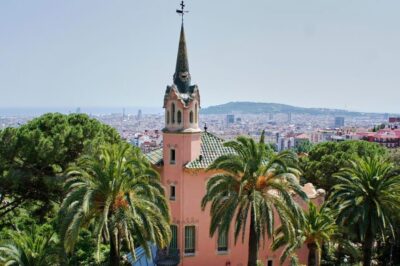 ★ 4.5Park Güell and Gaudí House Museum Entry TicketFrom $336,326 reviews
 ★ 4.5Sagrada Familia & Gaudi Tour Private or Small Group with TicketsFrom $901,188 reviews
 ★ 5.0Complete Gaudi Tour: Casa Batllo, Park Guell & Sagrada FamiliaFrom $1621,152 reviews
 ★ 4.1Park Güell: Guided Tour with Optional Gaudí Experience EntryFrom $35832 reviews
 ★ 5.0Barcelona e-Bike Tour: Gaudí & Old Town Small GroupFrom $38769 reviews
 ★ 5.0Ramblas, Old Town, Gothic and Gaudi Architecture Walking TourFrom $35723 reviews
 ★ 4.5Gaudi´s Casa Vicens Skip the Line Ticket with AudioguideFrom $26685 reviews
 ★ 4.8Discover Gaudí, Sagrada Familia, and Park GüellFrom $158651 reviews
Continue by place or experience