

REVIEW · BARCELONA GAUDI TOURS
Barcelona: Discover Gaudi Architectural Guided Tour
Gaudí plus an architect guide is a smart combo. You walk through Barcelona’s Modernisme era and see how design ideas evolved, not just what buildings look like. I like that the tour connects street scenes to big questions like how Barcelona became a modern city, and it uses that perspective to make Gaudí’s shapes and details easier to read.
Two things I especially like: you get explanations that treat the buildings as engineering and city-planning projects, and you also spend time on how private spaces became public gardens through hidden courtyards. One consideration, plan ahead: the tour does not go inside the buildings, so you’ll focus on what you can see from streets and courtyards, not interior visits.
Key Tour Takeaways
- Practicing architects guide the walk, often with an academic and critical lens
- Modernisme context plus Gaudí specifics, so the facades make sense
- Outside views and courtyards only, no interior building entry
- You’ll connect architecture to social concerns and urban ideas
- Three major Gaudí apartment houses are part of the route
- You get a written local guide with ideas for drinks and architecture afterward
Why Gaudí Clicks When the Guide Thinks Like an Architect
Gaudí can feel like pure fantasy at first glance. The lesson here is that the fun stuff, the twisted lines and sculptural drama, still grows out of real constraints, real technology, and real city problems. On this tour, you don’t just memorize names and dates. You learn the logic behind the forms, and suddenly Barcelona’s weirdness starts to feel consistent.
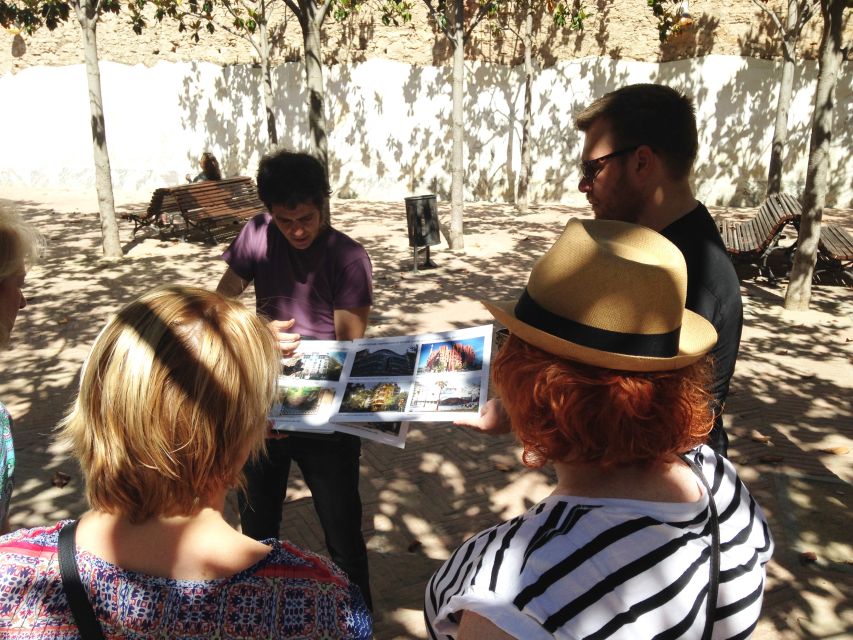
What makes the experience work is that the guides are not only history buffs. They’re practicing architects, and many are also professors and architectural critics. That mix matters, because you get both visual explanation and technical framing. One guest experience highlights how guides like Pia can translate engineering thinking into clear takeaways, including Gaudí’s technical innovations. That’s the difference between a slideshow and a real guide.
There’s also a strong storytelling arc built into the tour. You trace how Gaudí moved from social-minded concerns toward a near spiritual obsession, and you hear about turning points like the Manhattan project, the last commission from patron Eusebi Güell, and Gaudí’s early steps connected to Sagrada Família. Even if you’re not an architecture nerd, that kind of timeline helps you place each building in the bigger picture.
You can also read our reviews of more guided tours in Barcelona

Meeting by Joan Brossa, Then Getting Oriented Fast
The meeting point is easy to find once you know the spot: meet by the sculpture by Joan Brossa, in front of the Comedia Cinema, at the intersection of Passeig de Gràcia and Gran Via. If you’re arriving early, give yourself a few minutes to look up at the street around Passeig de Gràcia. This is one of Barcelona’s classic Modernisme stages, so even the approach sets expectations.
From there, you’re walking through the architectural “why” of the area. That matters because Gaudí is not floating in isolation. He’s reacting to urban design ideas that were taking shape, and he’s competing with other Modernisme architects of his time. The tour does a good job keeping you oriented, so each new facade doesn’t feel like a random stop.
A small practical tip: wear weather-appropriate clothing. Barcelona is usually pleasant, but your tour is outdoors, and tours will only be canceled if weather becomes a safety issue. This is the kind of morning where comfort affects your attention span.
Modern Architecture Stops: What the Tàpies Foundation Adds
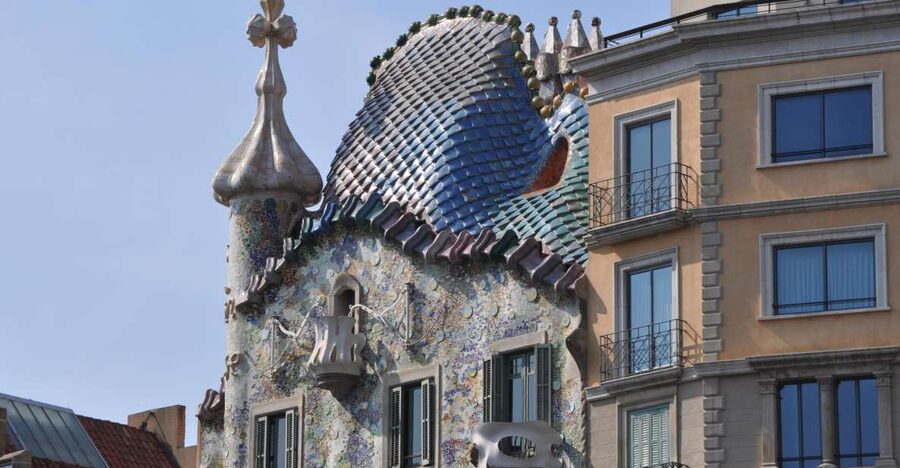
One of the tour’s first strengths is that it doesn’t treat Gaudí as the only star. You’ll also see major non-Gaudí architecture that helps you understand the Modernisme mindset. A key example on the route is the Antoni Tàpies Foundation.
Why it’s worth including: Barcelona’s Modernisme isn’t only about decorative facades. It’s about how the city imagines culture and public life. Even when buildings are tied to private ownership or elite patronage, there’s a constant question in the background: how should a modern city look, function, and communicate values?
When your guide gives context, you start noticing patterns you might miss on your own. You look at how materials work with light. You notice the relationship between structure and ornament. And you learn to spot when an architect is making a statement about Barcelona itself, not just their client.
This stop is also helpful because it gives you a baseline before the tour “turns up the volume” with the most famous Gaudí apartment houses.
Casa Lleó Morera and Domènech i Montaner’s Modernisme Reasoning
Another major point on the route is Casa Lleó Morera, designed by Domènech i Montaner. This is where the tour’s approach really pays off: Modernisme is not one style. It’s a shared period with different design personalities.
You’ll learn about how Barcelona’s architectural language developed, including the beginnings of modern urbanism. That phrase matters because you start seeing the city as an intentional system. Streets, blocks, and residential buildings aren’t only “where people live.” They become pieces of an urban plan, shaped by social needs and by new thinking about how cities should improve quality of life.
And you’ll also be trained to look at details with purpose. Instead of asking, Is this beautiful, you’ll ask, What is it doing, structurally and visually? That shift is what makes a 3-hour tour feel longer in the best way. You’re gathering tools for future self-guided exploring.
Casa Amatller and Puig i Cadafalch: Compare, Don’t Memorize
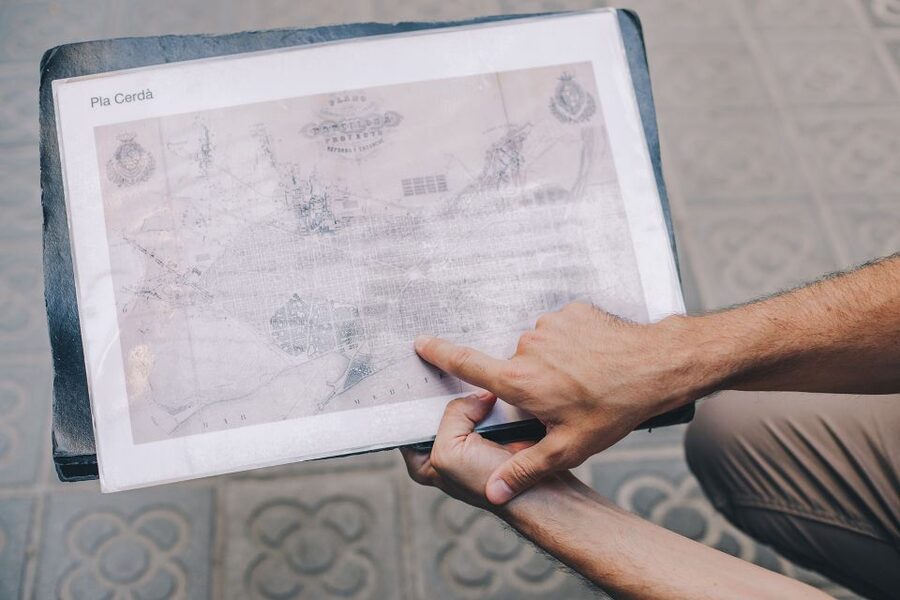
Casa Amatller by Puig i Cadafalch is another “comparison stop,” and that’s a gift to your brain. On Passeig de Gràcia, multiple architects are essentially answering the same question: How do you make an elite residential building look like the future?
When you see houses from different designers back-to-back, you stop treating Gaudí as a standalone phenomenon. You notice how each architect interprets Modernisme differently: ornament placement, silhouette, and the overall mood of the facade.
This is also the moment where the tour’s format helps you ask better questions. You begin to wonder how an architect’s worldview shapes design choices. That’s relevant later when the tour traces Gaudí’s shift from social concerns toward a stronger spiritual focus.
If you’re the type who wants “just show me Gaudí,” you might feel tempted to sprint ahead. Don’t. The non-Gaudí stops give context that makes the Gaudí stops hit harder.


Hidden Courtyards: How Private Space Became Public Garden
One of the tour’s standout themes is access to spaces that aren’t obvious from the street. You’ll get to hidden courtyards, and you’ll learn how these courtyards became public gardens.
That idea is quietly powerful. It reframes architecture as public benefit, not only private display. A courtyard sounds small until you understand what it means for light, airflow, and social life. In dense city blocks, a courtyard can be a breathing space, a shared micro-landscape, and a practical solution to the problems of urban living.
This is also where the tour feels most “hands-on,” because you’re not only reading facades. You’re experiencing how space behaves. Even if you’re not there for gardens, the courtyard lesson teaches you to look at how architects handled the gap between inside and outside, between private ownership and community use.
And since you’re not going inside buildings on this tour, these courtyards become especially important. They give you a sense of depth that a facade-only visit can’t match.
Casa Calvet, Casa Batlló, and Casa Milà: The Gaudí Apartment House Trio
Yes, you’ll see the three big residential buildings designed by Antoni Gaudí:
- Casa Calvet
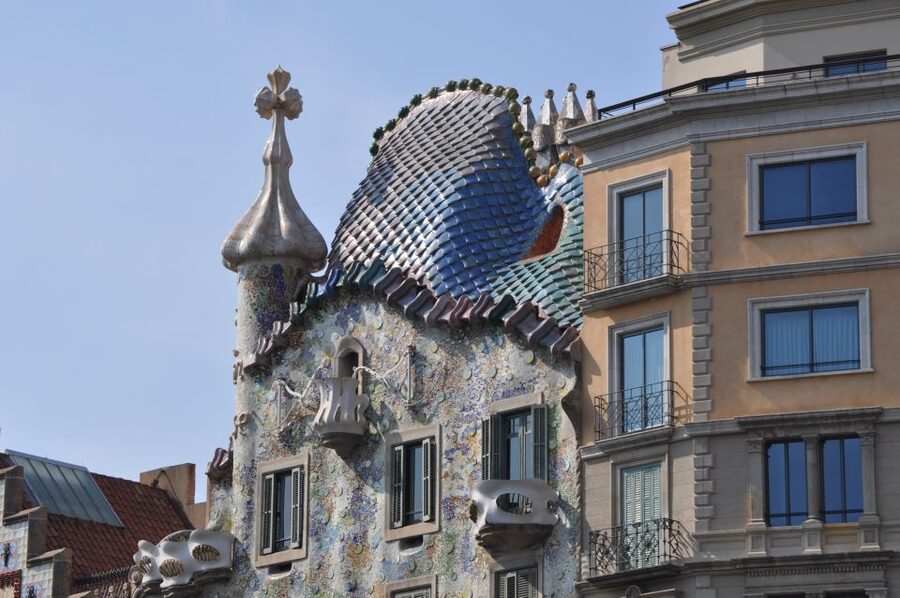
- Casa Batlló
- Casa Milà (often called La Pedrera)
This is the heart of the experience. The tour’s value isn’t that it points and says, That’s Gaudí. It’s that it gives you a way to interpret what you’re seeing.
Here’s what you should watch for as you approach each building:
- How the facade behaves like a designed surface, not a simple wall
- How ornament and structure feel connected, instead of separate layers
- How Gaudí uses visual power to create a sense of motion and meaning
- How his ideas evolve as his career changes
The tour also traces Gaudí’s career turning points, including his path toward becoming known as the last great cathedral builder. You connect that arc to what you see in these apartment houses, even though they are residential projects. That’s where the explanation helps. It shows how Gaudí’s thinking wasn’t divided into categories like art versus engineering. His approach sits in the middle.
One practical note: you will not go inside the buildings. So treat the stops as architecture viewing moments. Bring binocular-like attention, not expectations of interior tours. If you want interiors, you’ll need a separate plan after this walk.
The Career Arc: From Social Concern to Divine Absorption
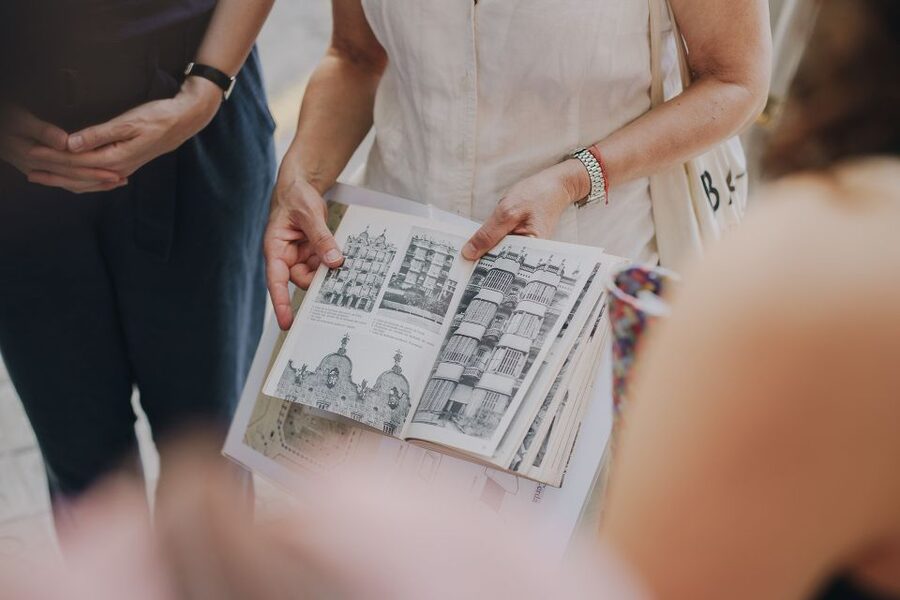
The tour doesn’t present Gaudí as one style forever. It traces his transformation as a person and as an architect. You learn about how his work began with social concerns, then moved toward a total absorption with the divine. That shift helps explain why his buildings can feel both intensely crafted and oddly transcendental.
You also hear about major “turning point” stories: a project in Manhattan, the last commission from patron Eusebi Güell, and Gaudí’s first architectural steps connected to Sagrada Família. These details matter because they give your brain handles to hold onto when you’re looking at curving forms and symbolic elements.
One review-style takeaway that aligns with how this tour is described is the emphasis on both engineering and context. A guide like Tomasz is noted for using visual aids and keeping the talk engaging even for non-architects. Another guide, Daniela, is described as very passionate and knowledgeable. This is reassuring if you worry you’ll get lost in technical chatter. The goal seems to be “make it understandable,” not “show credentials.”
What the 3 Hours Actually Feels Like
Three hours is a sweet spot for city walking tours. Long enough to connect ideas, short enough to avoid museum fatigue. The walk is designed to cover a focused architectural stretch and keep momentum.
The biggest comfort factor is that you can’t duck into buildings during the tour. That’s why weather matters. Barcelona usually cooperates, but you still want layers and comfortable shoes. You’ll be outside moving between viewpoints and courtyards.
Also, the tour is in English, and it’s described as wheelchair accessible for the entire walk. If you use a wheelchair, courtyards are a great chance to experience the design in a way that still works without interior entry.
Guides with Architect Minds: Why Their Answers Improve Your Visit
If you’ve ever had a tour where the guide reads facts off a screen, you know how frustrating that can be. The standout here is that many guides are practicing architects, some are professors, and several are architectural critics. That combination makes a huge difference in the type of conversation you can have.
In particular, multiple guide names in the experience notes, including Pia, Daniela, and Tomasz, are described as enthusiastic and able to handle questions. One example calls out how the guide used personal notes and pictures to reinforce explanations. That’s practical. You remember better when a guide shows you the exact detail they’re talking about.
And if you’re the type who asks why a city design works socially, this tour seems comfortable addressing broader themes without turning the walk into a debate club. That balance keeps you learning while still giving room for real curiosity.
Price and Value: Is $53 Worth It?
At $53 per person for a 3-hour guided architectural walk, you’re paying for three things you’d struggle to recreate on your own:
1) A tightly focused route that includes both Gaudí and Modernisme context
2) Explanation from active architects who can translate design decisions
3) A follow-up guide with ideas for drinks and more architecture
Is it the cheapest way to see Barcelona architecture? No. But it’s also not a “just take a photo, move on” tour. You’re buying understanding, not only views.
To decide if it’s good value for you, ask this: do you want help reading architecture? If yes, the price looks reasonable. If you’re content doing a self-guided Google Maps route and reading small plaques at each stop, you might not feel the same payoff.
My advice: treat this as your early orientation tour. Take it early in your trip if you can, so you can apply what you learn while you explore the rest of the city on your own.
Who Should Book This Gaudí Architectural Walk
This tour fits best if you:
- Love architectural detail and want a guide who can explain structure and design thinking
- Want Modernisme context, not only Gaudí headlines
- Prefer learning from an architect who can answer questions and connect buildings to how Barcelona became modern
- Enjoy walking and want a 3-hour morning plan
It’s also a great choice for people traveling with family who are curious but not technical. The guides are described as keeping explanations interesting without turning everything into long academic lectures.
Who might hesitate: if you specifically want to go inside the buildings, this tour won’t give you that. The plan is street-level architecture appreciation and hidden courtyard access, not interior entry.
Should You Book Barcelona: Discover Gaudí Architectural Guided Tour?
Book it if you want to understand Gaudí, not just collect photos. You’ll get a strong framework: Modernisme context, multiple architects on one route, hidden courtyard space, and the Gaudí apartment house trio. The architect-led format, including guides like Pia, Daniela, and Tomasz using visual aids and answering questions, is exactly the kind of match that turns famous buildings into meaningful ones.
Skip it, or pair it with other plans, if your top priority is inside access. Since you won’t enter the buildings, your experience will be driven by what you see outdoors and in courtyards.
If you can handle a morning walk and want to leave Barcelona with better architectural “reading skills,” this is a very solid use of time.
FAQ
How long is the Barcelona Gaudí architectural guided tour?
The tour lasts 3 hours.
What is the price per person?
It costs $53 per person.
Where do I meet the tour guide?
Meet by the Joan Brossa sculpture in front of the Comedia Cinema, at the intersection of Passeig de Gràcia and Gran Via.
Will we go inside the buildings?
No. You will not go inside the buildings.
Is the tour wheelchair accessible?
Yes, the entire tour is wheelchair accessible.
What languages and cancellation flexibility are offered?
The tour is in English. You can cancel up to 24 hours in advance for a full refund, and you can reserve now and pay later to keep plans flexible.
More Guided Tours in Barcelona

More Tours in Barcelona


More Tour Reviews in Barcelona
Not for you? Here's more nearby things to do in Barcelona we have reviewed









More Barcelona Gaudi Tours worth opening.
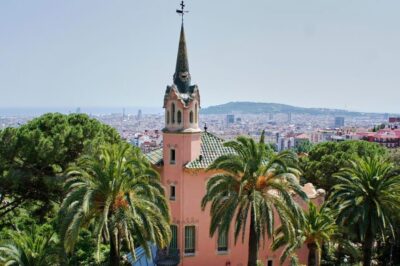 ★ 4.5Park Güell and Gaudí House Museum Entry TicketFrom $336,326 reviews
 ★ 4.5Sagrada Familia & Gaudi Tour Private or Small Group with TicketsFrom $901,188 reviews
 ★ 5.0Complete Gaudi Tour: Casa Batllo, Park Guell & Sagrada FamiliaFrom $1621,152 reviews
 ★ 4.1Park Güell: Guided Tour with Optional Gaudí Experience EntryFrom $35832 reviews
 ★ 5.0Barcelona e-Bike Tour: Gaudí & Old Town Small GroupFrom $38769 reviews
 ★ 5.0Ramblas, Old Town, Gothic and Gaudi Architecture Walking TourFrom $35723 reviews
 ★ 4.5Gaudi´s Casa Vicens Skip the Line Ticket with AudioguideFrom $26685 reviews
 ★ 4.8Discover Gaudí, Sagrada Familia, and Park GüellFrom $158651 reviews
Continue by place or experience