
REVIEW · BARCELONA
Intensive Ceramic Handbuilding Course
Clay happens fast when someone’s watching closely. This intensive handbuilding course in Barcelona pairs studio time with an easy rhythm that leaves room for sightseeing. I love that you get hands-on instruction in a small class (up to eight), and I also love that everything needed for the week is included, from tools to kiln firings.
One thing to consider: the schedule is intensive, with five consecutive 4-hour classes from 10:00 am Monday to Friday, so you will want your afternoons free to breathe and reset.
Key highlights to know before you go
- Up to eight students means you get real attention, not a one-size-fits-all demo
- 20 hours of teaching and studio work across five days, with structured technique practice
- No prior ceramics experience required, and the course supports all levels
- Pick up to five items for kiln firings, so you can focus on quality over quantity
- Language support in Spanish and/or English, depending on your preferences
Why This Barcelona Clay Course Works as a Real Vacation Plan
Barcelona is great at distractions. This course uses that energy in a smart way. Your mornings are dedicated to clay, and your studio day has a clear end. That makes it easier to plan real sightseeing after class instead of squeezing a workshop into an already packed holiday.
What makes this experience especially appealing is the balance between learning and making. The week is not just about experimenting. You get introduced to core handbuilding techniques first, then you build your own pieces with guidance while you work. That structure matters because it helps you get past the common beginner roadblock of feeling stuck on your first attempt.
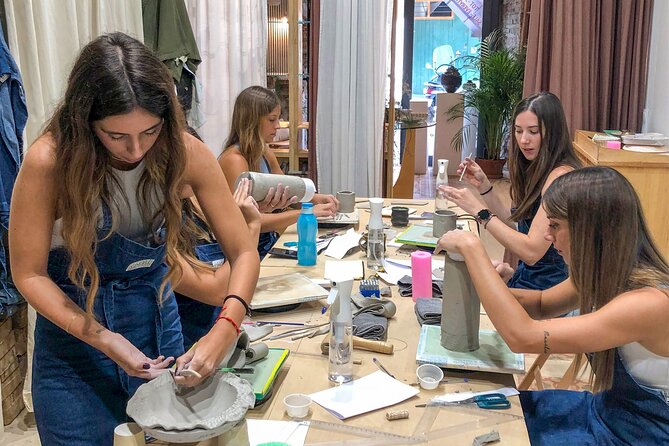
The small-group format also changes the whole tone. When there are up to eight participants, teachers can adjust what you’re doing on the spot. In practice, that’s what helps people go home with pieces that look intentional, not just handmade by accident.
There is also a social side that does not feel forced. You can sign up alone or with a friend, and the studio environment is described as friendly and open. If you like meeting people through an activity, this format fits well.
You can also read our reviews of more tours and experiences in Barcelona.



Finding the Studio: Location, Start Time, and What Arrival Feels Like
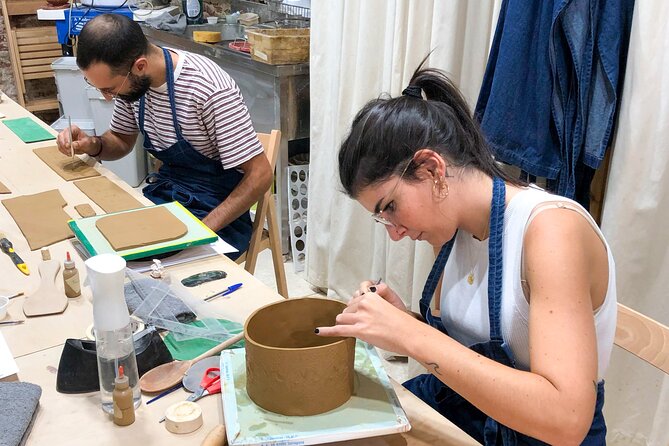
You start at Carrer de Salvà, 71, in Sants-Montjuïc (08004 Barcelona). The start time is 10:00 am, and the activity ends back at the meeting point. It is near public transportation, which is a big deal in a city like Barcelona where walking time can swing a lot depending on where you’re staying.
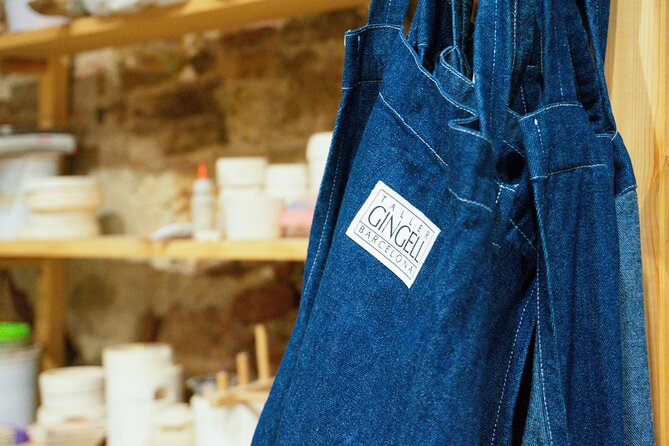
Plan to arrive a little early. Even though the course is straightforward and the team provides aprons, you will get more relaxed if you give yourself time to settle in. Once you’re in, the vibe is calm and focused. People talk about the studio atmosphere as pleasant, with a sense of order and support.
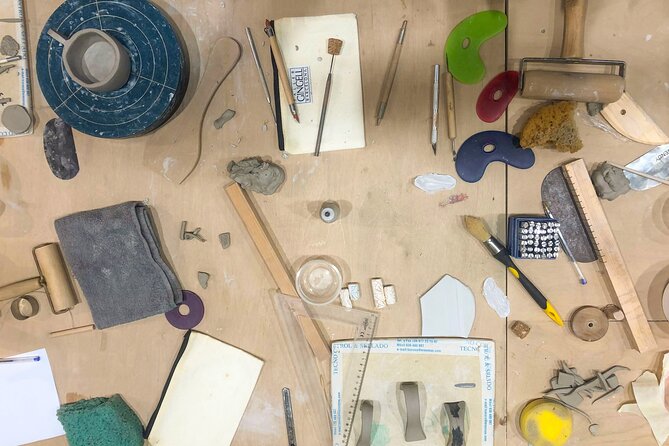
Also, you do not need to bring anything special. The studio provides aprons, ceramic modeling tools, and clay. That removes a lot of travel friction. You are free to show up in whatever outfit you are comfortable getting a bit dusty.
Your Week on the Wheel: Five 4-Hour Classes and 20 Hours Total
This is a five-day, Monday to Friday course. Each day runs for about four hours, totaling roughly 20 hours of structured teaching and studio work.
The course is split in a very practical way:
- The first two hours introduce specific techniques.
- The second two hours are focused on individual construction, with dedicated help while you make.
That rhythm is one of the most useful parts for your brain. You are not trying to learn everything and apply it later. You learn a technique, then you use it immediately, while a teacher can correct mistakes before they turn into habits.
You can expect to practice skills used for functional pieces (stuff you can use) and sculptural pieces (stuff you can enjoy as art). The point is not to force one style. The foundation is built so you can make almost any handbuilding project after the course.
What You Learn: Handbuilding Techniques That Actually Transfer to New Projects
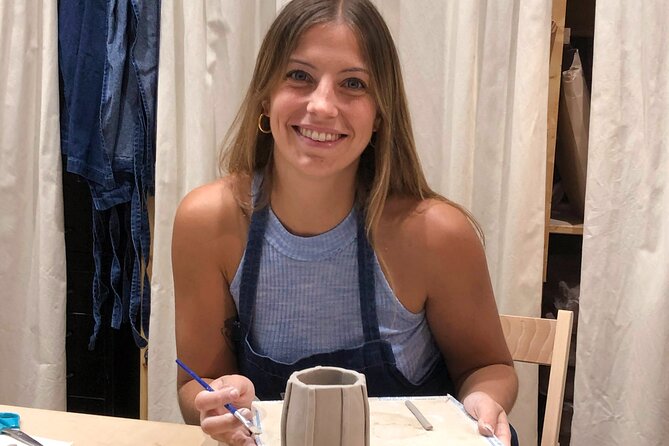
The core promise here is mastery of key handbuilding skills. In a week-long format, that usually means you focus on fundamentals plus a few creative pathways so you learn how to troubleshoot.
From real outcomes people describe after this class, you might end up making things like:
- a teapot
- a vase
- a cup
- ceramic stamps or texture elements
Even if your final shapes are different, those examples tell you the course covers more than one narrow craft task. It supports both practical forms and surface or texture ideas.
Some students also describe learning sculpting and even mold-making approaches, plus experimenting with glazes and underglazes and doing kiln testing. The safest way to think about this is: if your interests pull you toward those directions, the instruction can expand beyond basic handbuilding. If you want something simple and functional, you can also keep it straightforward.
That flexibility is a quality-of-life win. You are not forced into a set project. You can design within the course’s framework.
Your Pieces, the Kiln, and the Real Meaning of Selecting Up to Five Items
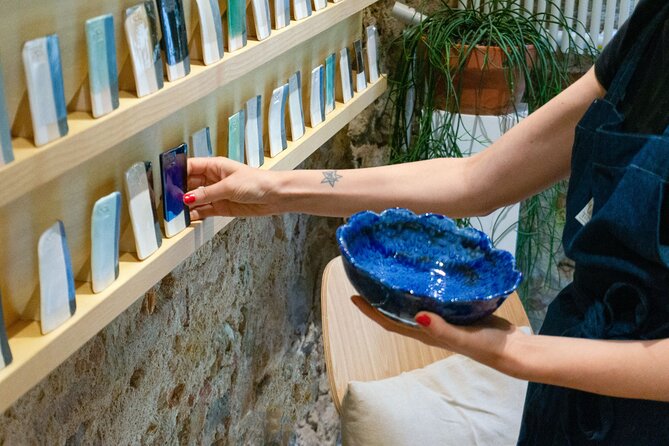
You can select up to five items to be kiln fired. That sounds like a small detail, but it is actually a huge part of how you plan your creativity.
Five pieces is enough to explore different forms and techniques. It is also enough that you will feel pressure to choose wisely. You need to think, what do I want to complete well in a short week?
Because kiln work is included, you do not have to treat firing like an optional extra cost. The course includes clay, kiln firings, and time for the work itself. That lowers decision fatigue and lets you focus on the making.
One practical expectation: kiln processes take time. You will likely need to wait until the firing and finishing steps are complete before your pieces are ready to collect or arrange for handling. The course team also packs items for safe travel, based on how students describe the pick-up experience.
If you are the type who likes leaving with finished results, plan for the reality that the final ceramic stage is after class ends.





Working With Wendy and Eric in a Small Class Setting
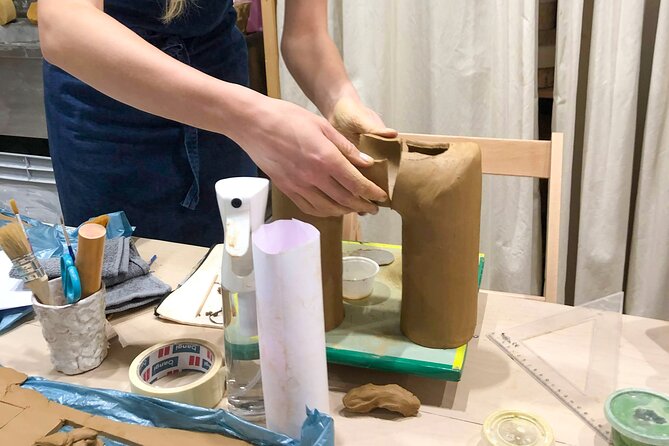
The teachers are Wendy and Eric. Wendy leads during the 20-hour course over five days, and Eric is also part of the teaching team. In the studio, they are described as attentive, precise, and supportive while still letting students make their own choices.
That combination matters. A good ceramics teacher can show you what to do. A great one also notices where you are making the same mistake twice. The best part of this course, according to what people consistently say, is that the instruction follows your actual work. Teachers give suggestions based on what you are building, not just generic tips.
You also get the advantage of a small group. Up to eight participants means you can ask questions in the moment and get feedback that fits your pace. People talk about the week feeling very well organized, with every step explained and with teachers checking in on how you work.
If you want more one-on-one attention, this course is built for that. Even if you end up sharing time with others, the group size stays small enough that you are not lost in the background.
Language Support: Spanish and English Without the Headache
Instruction is in Spanish and/or English based on your preferences. That is a practical win, because ceramic teaching is detail-heavy. Small instructions on handling, pressure, thickness, and timing can make a big difference.
If you prefer English, you can plan around that. If your comfort level is better in Spanish, you have that option too. Either way, you are not expected to communicate in a ceramics-only dialect.
Also, the studio environment is described as friendly and open. That helps if you are nervous about asking questions. You can focus on the work without worrying that you will fall behind due to language.
What Is Included, and What You Might Plan to Do Yourself
The course includes:
- Aprons
- Ceramic modeling tools
- Clay
- Kiln firings
- WiFi
- A mobile ticket (with confirmation at booking time)
- Instruction in Spanish and/or English
It also notes that shipping is not included if you want items shipped. The course covers kiln firing for up to your selected pieces. For anything beyond that, like shipping, you would need to arrange separately.
For what you should bring, the good news is simple. You do not need to bring anything special. The studio provides the basics you need to work.
Your travel planning, then, becomes about comfort and timing:
- Wear clothes you are comfortable with in a studio environment.
- Use public transport to get there smoothly given the start time.
- Leave your evenings open if you want to unwind after a hands-on day.
Price and Value: Is $612.78 a Fair Deal for 20 Hours?
At $612.78 per person, this is not a cheap activity, but it also is not overpriced when you break down what is covered.
Here’s the value logic:
- You get roughly 20 hours of instruction plus studio time
- You have a small class size (max eight), which raises the quality of feedback you receive
- Clay, tools, and kiln firings are included, and kiln work is not trivial in time or cost
- You can choose up to five items for firing, which helps you use your money on pieces you genuinely care about
Compare that to casual drop-in workshops where you might make one small item, get minimal technique coaching, and then pay extra for firing or glazes. This course treats firing as part of the learning loop, not a surprise add-on.
If you are a beginner, the value is in not having to buy equipment and figuring out what you like. If you are already handbuilding, the value is in getting technique refinement and feedback while making actual pieces.
Either way, it is one of those experiences where the price starts to make sense once you realize how much instruction and kiln work are bundled together.
Integrating Sightseeing: How to Pair Clay Time With Barcelona Time
The course is described as combining crafting and sightseeing. There is no claim of guided city tours built into the schedule. Still, the daily timing gives you something just as useful: the ability to plan the rest of your day.
Because class runs about 10:00 am to 2:00 pm each day (five days), you can structure your sightseeing in a very adult, low-stress way. You can focus on one neighborhood each afternoon, and you avoid that common vacation trap where you rush back too late to enjoy dinner or a walk.
Sants-Montjuïc is also a solid base for mixing studio time with city life. Since the studio is near public transportation, you can travel without spending your whole day in taxis or getting lost.
If you like your days to have a rhythm, this setup works. Clay gives you a clear purpose in the morning, and the city gives you variety in the afternoon.
Who Should Book This Course (and Who Might Think Twice)
This intensive handbuilding course is a strong match if:
- You are a beginner and want to learn core handbuilding techniques without prior experience
- You want a short, focused course with real teaching time and structured practice
- You enjoy making functional or sculptural pieces and want guidance on shaping, details, and finishing directions
- You like small group learning where you get feedback in the moment
It might be less ideal if:
- You want a super flexible schedule with lots of free time every day
- You are only looking for a quick pottery souvenir rather than technique practice
- You prefer workshops where you can pick any number of items without having to prioritize up to five for firing
Also, it is listed as suitable for most travelers, and service animals are allowed. The class size stays small at up to eight, which usually makes it feel more manageable than larger workshops.
Should You Book? My Practical Decision Guide
If you want a Barcelona activity that is hands-on, structured, and genuinely skill-building, I think you should book this course. The biggest reasons are the 20 hours of teaching, the small class setup, and the fact that kiln firings plus materials are included.
Book it if you like learning by doing, and if you want to leave with pieces you can be proud of. Even better, it works for beginners, so you do not need a ceramics background to get value.
If you hate intensive schedules, or if you only have a weekend and want a casual taste, you might choose a shorter workshop instead. But for a real week of making, this one has the right mix of guidance and freedom.
FAQ
What is the course duration and schedule?
The course runs for about 5 days with five consecutive classes from Monday to Friday, with about 4 hours per class, starting at 10:00 am.
Do I need prior ceramics experience?
No prior ceramics experience is necessary. The course is suitable for all levels.
What should I expect to learn during the week?
You will learn essential handbuilding techniques for both functional and sculptural work, with technique instruction in the first two hours of each class and individual construction with dedicated guidance in the second two hours.
Are tools, clay, and kiln firings included?
Yes. Aprons, ceramic modeling tools, clay, and kiln firings are included.
How many items can I choose to have kiln fired?
Each student can select up to five items to kiln fire.
What language will the instruction be in?
Instruction is in Spanish and/or English based on your preferences.
Can I cancel for a full refund?
Free cancellation is available, and you can cancel up to 24 hours in advance of the experience start time for a full refund. If you cancel less than 24 hours before, the amount paid will not be refunded.