
REVIEW · BARCELONA CITY TOURS
Crimes the tour through the Dark Side of Barcelona
Barcelona has a darker side. This walking tour strings together real crimes across El Raval, the Gothic Quarter, and El Born, so you see familiar streets with brand-new context. I especially loved the small group feel and the way guide Cristina brings specific locations and stories into a clear route you can actually follow. One drawback to weigh up front: the subject matter is heavy, so if you want easy, upbeat sightseeing only, this might feel like a lot.
The pace is brisk and focused, about 2 hours (approx.) total, with a licensed guide and a route that stops at major crime-linked landmarks. You also get a mobile ticket, which keeps things simple when you are on the move. You should expect mostly outdoor walking and standing around for short explanations, not long museum time.
You do get a lot of value for the money because the stops are practical and walkable, and the itinerary lists admission ticket free at each point. Still, there are no snacks included, so plan to manage your energy with water and timing on your own.
Key highlights worth planning for
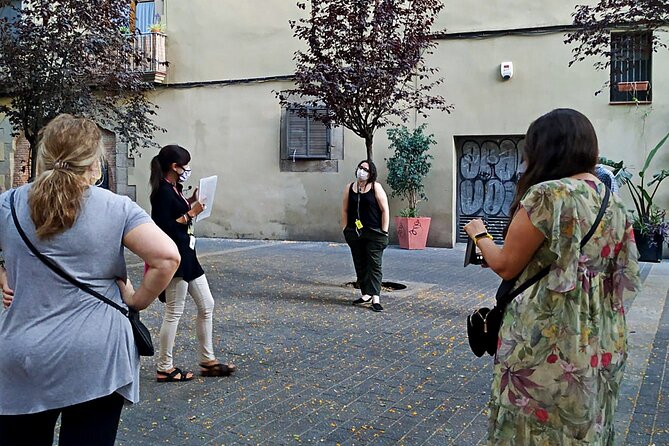
- Small group, max 20: easier to hear the details and ask questions.
- Cristina’s storytelling: lots of place-based history, not vague spooky claims.
- El Raval to El Born route: you cross neighborhoods most people only pass through.
- Stop-by-stop crime themes: each square, street, convent, and wall gets a purpose.
- Most stops are admission ticket free: easier and faster than museum-heavy tours.
- Clear end point in the Gothic area: you finish near Plaça de Sant Pere, ready to keep wandering.
Starting on La Rambla, right where the story kicks off
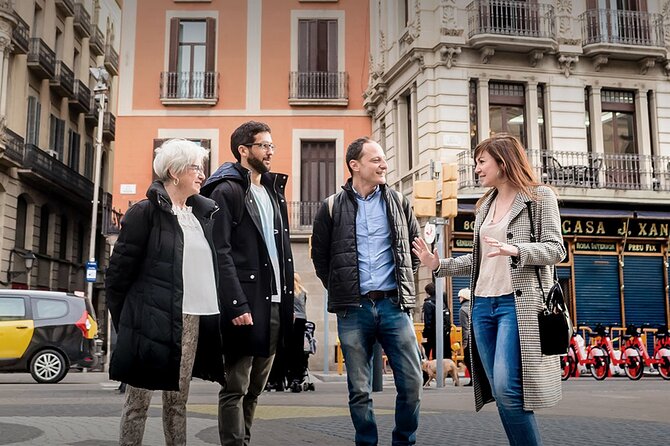
The meeting point is at Le Méridien Barcelona, La Rambla 111, and the tour starts on La Rambla. The guide immediately sets the tone, talking about the former Hotel Manila as the place where the first real crime took place. Even if you think you know La Rambla well, this start forces you to notice the city like a detective.
This first segment matters because it trains your brain to connect three things: a location, a time period, and why people were afraid. That is the core trick of the whole tour. It is not just scary stories for fun, it is a guided way to read the city.
If you are sensitive to grim topics, this is your cue to decide how you want to experience the evening or afternoon. The tour does not shy away from brutality, and the language stays factual and direct.
You can also read our reviews of more tours and experiences in Barcelona.
MACBA and the Raval context you cannot unsee
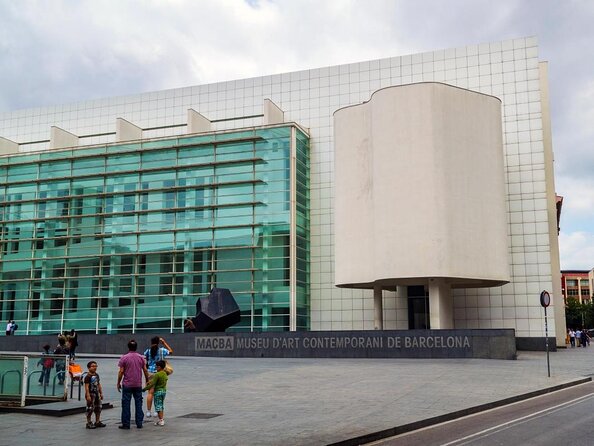
Next is MACBA Museu d’Art Contemporani de Barcelona. The tour frames the building as a former convent and explains the misery around the Raval quarter in the early 1900s. That context is valuable because the Raval is one of those neighborhoods where modern visitors often look at street life and forget the pressure that built up over decades.
You get about 10 minutes here. That is enough time to understand what the space used to be and how the area’s social conditions shaped fear and crime. It is also a good reminder that today’s landmarks often sit on layers of use that have nothing to do with what most people imagine.
The potential drawback is also clear: since each stop is short, you will not get deep museum-style immersion. You go for the walking-history connection, not a slow, academic lecture.
Carrer de Joaquín Costa 29 and the Vampire of Raval
At Carrer de Joaquín Costa, 29, the guide focuses on Enriqueta Martí, known as the Vampire of Raval. This is one of the most talked-about stops on the route for a reason: it is concrete, it is address-specific, and it puts a human face on what became a long-running nightmare story.
What I like about this kind of stop is the way it turns a rumor into a place you can stand and imagine. You are not just hearing names. You are mapping them onto the street grid.
One practical note: this is tight city walking. Wear shoes you trust for uneven sidewalks and expect to look up and down the street as the guide explains details.
Prison stories at Carrer de la Reina Amàlia
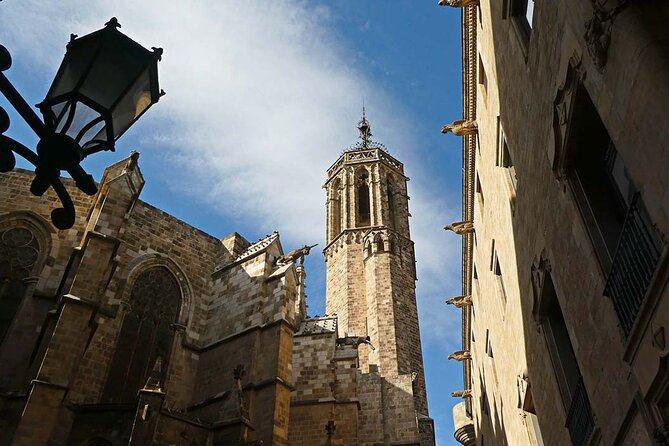
Carrer de la Reina Amàlia is next, and the tour explains that this square used to be the prison of Queen Amalia. The guide discusses the difficult living conditions inside and also mentions famous prisoners. That combination is what makes the stop more than atmosphere. It connects power, confinement, and public fear.
Because the tour is time-limited at about 10 minutes per listed stop, you will get the key beats rather than exhaustive biographies. Still, the payoff is how the story makes you read the square differently when you pass it on your own later.
If you do not like true crime themes, you might still appreciate this stop for the way it teaches you to think about what institutions meant to ordinary people.
Sant Pau del Camp and the shock of war crimes in 985
The Old Monastery of Sant Pau del Camp is a former convent where war crimes took place in 985 during the invasion of Barcelona. This is a powerful stop because it shifts the tour beyond modern-era scares and into a much older timeline.
The setting helps. Monastery grounds tend to feel quiet now, but the guide uses that contrast to show how violence can exist even in places that are meant for devotion or routine. You also get a full 10 minutes, which is enough time to understand why the year 985 is used as a reference point for the city’s long memory.
This is also where you will likely start to feel the tour’s emotional weight. It is not just street tales. It is the idea that Barcelona kept replaying fear across centuries.

Plaça George Orwell, civil war crimes, and a book you should know
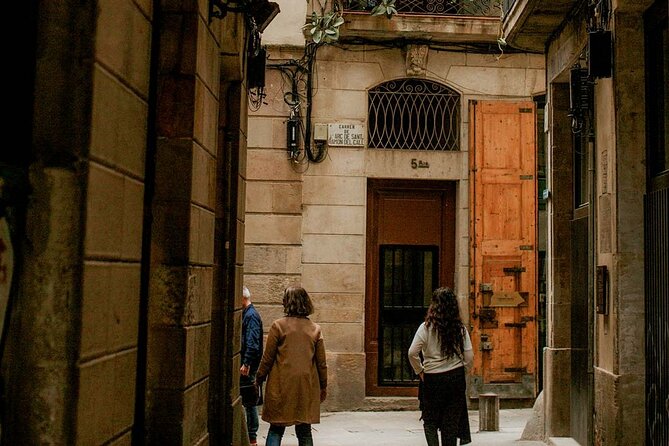
Then you reach Plaça George Orwell, where the tour covers the Spanish Civil War in Spain and its crimes. The guide also stresses the importance of George Orwell’s Hommage to Catalonia.
I like how this stop ties a famous writer to a real place, because it helps you choose what to read next. If you are the kind of traveler who wants more than facts, this is a natural bridge to literature. And if you already know Orwell’s work, this gives you a reason to connect it to the streets outside the page.
There is no ticketed entry here, just a set piece for context. You are standing in the city while the guide puts words to events that shaped Catalonia.
Roman walls at Muralla Romana and early document crimes
Next comes Muralla Romana, the borders of the old Roman walls. The guide explains the former colony of Barcino and the first document crime in Barcelona’s history. This stop is a reminder that fear and violence are not only modern problems. They show up in records, early governance, and everyday conflict.
It is a smart pacing choice in the middle of the route. After the intense medieval and civil war material, you get a historical reset. The Roman wall context gives you a wider lens, so the later crimes feel less random and more like part of a long pattern of control and punishment.
If you love ancient history, you might wish this stop were longer. But the tour stays focused on the crime thread, so you keep moving.
Plaça de l’Àngel and execution methods you hear with a straight face
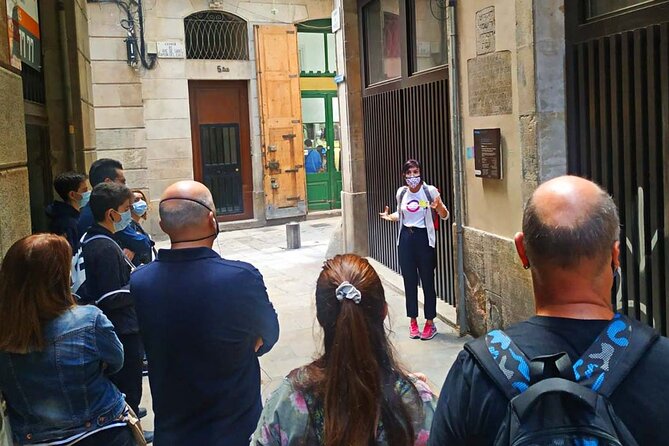
At Plaça de l’Àngel, the tour says many executions took place in this main old-town square. The guide also covers different methods used. That is the kind of detail that can be uncomfortable, and the tour handles it as history, not sensationalism.
From a traveler’s perspective, this stop can be one of the most memorable because it changes what you think a landmark is for. You start looking at sightlines in the square, wondering where people stood, and how crowds watched. It also helps you understand why some urban squares feel like they were built for public viewing.
If you are visiting with kids or anyone who dislikes violent history, you should consider whether this tour is the right fit. The information here can be graphic in theme, even if you are not shown anything visual.
Carrer de l’Allada-Vermell: a 1934 family tragedy
Carrer de l’Allada-Vermell is next, and the tour places a 1934 tragic incident where a family lost one member. The guide uses this stop to keep the story moving through the 1900s and into the era most visitors associate with modern Barcelona.
What I like is that it does not only focus on famous names. It includes smaller, more personal tragedies, which makes the history feel lived-in instead of like a museum file.
The tradeoff is that you will get a snapshot rather than a full case report. If you want to go deeper on this specific event afterward, it is worth writing down the street name so you can search it later.
Sant Agustí Vell and the price of wheat in 1789
Plaça de Sant Agustí Vell brings the story to 1789 and a demonstration against the price of wheat. This is a different kind of crime angle. It is about economic pressure and public unrest, not only individual perpetrators.
This stop can be surprisingly relevant even today. You see how hunger and cost spikes can turn daily life into conflict. It also widens your understanding of what the word crime can mean in a city’s past, because sometimes it is about power, punishment, and survival.
If you prefer fast-moving, story-heavy stops, this one might feel less spooky and more political. In my view, that is a strength, because it makes the tour less one-note.
Carrer del Portal Nou and the mystery of Benvingut Funes
At Carrer del Portal Nou, the tour covers the 1936 killing of Benvingut Funes in a savage way. The guide notes that his death remains a mystery in the city.
This is the kind of stop that keeps people talking after the tour because it lives in that gray zone between recorded facts and unresolved questions. For you, it is also useful because it shows how Barcelona’s streets can preserve uncertainty, not just certainty.
If mysteries are your thing, this is a highlight. If you dislike unresolved stories, you might prefer the more documented stops earlier in the route.
Ending at Plaça de Sant Pere and the convent-era war crimes
The final stop is Plaça de Sant Pere, where an old convent site is tied to terrible war crimes affecting the nuns in 985. The tour returns to the year 985 theme, using the ending point to close the historical loop.
I like endings that land you in a place you can continue exploring on your own. Plaça de Sant Pere is in the heart of the Gothic area, so after the tour finishes, you have easy options for food streets and wandering. The guide ends you there, so you are not stuck figuring out your next move.
This final segment can also feel heavy. It is meant to. By the time you arrive, the tour has already taught you how often fear and violence were part of everyday urban life.
Why the route across El Raval, Gothic Quarter, and El Born works
The big win here is the neighborhood mix. El Raval is known for its gritty, layered identity, while the Gothic Quarter and El Born often get treated like postcard history zones. This tour makes you connect the postcard parts to the nightmare parts.
You get a consistent method: stand in a real place, hear what happened, and then connect it to the time period. That is why the tour is a good use of your limited time. It gives you a mental map of Barcelona that does not fade after one day.
The small-group format, with a maximum of 20, helps you keep up. You are not shouting over a crowd. You can hear the guide. You can also adjust your own comfort level without feeling trapped.
Price, duration, and whether it feels like value
The price is $254.95 per person for about 2 hours (approx.). That is not a budget street tour. You are paying for a licensed guide, a private setup where only your group participates, and a tightly crafted route with a lot of place-specific storytelling.
In practical value terms, you get:
- a guide who can keep the facts organized while walking
- multiple neighborhoods and landmark types (squares, streets, walls, convent sites)
- listed admission ticket free stops, so you are not burning time or money on entries
If you are traveling solo or in a small party, this can still feel worth it because you are buying focus and flow, not just walking distance. If you are on a strict budget, you might choose a cheaper walking tour and then read more on the case studies afterward. But if you want a guided, coherent story you can follow step-by-step, this price starts to make sense.
Also, since snacks are not included, plan your timing so hunger does not ruin the experience. That is a small thing, but it matters more with a heavier-themed tour.
Who should book this crime-themed Barcelona walk
Book it if you like:
- true crime themes that stay grounded in real places
- city history told through street-level landmarks
- tours that help you see what most visitors miss, even in famous areas
It is also a great choice for couples or friends who like to talk and process stories together. The max group size helps conversation stay natural.
I would think twice if you:
- want a light, relaxing walk
- dislike dark history and graphic themes
- need very long pauses or lots of seated time, because each stop is short and you are moving throughout
Practical notes before you go
This tour is walk-focused and the activity calls for a moderate physical fitness level. You will be on sidewalks, turning corners, and spending time standing for the guide’s explanation.
Service animals are allowed, and the meeting points are near public transportation. The start is at Le Méridien Barcelona, La Rambla, and the tour ends at Plaça de Sant Pere.
You will also receive confirmation within 48 hours of booking, subject to availability.
Should you book Crímenes in Barcelona’s Dark Side?
If you are the kind of traveler who enjoys history with teeth, this is an easy yes. The route gives you real momentum, from La Rambla’s first-crime framing to convent sites tied to 985, then Roman walls, execution squares, and civil war references with Orwell’s Hommage to Catalonia.
I would book it now if:
- you want a Barcelona story that lasts longer than a single headline
- you value a licensed guide and a smaller group for listening comfort
- you are okay with heavy true crime and war-era topics
I would skip or consider alternatives if:
- you want sightseeing that stays upbeat and low intensity
- you get uncomfortable with execution-related history and prison-era details
Either way, you will come away seeing Barcelona differently. Once you learn to read the city by its crimes and consequences, the streets stop being just pretty backdrops.
FAQ
How long is the Crímenes the tour through the Dark Side of Barcelona?
It is listed as approximately 2 hours.
What is the price per person?
The price is $254.95 per person.
Where does the tour start and where does it end?
It starts at Le Méridien Barcelona La Rambla 111, Carrer del Pintor Fortuny, 4-6, Ciutat Vella, 08001 Barcelona, Spain. It ends at Plaça de Sant Pere, Pl. de Sant Pere, Ciutat Vella, 08003 Barcelona, Spain.
Is this a private tour?
Yes. Only your group participates.
Is the tour mobile-ticket based?
Yes, the tour includes a mobile ticket.
Do I need tickets for the stops?
The itinerary lists Admission Ticket Free for each stop.
Is a guide included?
Yes. A licensed tour guide is included.
Do I need to bring snacks?
Snacks are not included.
What physical level is required?
The tour indicates travelers should have a moderate physical fitness level.
What is the cancellation policy?
Free cancellation is available, and you can cancel up to 24 hours in advance for a full refund. If you cancel less than 24 hours before the start time, the amount you paid is not refunded.
More Tours in Barcelona


More Tour Reviews in Barcelona
Not for you? Here's more nearby things to do in Barcelona we have reviewed








More Barcelona City Tours worth opening.
 ★ 4.4Park Güell Admission TicketFrom $2576,534 reviews
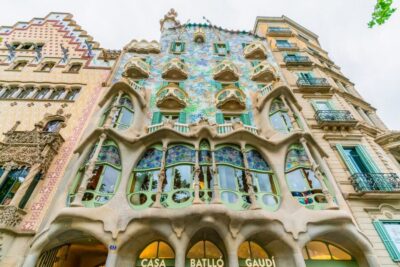 ★ 4.7Casa Batlló Entry with Self-Audioguide TourFrom $3425,359 reviews
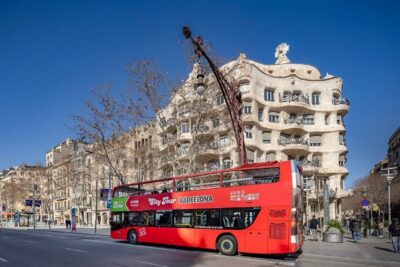 ★ 4.424 or 48-Hour Hop-On Hop-Off Bus TourFrom $3920,872 reviews
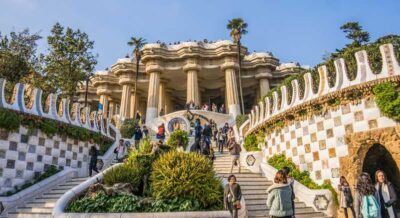 ★ 4.7Park Guell Guided Tour with Skip The Line EntryFrom $3117,563 reviews
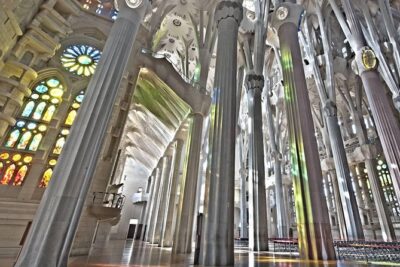 ★ 5.0Barcelona in 1 Day: Sagrada Familia, Park Guell,Old Town & PickupFrom $12013,541 reviews
 ★ 4.3Barcelona Aquarium: Entry TicketFrom $3113,335 reviews
 ★ 4.8Sagrada Familia Skip-the-Line Entry Ticket & TourFrom $6712,789 reviews
 ★ 4.4FC Barcelona Museum “Barça Immersive Tour” TicketFrom $3510,944 reviews