
REVIEW · BARCELONA CITY TOURS
The wonders of architecture 2 hours on foot in Barcelona
Barcelona buildings talk back to you on foot. This 2-hour architecture walk strings medieval Gothic, Catalan Modernisme, and Gaudí details into one easy plan, with a French-speaking guide who keeps it friendly and clear.
I love the way the guide turns each stop into a story, not just a photo stop, like the construction anecdotes at Barcelona Cathedral and the myths behind Palau de la Música Catalana. One thing to consider: most of the big sights on the route have admissions not included, so if you want to go inside, plan for extra tickets.
Key highlights before you go
- Gothic to Modernisme in one 2-hour loop across central neighborhoods
- Stories that connect buildings to Catalan identity, including legends tied to Palau de la Música
- Plaça Catalunya as the old versus modern dividing line you can actually feel while walking
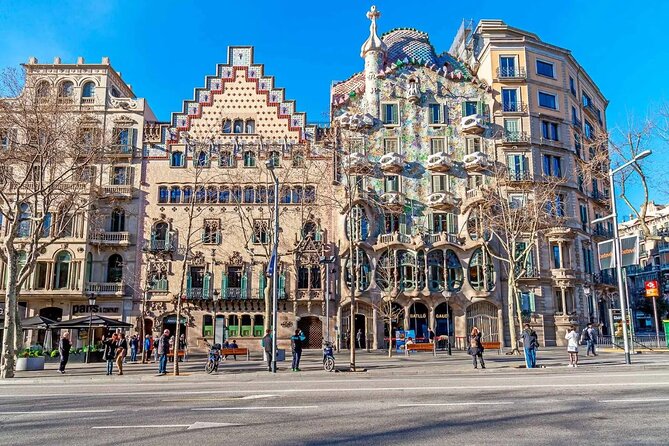
- The Apple of Discord houses at Casa Lleó i Morera and Casa Amatller
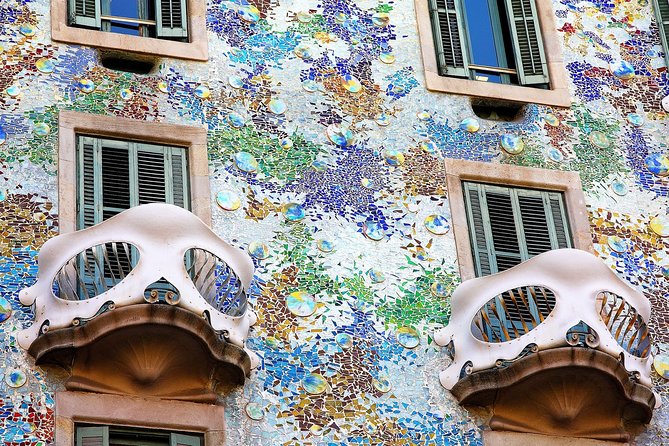
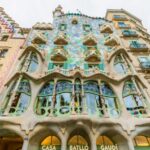
- A focused Gaudí finish at Casa Batlló in L’Eixample
- Small group size (max 10) for a more relaxed pace and better Q and A
Why this Barcelona architecture walk feels different
If you only have a couple of hours in Barcelona, it can be tough to choose between the Gothic Quarter and Gaudí land. This walk helps you skip the guesswork by building a route around one idea: Barcelona architecture is full of contrast, and that contrast tells you a lot about the city.
You start with the older, heavier side of the story at Barcelona Cathedral, where construction details and historical anecdotes give the building weight beyond its postcard look. Then you move into Catalan Modernisme, the world of color, shapes, and showmanship, where even the facades seem to have an opinion. By the time you reach Casa Batlló, you are ready to notice the craft, symbolism, and the specific kind of eccentric energy Gaudí is famous for.
The pace is also practical. It is about 2 hours on foot, and the route stays in a walkable zone where you can keep moving without feeling like you are sprinting across town. For me, that matters, because architecture is best when you can stop, look up, and take in the details without feeling rushed.
More Barcelona tours and experiences for the shortlist



The 6-stop route, what you actually see at each one
This is a short route with smart timing. Each stop is designed for quick observation plus a guide-led explanation, so you leave with more than random exterior photos.
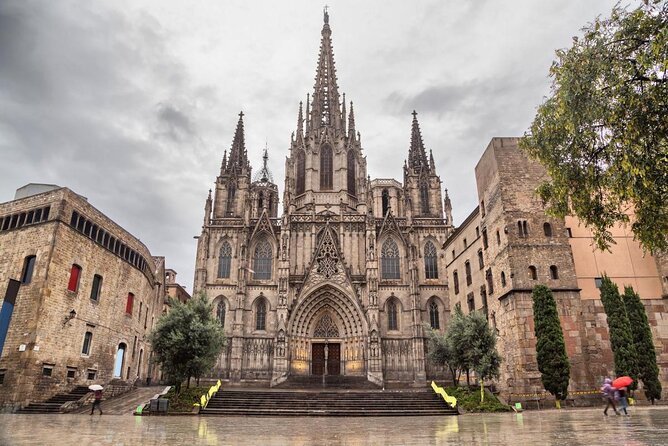
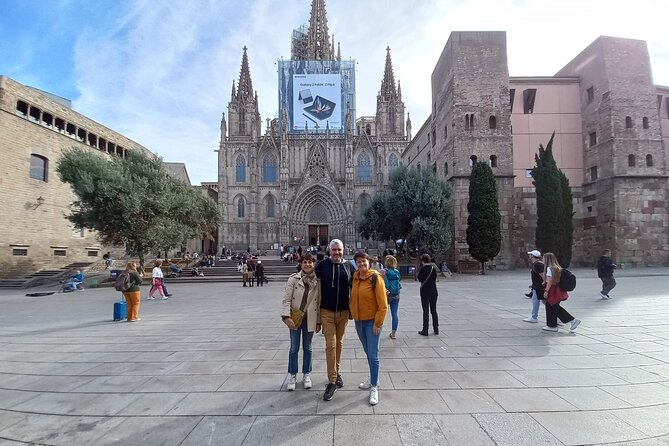
Stop 1: Barcelona Cathedral, details and construction stories
Barcelona Cathedral is one of those buildings where your eyes want to jump straight to the biggest features. The guide shifts your focus to the details and anecdotes around construction, which is where Gothic architecture often becomes understandable.
Even without buying an entry ticket, you can learn how to read the stonework and proportions as part of a longer building process, not a single finished moment. If you are the type who likes architecture with a timeline behind it, this first stop pays off.
Ticket note: admission is not included here.
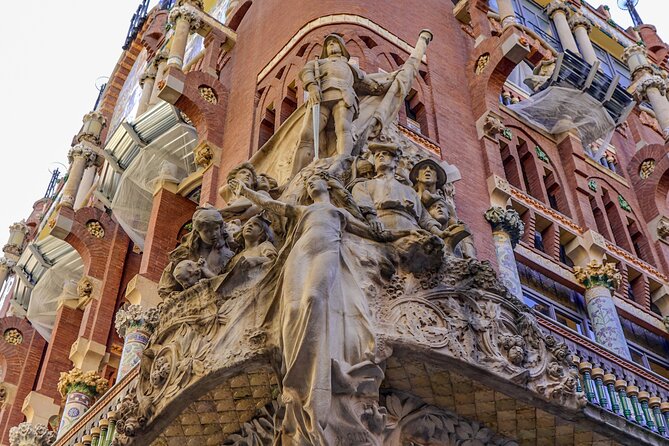
Stop 2: Palau de la Música Catalana, myths plus architecture
Next comes Palau de la Música Catalana, a place known for drama, but here you get help seeing why it looks the way it does. The guide talks through the architecture in detail and ties it to founding myths of Catalonia.
This is a good mental move. Instead of treating the building like a sculpture, you start seeing it as a cultural statement. You learn what shapes and features might be pointing to, and why Catalonia’s identity matters in Modernisme.
Ticket note: admission is not included here.
Stop 3: Plaça Catalunya, the old versus modern border
Plaça Catalunya is not just a square. It is a real boundary in how the city feels. The guide frames it as the border between the old and the modern city, so you know what to notice as you move through it.
This stop works well because it gives your route a “reset.” You have spent time in older styles, and now you stand in the transition zone where Barcelona’s newer self starts to show. Even if you are just passing through, hearing how it functions culturally makes you look at it differently.
Ticket note: admission is free.


The Champs Elysees in Barcelona stretch, grand boulevard energy
After Plaça Catalunya, you get the grand boulevard vibe described as the Champs Elysees in Barcelona. The value here is not a single building. It is the feeling of a city that likes to show off.
Think of this as the bridge between the older heart of the city and the Modernist “show” streets nearby. If you like walking and people-watching, this segment helps you stay in the mood for what comes next.
No admission required for this part.
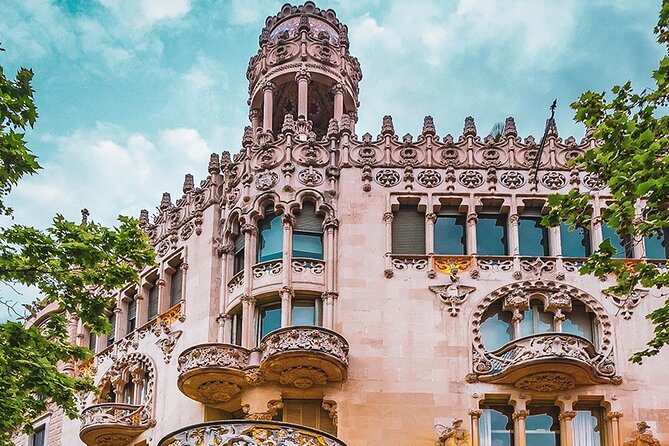
Stop 4: Casa Lleó i Morera, part of the Apple of Discord
Now you enter the world of the Apple of Discord, and Casa Lleó i Morera is one of its key members. The facade style may look like playful design competition from street level, but the guide helps you understand it as a coherent chapter of Modernisme.
This stop is short, around 10 minutes, so the goal is focused: learn what you are looking at, then move on before you overthink it. If you are doing Barcelona architecture in limited time, these quick bursts are exactly the right way to cover ground.
Ticket note: admission is not included.
Stop 5: Casa Amatller, another Apple of Discord face
Casa Amatller continues the comparison game, again around 10 minutes. Since it is part of the same set, it is easier to see differences in style and attitude.
For me, this is where the tour starts to feel like it has a personality. Modernist buildings here are not quiet. They are trying to make you notice. The guide’s explanations make the contrasts between the houses easier to catch, even if you are not an architecture specialist.
Ticket note: admission is not included.
Stop 6: Casa Batlló, Gaudí’s emblematic finale
The walk ends at Casa Batlló, on Pg. de Gràcia, address listed as Pg. de Gràcia, 43. This is a strong finish, because the building is one of Gaudí’s most recognizable works.
Here the guide focuses on the wonders of the building by Antoni Gaudí, helping you look beyond the obvious shapes and colors. You learn what to notice, so your last stretch does not turn into a tired photo spree.
Ticket note: admission is not included.
Where the route makes sense (and where you might want to slow down)
This walk is built like a narrative. You start with an older structure and its construction story, then shift to a cultural landmark tied to Catalonia’s myths, then cross a major city border, and finally move into Modernisme where buildings behave like bold personalities.
That arc matters because Barcelona’s architecture is not one style. It is a sequence of ideas, and the city seems to keep reinventing itself. By the end, the Apple of Discord houses and Casa Batlló do not feel random. They feel like the culmination of a shift toward expression and craft.
Still, you should think about your own priorities. If you love interiors and want maximum time inside buildings, you may find the short exterior-focused stops a bit limiting. Several stops list admission as not included, so you might spend extra time booking entries on your own after the tour.
If you want the best of both worlds, I suggest using the tour as your “orientation pass.” You get the meaning first, then you decide which building deserves your money for an inside visit.
Price and value: why $29.67 can be a smart use of time
At $29.67 per person for about 2 hours, this is not a budget tour where you rush and forget. The value is in the guided interpretation of multiple major architecture stops in one go.
Here is the practical tradeoff: admissions are not included at key sites. That means you are paying mainly for the guide, the route logic, and the architectural storytelling. If you do not plan to enter places, this can still be good value because the stops are designed to work from outside too.
If you do want to go inside, budget extra for ticketed attractions based on your preferences. You are not paying double because the tour is not selling you entry tickets. You are paying for a trained explanation that helps you understand what the tickets are for.
Also, the group size cap of 10 travelers is not a small detail. In a compact walking tour, smaller groups usually mean fewer distractions and more time to ask questions at street level where architecture is most readable.
Pace, meeting point, and what to bring
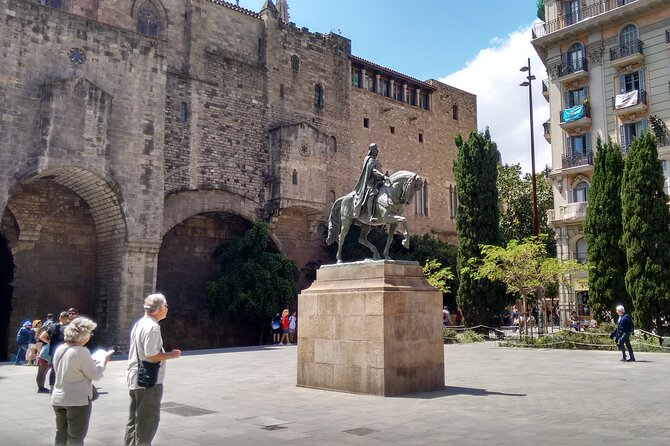
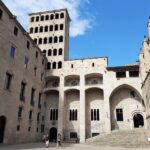
You meet at Plaça de Ramon Berenguer el Gran in Ciutat Vella, with a start time of 10:30 am. The walk ends at Casa Batlló in L’Eixample on Pg. de Gràcia.
Because the tour is “on foot,” you should dress like you will be outside for a while. Comfortable shoes matter more than you think. Even at just two hours, the work of looking up, stopping briefly, and walking between areas adds up.
It also helps that the experience is near public transportation. If you are juggling the rest of your day, you can usually get yourself back into the city grid without drama.
Mobile ticketing is listed, and service animals are allowed, which makes it easier for many travelers to participate smoothly.
Guide style in real terms: stories, humor, and practical tips
The tour runs in French with passionate guides. That is important if you rely on language. If your French is basic, you will still likely catch the big ideas, but it may help to have a quick architecture vocabulary in your head, like façade, ornament, and symbolism.
From the guide approach described in feedback, the standout trait is story telling that stays understandable for different ages. People highlight guides who explain naturally, keep things clear, and use humor. That is exactly what you want on a walk like this, because architecture gets more fun when the guide helps you connect it to people and culture instead of turning it into a lecture.
There is also a practical side: guides like Florence are praised for giving helpful local tips beyond the buildings, including restaurant suggestions. That can be genuinely useful because architecture tours often end right when you start thinking about lunch or a first dinner.
If you enjoy being guided through details rather than being handed a map and told good luck, this format fits you.
Weather matters, because walking tours live outdoors
The experience requires good weather. If it is canceled due to poor weather, you will be offered a different date or a full refund.
That means you should plan smart. Bring a light rain layer if rain is possible that week, and check the forecast close to your start time. If you get a cloudy day instead of clear sun, you can still enjoy stonework and color, but heavy rain changes the comfort level fast.
Who should book this Barcelona architecture tour
This is a strong fit if:
- you have limited time and want the big architecture beats of Barcelona in one walk
- you like Modernisme and want help reading what you see, not just snapping pictures
- you want a guided narrative connecting Gothic roots to Gaudí-era expression
- you travel with family and appreciate an explanation that can work for different ages
It may be less ideal if:
- you want long indoor visits and fully ticketed experiences as part of the package
- you are only interested in one building and nothing else
- you prefer a slow, self-paced walk where you control every stop length
Should you book it?
Yes, if your goal is to understand Barcelona architecture quickly and then decide what to explore deeper on your own. For the money, the guided storytelling across multiple landmark stops is a smart way to build context, especially if this is your first or second day in the city.
I would book it early in your trip. Then you can take the route again later at your own pace, or choose an inside visit for the buildings that captured you most during the walk.
If you are hoping to see everything inside during the tour, read your expectations carefully. Admissions are not included at major stops, so you will likely add ticketed time separately.
FAQ
FAQ
How long is the architecture tour?
The tour lasts about 2 hours on foot.
What time does the tour start, and where does it begin and end?
It starts at 10:30 am. You meet at Plaça de Ramon Berenguer el Gran in Ciutat Vella, and the tour ends at Casa Batlló on Pg. de Gràcia 43, L’Eixample.
Are tickets for the cathedral and Palau de la Música included?
No. Admission tickets are not included for Barcelona Cathedral and the Palace of Catalan Music. Plaça Catalunya is listed as free.
Is this tour mostly outside, and does weather matter?
Yes, it requires good weather. If it is canceled due to poor weather, you will be offered a different date or a full refund.
How large is the group?
The tour has a maximum of 10 travelers.
What is the cancellation window for a full refund?
You can cancel for a full refund up to 24 hours before the experience’s start time. If you cancel less than 24 hours before, the amount paid is not refunded.
More 2-Hour Experiences in Barcelona


More Tour Reviews in Barcelona


Not for you? Here's more nearby things to do in Barcelona we have reviewed








More Barcelona City Tours worth opening.
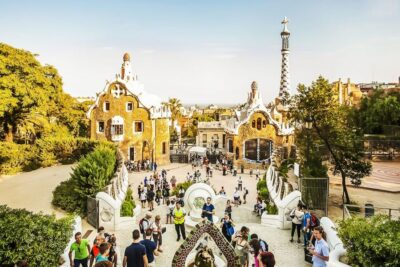 ★ 4.4Park Güell Admission TicketFrom $2576,534 reviews
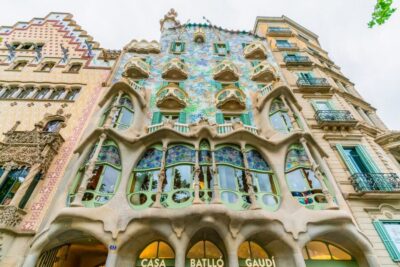 ★ 4.7Casa Batlló Entry with Self-Audioguide TourFrom $3425,359 reviews
 ★ 4.424 or 48-Hour Hop-On Hop-Off Bus TourFrom $3920,872 reviews
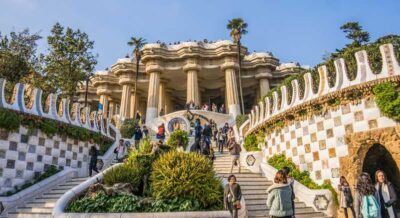 ★ 4.7Park Guell Guided Tour with Skip The Line EntryFrom $3117,563 reviews
 ★ 5.0Barcelona in 1 Day: Sagrada Familia, Park Guell,Old Town & PickupFrom $12013,541 reviews
 ★ 4.3Barcelona Aquarium: Entry TicketFrom $3113,335 reviews
 ★ 4.8Sagrada Familia Skip-the-Line Entry Ticket & TourFrom $6712,789 reviews
 ★ 4.4FC Barcelona Museum “Barça Immersive Tour” TicketFrom $3510,944 reviews
Continue by place or experience