
REVIEW · BARCELONA CITY TOURS
Barcelona in 2 Hours: Guided Walk Through History and Sights
Barcelona makes more sense in two hours. This walk strings together the sights you recognize with the stories you usually miss, from Els Quatre Gats to El Born. You get a local-style narrative that connects architecture, art, and Catalan identity without turning your afternoon into a museum marathon.
I love the short, focused route. You hit major landmarks plus smaller, story-rich stops, and it stays paced for real strolling, not queueing. I also love the human touch from the guides. Over multiple guide names like Darren, Petra, Jorge, Sonia, Sonja, Lydia, Sarah, Vanessa, Rolene, and Mariah, the common thread is clear, energetic storytelling and helpful local tips.
One thing to plan for: entry is not included at Catedral de Barcelona and Basilica de Santa Maria del Mar. If you want to go inside both, factor in extra time and possible ticket costs.
Key reasons this 2-hour Barcelona walk works
- Story-led stops that connect famous faces, like Picasso and Gaudí, to specific places you can see
- Small group size with a maximum of 20 people, which helps you hear and ask questions
- Mixed free and paid access so you can enjoy many exteriors right away, then decide on church interiors
- Catalan history built into the route at plazas tied to La Diada, independence, and darker episodes
- Local-guide energy highlighted by guides such as Darren, Petra, and Jorge in multiple runs
- Practical visitor tips that include common-sense advice like wearing good walking shoes and using sunblock
A 2-hour Barcelona intro that connects streets to Catalan identity
This is the kind of Old Town tour that helps you stop seeing Barcelona as disconnected postcards. In two hours, you get the why behind what you’re looking at: the buildings, the artwork, and the political memory living in plain sight.
The loop also makes timing easy. You’re not trying to cover everything in the city. Instead, you’re given a tight path through Ciutat Vella and El Born, with each stop acting like a chapter. If it’s your first day, it helps you make better choices later, because you’ll understand how the neighborhoods and themes link up.
You can also read our reviews of more walking tours in Barcelona



Starting in Ciutat Vella, then walking into the Gothic Quarter mindset
You begin in Ciutat Vella at Plaça del Vuit de Març (08002), and you finish at Basílica de Santa Maria del Mar in Ciutat Vella (08003). That end point matters, because Santa Maria del Mar is a strong “send-off” for El Born, the area where maritime Barcelona stories show up in stone.
The pace is built around about 10 minutes at each stop. That’s not long enough to turn into a lecture, which is good. It also means you’ll want comfortable shoes, since you’re moving through narrow streets and open plazas in the sun.
Els Quatre Gats and the Picasso and Gaudí meeting-place story
Your first stop is Els 4 Gats, a historic café and restaurant known for gathering thinkers, artists, and visitors. The big draw here is the idea of the place as a social engine, not just a pretty exterior. You learn how it became part of Barcelona’s creative orbit, including references to Picasso and Gaudí.
Even if you’ve seen the name in art books, this stop helps you translate it into something physical: the Art Nouveau feel of the surroundings and the sense that conversations happened here that mattered. It’s also one of those places where you can get your bearings for the rest of the walk.
Practical note: this is listed as admission free in the plan, so you can enjoy it without budgeting for entry.
From the mosaic legend to prayer in the streets: El Mon Neix En Cada Besada
Next comes El Mon Neix En Cada Besada, a photomosaic that’s often shared online. The tour angle is what I like best about it: the story runs deeper than the photo.
You connect the artwork to Catalan history tied to September 11, 1714, and to the annual celebration known as La Diada. So instead of thinking of it as a decorative wall, you see it as a visual reminder of remembrance and identity.
This stop is also admission free and designed for a quick, satisfying pause. You’ll likely spend a few minutes looking up, then again looking sideways, because the details reward a second glance.
Catedral de Barcelona: Gothic drama and the life of Saint Eulalia
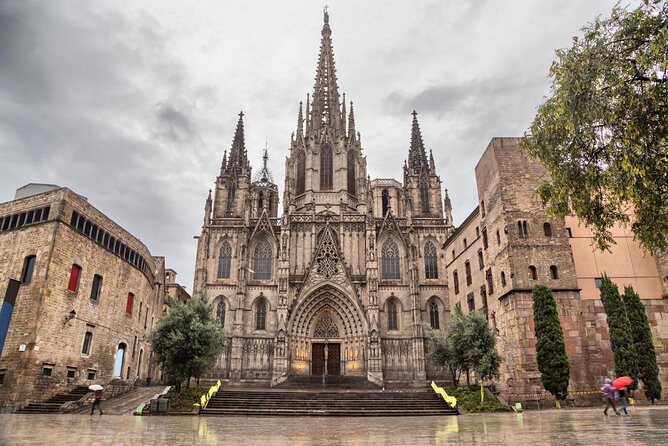
After the street art, you reach Catedral de Barcelona, the Gothic-style centerpiece in the heart of the city. The key story here is Eulalia, Barcelona’s patron saint, and the way her life and martyrdom are reflected in the cathedral’s legacy.
This is one of the stops where you should manage expectations around time and money. The tour plan lists admission as not included at this church. So you can enjoy the outside quickly with the group, then decide on the spot whether you want to pay to go in.
If you’re the type who loves details, consider adding the interior visit later, because the cathedral is built over centuries. If you prefer the “see it, then move on” style, the exterior stop still gives you the religious and local context.
You can also read our reviews of more guided tours in Barcelona

Casa de l’Ardiaca and the aqueduct traces that carry Roman Barcelona
Casa de l’Ardiaca is a tiny architectural standout in the Gothic Quarter, with elements mixing Gothic and Renaissance touches. What I enjoy about this stop is the time travel angle: you’re shown remnants that connect to Roman Barcino.
The plan specifically points to Roman-era wall remnants and arcade traces linked to the aqueduct system that once supplied the city with water. That turns the building from a pretty stop into a clue: Barcelona didn’t start where the Gothic Quarter begins today.
Admission free, so it’s a good moment to slow down for photos and take in the texture. It’s also a reminder that Barcelona’s layers are close together. One street can feel like multiple eras stacked.
Pont del Bisbe and the legend-factor you’ll either love or laugh at
Pont del Bisbe is described as one of Barcelona’s most photographed spots, and the reason is simple: it looks like a postcard. The tour adds a legend that hangs around the bridge, tied to someone’s superstition and a caution about walking under it.
I like stops like this because the story gives you a hook. Even if you don’t buy the legend, it makes the bridge feel like part of the neighborhood’s folklore, not just an image.
Admission free, and because it’s a brief stop, it’s ideal if your feet are starting to complain but you still want the fun story component.
A sombre pause at Plaça Sant Felip Neri, then MUHBA – El Call’s medieval streets
Then the walk turns heavier, at Plaça Sant Felip Neri. The focus here is the connection between the square’s story and the Catalan independence struggle, including scars from tragedy tied to that desire.
After that, MUHBA – El Call brings you into the old Jewish quarter with narrow streets and medieval architecture. This stop changes the tone again, and that contrast is useful. Barcelona’s identity is not one theme. It’s a stack of communities, faiths, and conflicts.
Both stops are listed as admission free in the plan, so you can keep the walk moving. Still, give yourself permission to look up and slow down for a moment. The alley geometry in places like El Call makes the city feel older than it looks from a distance.
Plaça de Sant Jaume and Plaça del Rei: power, government, and Inquisition-era shadow
Plaça de Sant Jaume is the main square of the city, home to the seats of Catalan government and City Hall. The tour context adds two useful ideas: celebration and protest can happen in the same place, and one local figure’s story is tied to an important holiday.
From there you move to Plaça Del Rei, where the Royal Palace sits. The story here shifts to the dark past of the Spanish Inquisition. This stop can feel intense, but the value is that it makes Catalonia’s modern political identity easier to understand. You see how power has been enforced and challenged over centuries.
Both stops are admission free in the plan. For me, that makes them perfect for a first pass. You don’t need tickets to grasp the emotional temperature of a place.
Plaça de l’Àngel and the grain trade to Saint Eulalia apparition story
You finish this section at Plaça de l’Àngel. The tour explains that it was once known as Wheat Square, which points to Barcelona’s trading past. Then the square gets a name change tied to an apparition during a Saint Eulalia procession.
This is another stop that plays well with the tour format. It’s short, story-driven, and it gives you a new way to interpret a place you might otherwise ignore. You start noticing trade routes and religious rituals as “invisible infrastructure” behind the city’s street map.
Admission free in the plan, so it’s one more easy win.
Basilica de Santa Maria del Mar: a Gothic finale for El Born’s maritime identity
The last stop is Basilica de Santa Maria del Mar in El Born. The tour frames it as a major Gothic basilica and a hallmark of the neighborhood. It also ties the church to Barcelona’s maritime history, which is exactly what I want to learn about in this part of the city.
Admission is not included for this basilica on the plan. That means you’ll either enjoy the outside with the group and keep moving, or you’ll plan for a paid interior visit on your own.
Why end here? Because the basilica feels like a real culmination point. After learning about plazas of power and memory, it’s a good shift to the kind of architecture that grew from daily life tied to the sea and trade.
Price, group size, and what you really get for $22.99
At $22.99 per person for an approximately 2-hour walk, this is priced like an affordable orientation tool. You’re paying for a guide to connect the dots between architecture, art, and Catalan context. That’s hard to replicate with only a map and a few plaques.
The group size helps the value. With a maximum of 20 travelers, you’re more likely to get a back-and-forth experience, rather than just being marched past points.
You also get a mobile ticket, which makes check-in simple when you’re moving fast in the city. And there’s an option to upgrade to a private tour if you want quieter pacing or more direct attention from the guide.
One more timing tip: the tour is commonly booked about 42 days in advance on average. If you’re visiting in a busy season, booking ahead is smart.
The guide experience: what stood out across Darren, Petra, Jorge, and more
The reviews emphasize a consistent style: clear English, strong organization, and story-telling that makes the route feel like a conversation. Guides named across different runs, including Darren, Petra, Jorge, Sonia, Sonja, Lydia, Sarah, Vanessa, Rolene, and Mariah, are repeatedly praised for keeping the pace engaging.
What you should take from that is simple. This tour is built to be a first-day shot of clarity. You’ll likely leave with sharper questions, plus practical suggestions for what to do next.
A small practical note from feedback that matters: on some days, background city noise can be an issue if there’s no amplification. If you’re hard of hearing or sensitive to loud street noise, sit where you can see the guide clearly, and don’t be shy about asking them to repeat.
Who should book this walk, and who might want something else
Book it if you want a high-efficiency intro to the places behind Barcelona’s icons. It suits first-timers, solo visitors, and couples who like walking and want real context without spending a whole day in line-heavy attractions.
It’s also great if you already plan bigger sites later. This tour helps you build a mental map for the Gothic Quarter and El Born, so the next day’s sightseeing feels more meaningful.
You might consider a different option if you want long interior time in major churches. Since Catedral de Barcelona and Santa Maria del Mar are not included for admission, you’ll need to plan separate visits if interiors are your priority.
Should you book this Barcelona in 2 Hours walk?
Yes, if you want fast clarity and story-led sightseeing in the tight streets of Ciutat Vella and El Born. At $22.99 and about 2 hours, you get enough context to understand what you’re seeing, plus a route that makes the Old Town feel navigable.
I’d book it especially if you like your history told through places, not just facts. The mix of Els 4 Gats, Catalan-linked art, Gothic architecture, and politically charged plazas means you’ll come away with more than photos.
If you know you want to see major interiors, come prepared to add separate entry time for Catedral de Barcelona and Basilica de Santa Maria del Mar.
FAQ
How long is the Barcelona in 2 Hours guided walk?
It lasts about 2 hours.
How much does the tour cost?
The price is $22.99 per person.
Is the tour offered in English?
Yes, the tour is offered in English.
What is the maximum group size?
The group is capped at 20 travelers.
Are museum or church tickets included at every stop?
No. The plan lists admission as not included for Catedral de Barcelona and Basilica de Santa Maria del Mar. Other stops are listed as free.
Where does the tour start and end?
It starts at Plaça del Vuit de Març, Ciutat Vella, 08002 Barcelona, Spain, and ends at Basílica de Santa Maria del Mar, Plaça de Santa Maria, 1, Ciutat Vella, 08003 Barcelona, Spain.
Do I need a paper ticket?
No, the tour uses a mobile ticket.
Can I cancel for a refund?
Free cancellation is available up to 24 hours before the experience starts for a full refund.
More Guided Tours in Barcelona
More Walking Tours in Barcelona


More Tour Reviews in Barcelona
Not for you? Here's more nearby things to do in Barcelona we have reviewed








More Barcelona City Tours worth opening.
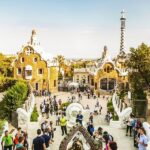
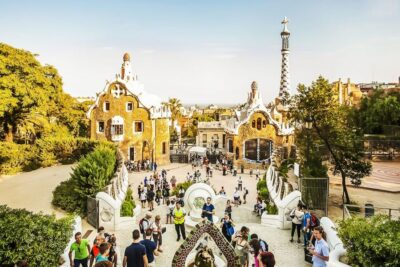 ★ 4.4Park Güell Admission TicketFrom $2576,534 reviews
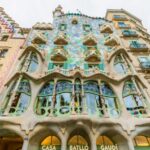
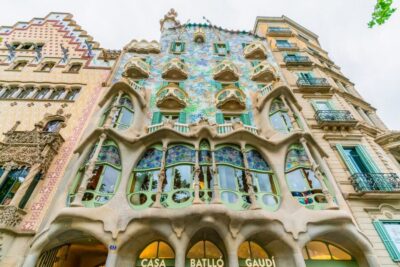 ★ 4.7Casa Batlló Entry with Self-Audioguide TourFrom $3425,359 reviews
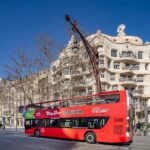
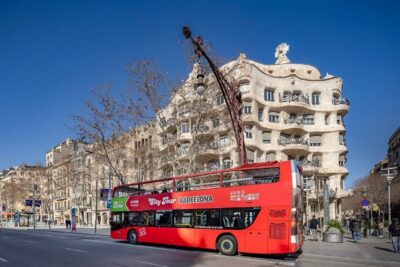 ★ 4.424 or 48-Hour Hop-On Hop-Off Bus TourFrom $3920,872 reviews
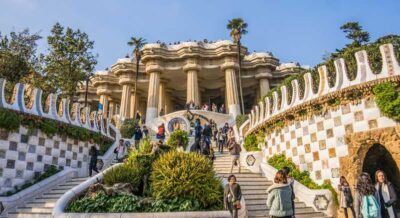 ★ 4.7Park Guell Guided Tour with Skip The Line EntryFrom $3117,563 reviews
 ★ 5.0Barcelona in 1 Day: Sagrada Familia, Park Guell,Old Town & PickupFrom $12013,541 reviews
 ★ 4.3Barcelona Aquarium: Entry TicketFrom $3113,335 reviews
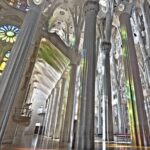
 ★ 4.8Sagrada Familia Skip-the-Line Entry Ticket & TourFrom $6712,789 reviews
 ★ 4.4FC Barcelona Museum “Barça Immersive Tour” TicketFrom $3510,944 reviews
Continue by place or experience