
REVIEW · GOTHIC QUARTER TOURS
Barcelona Historical Walking Tour: Gothic Quarter and El Born
Old streets, big stories in two hours. This walking tour strings together the Gothic Quarter and El Born with real places tied to Picasso and Gaudi, plus street-level bits most bus tours miss. I love the way it mixes famous landmarks with short stops where the details matter, and I especially like that the guide keeps the pace easy while telling local stories. One possible drawback: you only get quick looks at major interiors, since tickets are not included for the Catedral de Barcelona and Basilica de Santa Maria del Mar.
You’ll finish with a clear mental map of central Barcelona, not just a list of sights. The group stays small (max 20), and the tour is designed to be doable for most people, with a relaxed rhythm that leaves room to stop, look, and take photos. I also like that it’s offered in English and uses a mobile ticket, so you’re not juggling paperwork mid-walk.
At $30.25 per person for about two hours, the value mostly comes from having a local guide connect the dots for you. Many of the stops are free to view, but two big churches require separate admission, so plan a little extra if you want inside time. If you’re sensitive to audio, stand near the front at the start, since I’ve seen a small number of groups mention sound was hard when the guide spoke too softly.
Key highlights you can bank on
- Els 4 Gats puts Barcelona’s modernist scene in your hands, with the Picasso and Gaudi connection
- El Mon Neix En Cada Besada gives a quick lesson in Catalan identity tied to La Diada
- Roman and Gothic layers show up at Casa de l’Ardiaca and Pont del Bisbe
- Jewish Quarter storytelling at MUHBA – El Call turns narrow lanes into a timeline
- Major squares without the rush at Plaça de Sant Jaume and Plaça del Rei
- Santa Maria del Mar finish lands you in one of the best Catalan Gothic atmospheres for a finale
Walking From Picasso Cafes to Medieval Squares in About 2 Hours
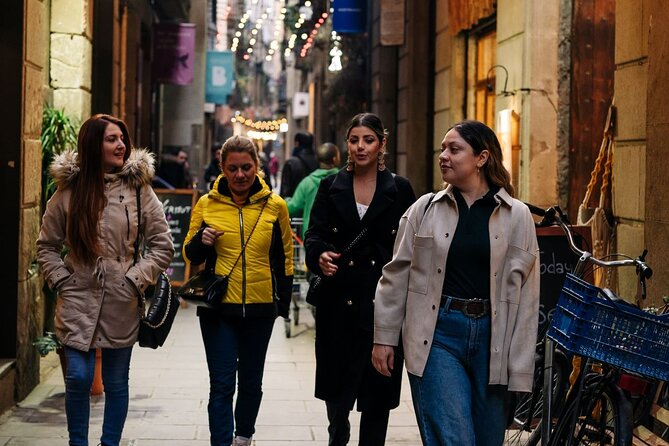
This is the kind of tour that helps you get bearings fast. You’re walking through the oldest streets of Barcelona, but the route is built for understanding, not just sightseeing. In roughly two hours, you go from artist hangouts to Roman-era echoes, then on to medieval streets and government-and-royalty squares.
The format also works because it doesn’t try to cram in long museum visits. Most stops are short and mostly outside, so you can actually read what’s in front of you: stone, street layouts, and architectural clues. That’s a big reason why I think it suits first-timers who want a strong overview before they start choosing what to explore deeper.
If you’re a repeat visitor, it still has a benefit. You’ll likely notice you’ve walked past some of these corners without understanding what they signaled at the time. The guide’s job is to make those connections feel obvious.
You can also read our reviews of more walking tours in Barcelona



Price and what you actually get for $30.25
The tour costs $30.25 per person and runs about 2 hours. It’s a group walk with a local guide and a max group size of 20, which usually helps keep the pace human and questions manageable.
Here’s the practical math: most stops are free to access or view. You’ll see a mix of cafés, squares, and churches from the outside as the guide explains what’s going on. Admission is not included for the Catedral de Barcelona and Basilica de Santa Maria del Mar, so if you want inside photos and a full experience, you’ll need to add those tickets on your own.
You also get a mobile ticket, plus the tour is offered in English. And the route is built to reach spots that larger bus tours often can’t comfortably serve, especially those tight streets where Barcelona really feels like Barcelona.
Plaça del Vuit de Març to Els 4 Gats, where artists and modernists met
Your walk starts at Plaça del Vuit de Març, in Ciutat Vella. From there, you head into the Gothic Quarter in a way that feels like moving through a living neighborhood, not an empty set built for tourists.
Stop one is Els 4 Gats, a historic café and restaurant that became a favorite meeting point for artists and intellectuals. This is where the tour makes one of its strongest promises: you hear how Pablo Picasso and Antoni Gaudi were tied to the kind of creative scene that formed around places like this. Even if you don’t go far inside, the Art Nouveau design gives you an instant sense of what Barcelona looked like when modernism was still fresh and daring.
If you like architecture and art stories, this opening stop sets the tone. It also stops you from thinking of the Gothic Quarter as only medieval. Barcelona has layers, and this tour starts with one of the more recent-but-still-historic layers.
La Diada in the street: El Mon Neix En Cada Besada
Next comes El Mon Neix En Cada Besada, a photomosaic installed in 2014. This one is short on time but long on meaning, because it ties directly to Catalan memory and the defeat of September 11, 1714.
The guide connects that moment to La Diada, Catalonia Day, and explains why this area keeps the theme of freedom close to its identity. It’s a good reminder that Barcelona’s history is not only about buildings. It’s also about politics, language, and how people remember.
This stop works well because it’s easy to pause. You can take a photo, listen, and then move on without needing to read a long plaque or hunt for context on your own.
Catedral de Barcelona, Casa de l’Ardiaca, and Pont del Bisbe: Gothic details you can spot
The tour then leans into the Gothic core. The Catedral de Barcelona is an eye-catcher right in the center of the old city, and it’s especially tied to the life and death of the city’s patron saint, Eulalia. You’ll hear the story of Eulalia being tortured to death by the Romans, which adds weight to a place that might otherwise just look like beautiful stone from street level.
Important practical note: admission for the cathedral is not included. So you’re set up for an outdoor orientation, and you’ll have to decide on the spot whether to purchase entry if you want inside access.
After that, Casa de l’Ardiaca brings the “spot the layers” theme to life. You learn why this place feels strange and specific, with a mix of Gothic and Renaissance architecture. You also get the vertical face of a Roman wall and aqueduct structures as part of the story, which is one of those details that makes the old city feel like a document you can read.
Then you cross Pont del Bisbe. This Neo-Gothic style bridge sits on Carrer de Bisbe, once a main Roman thoroughfare in Barcino. The legend tied to the bridge is the kind of story that helps the guide’s explanations stick, because you remember the place by the weird, human detail.
One drawback to keep in mind: because this is a walking tour with lots of “stop and listen” moments, you won’t have hours inside churches. It’s ideal for building context and spotting features, but it’s not a substitute for a cathedral ticket if that’s your main priority.
You can also read our reviews of more historical tours in Barcelona


Placa Sant Felip Neri and the quiet weight of Spanish Civil War history
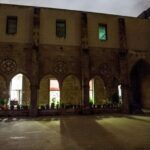
Plaça Sant Felip Neri is tucked away, so you feel the change the moment you reach it. This square holds scars from the Spanish Civil War, and the guide treats it as more than a background fact. You learn how the built environment can preserve trauma in plain sight, even when the location looks calm.
This is also one of those stops where listening matters more than staring. If you rush through, the impact is easier to miss. Give yourself the full 10 minutes, look around, then let the story make the square feel real.
From there, the tour keeps moving through the neighborhoods where history isn’t abstract. It becomes street-level.
MUHBA – El Call: narrow lanes and the Jewish Quarter timeline

MUHBA – El Call is where the tour expands your understanding of Barcelona beyond the main Christian landmarks. The Jewish quarter area is all about tight streets and medieval textures, and the guide gives context that helps you picture how this quarter functioned historically.
You’ll hear about the Jewish history connected to the area, including the presence of a synagogue and local legends tied to the streets. Even if you’ve seen Jewish quarters in other European cities, this one has a Barcelona-specific feel because of how the layers overlap.
This is a strong stop for photographers too. Narrow lanes plus medieval-style architecture naturally frame shots. Just remember the walk is still happening around you, so keep an eye on your pace and meet the group quickly after photos.
Plaça de Sant Jaume and Plaça del Rei: where power lived in the open
Two central squares help you understand why Barcelona’s old city felt like a civic machine. Plaça de Sant Jaume acts like a hub for government activity, and the buildings around it help explain the idea of public life being tied to specific locations.
Then Plaça del Rei brings the royal layer into view. The square houses the Royal Palace, and the guide connects it to a darker past that makes the area feel more serious than its appearance suggests. It’s a good reminder that “pretty square” does not mean “simple story.”
This part of the tour is also useful for practical sightseeing later. Once you’ve walked these squares with context, it’s easier to decide what direction to explore next, whether you head toward more museums or just wander without getting lost.
Wheat Square legend at Plaça de l’Àngel, then Santa Maria del Mar to finish
Plaça de l’Àngel is described as the former Wheat Square, a major hub for grain trading. That detail alone changes how you see it, because it’s no longer just a pretty place to pass through. The guide also tells the heavenly legend behind the name Angel’s Square, giving you a story that links commerce, language, and myth.
The tour ends at Basilica de Santa Maria del Mar, in the Plaça de Santa Maria area. This Catalan Gothic church is known for its dramatic look, and the guide connects it to Barcelona’s maritime history. It’s a fitting finale because the feel shifts from narrow lane mystery to a wider, more monumental space.
Again, admission for Santa Maria del Mar is not included. If you want to go inside at the end, you’ll likely find it more satisfying because your brain is already primed with the architectural and historical explanations from earlier stops.
If you like to continue after tours, this ending point is a smart launchpad. Even if you do nothing else that day, you’ll have a church you can revisit with a clearer sense of what you’re looking at.
Guides make this tour: energy, Q and A, and stories you remember
The biggest strength is the guide work. Across many groups, I keep seeing the same pattern: guides stay energetic, answer questions well, and use small extras to keep the route interesting.
For example, Juan is praised for connecting Spanish history to the details you see in the streets. David is singled out for Gaudi connections, which matters here because you’re not just learning Gothic architecture, you’re also learning how modernism grew out of the city’s earlier creative currents.
Other guides like Thami and Lidia get credit for mixing local traditions and humor with clear explanations. Jordan gets mentioned for comedy paired with solid history, and guides such as Sonia and Petra show up with the vibe of a tour that keeps moving but does not feel rushed.
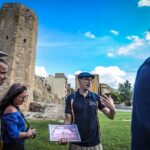
One practical tip from these patterns: if the guide uses extra visual support, like an iPad on the walk, the best seats are usually where you can see their hands and eyes. You’ll get more out of it even during the quick 10-minute stops.
Who should book this Barcelona Old Town walk
This tour is best for you if you want:
- A first pass through the Gothic Quarter and El Born with context
- A guide-driven route that reaches places bus tours struggle to access
- An easy morning or afternoon plan that still feels like real Barcelona street time
It also fits families and mixed-age groups. I’ve seen notes that the walk is doable and even keeps teenagers interested, which is not nothing in Barcelona when everyone wants to stop for snacks.
If your top priority is entering every big monument, plan on using this tour as the set-up. Then pick one church to spend more time in later, since cathedral and basilica admissions are not included.
Should you book this Gothic Quarter and El Born tour?
I’d book it if you want value, context, and a route that helps you stop guessing what you’re looking at. The small group size (max 20), the English-friendly format, and the mix of Roman traces, Gothic architecture, and Catalan identity themes make it a strong overview for a first Barcelona trip.
Skip it or adjust your expectations if your travel style is more about long, ticketed interiors and quiet self-guided wandering. This is a fast, story-forward walk, not a museum day.
And one last callout: if you care about hearing clearly, start near the front so you can follow the explanations. Most guides are loud and clear, but a few groups have had trouble with volume, and you don’t want that to ruin your experience.
FAQ
How long is the Barcelona Historical Walking Tour?
The tour lasts about 2 hours.
How much does the tour cost?
The price is $30.25 per person.
Is the tour offered in English?
Yes, it is offered in English.
What is the group size limit?
The tour has a maximum of 20 travelers.
Where do I meet and where does it end?
You meet at Plaça del Vuit de Març, Ciutat Vella, 08002 Barcelona, Spain. The tour ends at Basílica de Santa Maria del Mar, Plaça de Santa Maria, 1, Ciutat Vella, 08003 Barcelona, Spain.
Are entrance tickets included for the Cathedral de Barcelona and Basilica de Santa Maria del Mar?
No. Admission tickets are not included for Catedral de Barcelona and Basilica de Santa Maria del Mar.
What is included in the tour?
It includes a guided walking tour with a local tour guide, city highlights, and hidden gems, plus a mobile ticket.
Is free cancellation available?
Yes. You can cancel up to 24 hours in advance for a full refund. Cancellation within 24 hours is not refundable.
More Walking Tours in Barcelona

More Tours in Barcelona


More Tour Reviews in Barcelona
Not for you? Here's more nearby things to do in Barcelona we have reviewed








More Gothic Quarter Tours worth opening.
 ★ 5.0Barcelona Gothic Quarter Tapas & Taverns Food & Wine TourFrom $1311,470 reviews
 ★ 4.7Gothic Quarter Ghosts and Legends Walking TourFrom $191,443 reviews
 ★ 4.8Old Town and Gothic Quarter Walking TourFrom $211,393 reviews
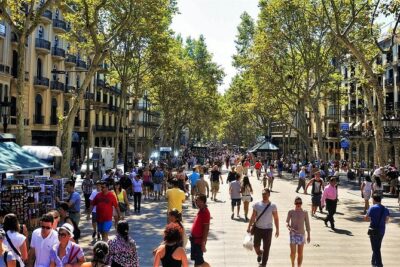 ★ 5.0Barcelona Old Town & Gothic Quarter Small Group TourFrom $221,308 reviews
 ★ 4.8El Born and Gothic Quarter Wine & Tapas Bar TourFrom $81674 reviews
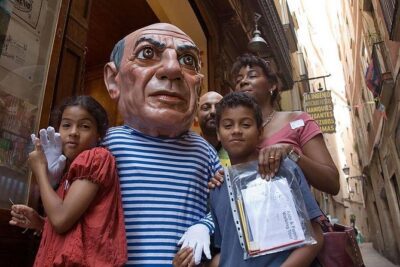 ★ 5.0Kids and Family Gothic Quarter Walking Tour in BarcelonaFrom $25465 reviews
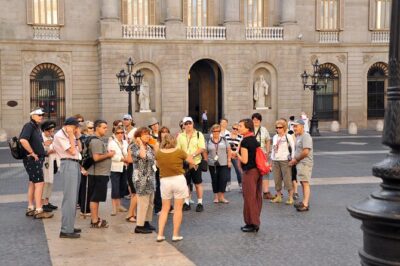 ★ 4.5Barcelona Gothic Quarter Walking TourFrom $33456 reviews
★ 4.9Gothic Quarter Walking TourFrom $212383 reviews
★ 4.5Barcelona Gothic Quarter Walking TourFrom $33456 reviews
★ 4.9Gothic Quarter Walking TourFrom $212383 reviews
Continue by place or experience