
REVIEW · BARCELONA BIKE TOURS
Beach Bike Tour Barcelona
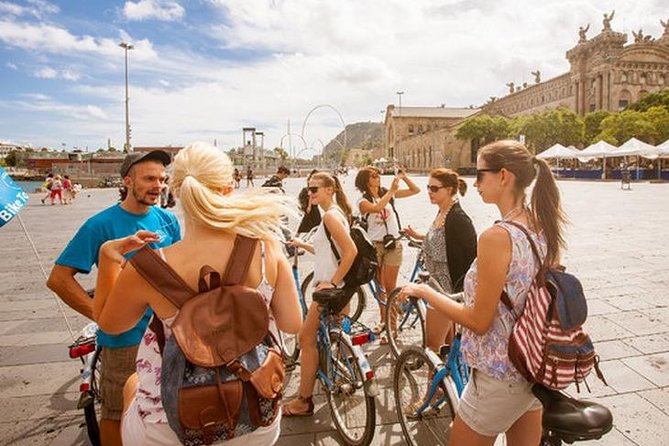
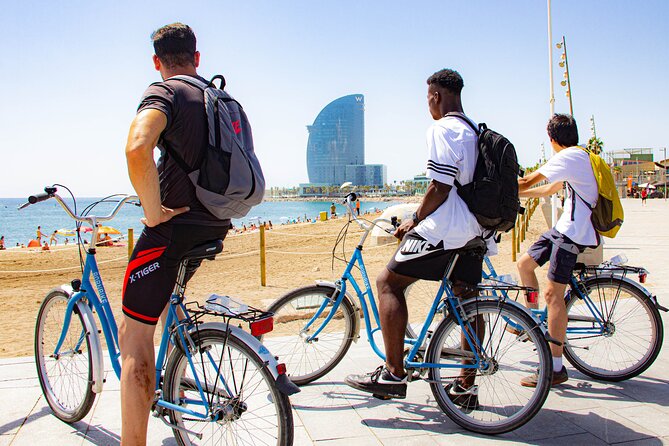
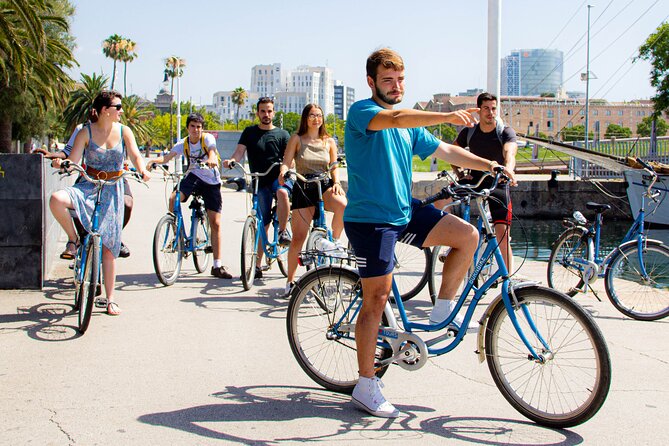
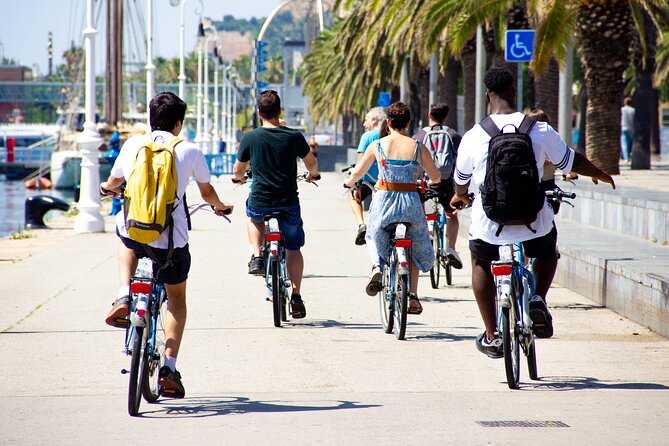
Barcelona by bike feels like a shortcut to real life. This 3-hour ride threads through the waterfront neighborhoods and key coastal stops with a local guide and small-group attention. You’ll roll past the old harbor vibe, then keep going down to the Olympic-era coastline and back again.
I love that you get everything set up for you: helmets and bikes provided, plus free bottled water to keep things comfortable. I also like the pacing, with short looks at each stop, so you get lots of variety without feeling stuck in one place too long.
The one thing to consider is that this is a bike tour with a fixed route and time window, so if you want long photo breaks or slow museum-style stops, you might feel a bit rushed.
Key highlights worth your attention
- Small group, max 15 people, which makes it easier to hear your guide and ask questions
- English-speaking guide with a route built around neighborhood feel, not just monuments
- Free bottled water and helmets provided for a more relaxed ride
- Stop-to-stop sightseeing, with brief 10-minute stops at each listed point
- Coastal variety, from Port Vell and La Barceloneta to Parc Diagonal Mar and Poblenou
- Free admission tickets listed for each stop, so you can focus on the ride
Sea views on two wheels, with a guide who keeps it practical
A good bike tour in a big city is really about one thing: getting you moving through the right areas without you having to think too hard. This one is built for that. You’re in Barcelona’s seaside zone for about three hours, and the route cycles through a mix of harbor views, neighborhoods, and park space.
The tour is priced at $43.45 per person, and I think it hits a sweet spot because the value is not just the scenery. You’re also getting helmets, bikes, and bottled water, which removes a lot of hassle from your day. That matters in Barcelona, where finding rentals, timing them right, and keeping water on hand can turn into little side quests.
And the vibe is helped by the guide. One guide named Tomjie was praised as a very kind, thorough person and a safe rider. Another key name you might run into is Ernés, noted for being helpful and for sharing good neighborhood hints. The practical takeaway for you: you’re not just riding, you’re getting direction on what you’re seeing and how to read the areas as you pass through.
You can also read our reviews of more cycling tours in Barcelona
Getting set up: bikes, helmets, and free bottled water
Before you start, this is set up to be low-stress. You’ll have helmets and bikes provided, so you do not need to show up with gear. You’ll also get free bottled water. That may sound basic, but on a seaside route in warm months, it can be the difference between a fun afternoon and a slightly cranky one.
The tour also uses a mobile ticket. That’s a real convenience point. You can usually keep everything in your phone, rather than juggling paper or printed confirmations.
English is the offered language, so if that matters for your comfort, you’ll be fine. And because the group can be as high as 15 people, you should still expect personal attention rather than being shoved into a huge pack.
Where you meet and how the tour moves (Carrer de la Marquesa to back again)
You’ll start at Carrer de la Marquesa, 1, Ciutat Vella, 08003 Barcelona, Spain. The tour ends back at the same meeting point, so you’re not left figuring out a second transportation plan.
It also says it’s near public transportation, which is a useful detail if you’re combining this with other parts of your day. Since the tour is around three hours, it works as a solid midday or late-afternoon activity when you want fresh air and a change of pace.
One more time-related note you can plan around: each listed stop is about 10 minutes. That means you’ll see a lot of distinct places, but you won’t get a long, slow spend in just one spot. If your travel style is quick glances plus good route coverage, this fits nicely.
The route in plain terms: 10 coastal stops in about three hours
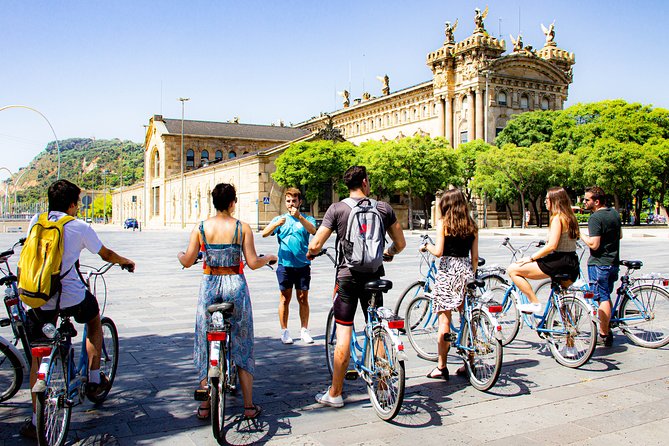
The tour follows a straight sequence of coastal and seaside-adjacent points. Each stop is brief, and they’re chosen to give you the feel of Barcelona’s waterline in multiple moods:
- Port and harbor areas
- Beach neighborhood streets
- Olympic-era waterfront zones
- Big park space for a calmer moment
For you, the advantage is that you’re not guessing what’s next. The itinerary does the navigation for you, while your job is to enjoy the ride and soak up what you’re seeing.
Below is how each stop tends to “pay off,” plus what to watch for so the time feels worth it.
Stop 1: Mirador de Colom at Portal de la Paz
Stop 1 is Mirador de Colom, tied to the Monumento a Colón at the Plaza del Portal de la Paz. Even with a short stop time, this is a good way to orient yourself. It gives you a strong sense of where the city frames the waterfront.
What I like about starting with a clear landmark is that it helps the rest of the route make sense. After this, when you move toward the harbor zones, you’ll have an easier time understanding how Barcelona’s waterfront layers sit next to each other.
Stop 2: Drassanes, a quick look that sets the harbor tone
Next comes Drassanes. This is another stop that’s short on time but useful on context, because it keeps the tour anchored in the harbor-side look and feel.
With a 10-minute window, you won’t be doing a long study here. Instead, you’re getting a “read” on the area so that later stops like Port Vell and La Barceloneta feel less random and more connected.
Stop 3: Port Vell, Barcelona’s old harbor feel
Stop 3 is Port Vell, described as the old harbor. This is often where a seaside bike tour becomes more than just movement. You start to feel the older maritime side of the city, and that changes the mood from “city landmark” to “waterfront neighborhood.”
Practical tip for your photos: since the stop is brief, decide quickly what you want first. A wide harbor view is usually more satisfying than trying to capture every angle in ten minutes.
Stop 4: La Barceloneta, the beach neighborhood reality check
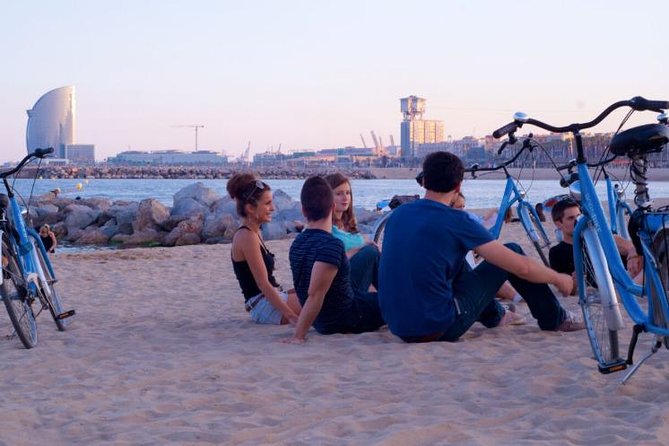
Stop 4 is La Barceloneta, the beach neighborhood. This is where you can feel the mix of locals, coastal energy, and typical seaside street life.
I like this stop because it’s not just about views. It’s also about atmosphere. You’ll get a sense of how people live around the water, not just how Barcelona looks from a postcard angle.
A consideration: beach neighborhoods can be busy, so your best bet is to slow down your attention. Instead of trying to see everything, pick one or two things to watch, like how the streets connect back to the harbor or where people gather near the shoreline.
Stop 5: Port Olímpic, a modern harbor chapter
Stop 5 is Port Olímpic. Since the tour later includes Olympic references, this stop works like a bridge. It shifts you toward the more modern harbor structure and away from the older-harbor feel.
On a bike, Port Olímpic tends to be fun because you can experience it as a flowing route, not a single fixed viewing platform. Even if the stop is short, the ride through the area helps you understand the layout.
Stop 6: Forum de las cultures, the oversized space moment
Stop 6 is the Forum de las cultures. This kind of stop adds variety to the day. After harbor and neighborhood streets, you get a different kind of setting: more open space energy.
If you like a break in scenery, this works. It gives your eyes a chance to reset before the route heads toward parks and residential-coastal areas.
Stop 7: Parc Diagonal Mar, park air on the seaside edge
Stop 7 is Parc Diagonal Mar. Parks are a smart stop on a bike tour because they let you breathe. Even though the time is listed as about 10 minutes, a park stop can break up the day’s heat and keep the ride comfortable.
I also think parks help you absorb the city layout. In Barcelona, green space along the waterfront can be a clue to how the city planned for people to move between city zones.
Stop 8: Poblenou, the neighborhood layer
Stop 8 is Poblenou. This is where the tour becomes more about “which Barcelona is this?” Poblenou gives you that neighborhood feel rather than a purely waterfront-only experience.
This stop is especially useful if you’re trying to avoid only the most famous tourist strips. Since your route is already structured around multiple neighborhoods, Poblenou adds another readable layer to what you’re seeing.
Stop 9: Ciutadella / Vila Olímpica, JJOO 1992 context
Stop 9 is Ciutadella / Vila Olímpica, described as Vila Olímpica (JJOO 1992). This is a key moment in the overall route because it ties the ride to the 1992 Olympic area.
Even if you’re not visiting museums or deep history stops, that context makes your ride more meaningful. You can look at the surrounding layout and understand why certain parts of the coast feel planned and structured.
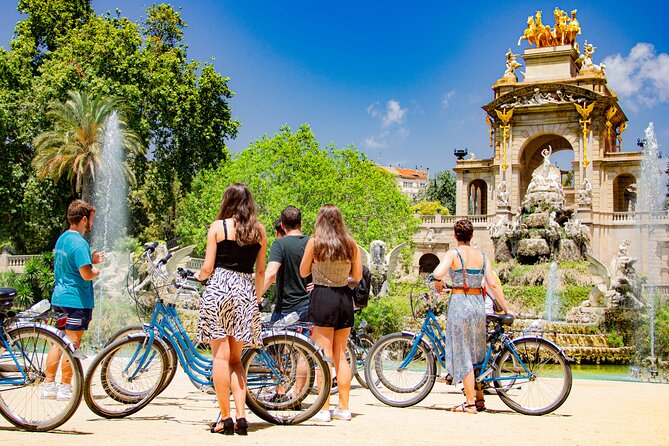
Stop 10: Parc de la Ciutadella, the calm ending
The final stop is Parc de la Ciutadella. After all the coastal zones, ending with a park is a nice way to finish. It gives you an easier final landing, with a calmer setting for photos and a moment to stretch a little.
And because the tour ends back at the meeting point, the park stop feels like a natural wind-down rather than a random last stop that leaves you needing to scramble to get home.
Why the small group size matters on this route (max 15)
This tour caps at a maximum of 15 travelers, which is a meaningful detail. On bike routes, a smaller group makes it easier to:
- keep a steady pace without bunching up
- hear your guide’s directions and neighborhood notes
- ask quick questions without feeling awkward
The reviews you provided highlight that guides can be thorough and helpful, and you can connect that to the group size. When a guide is managing fewer people, they can actually adapt to what the group is looking at, or what questions come up.
If you like a tour where you can stay engaged, not just passively ride along, this group size supports that.
English guidance plus real-world neighborhood hints
The tour is offered in English. That’s important for comfort, but the bigger value is the kind of info your guide tends to give.
For example, Ernés was praised as a helpful owner who offers good hints on neighborhoods. That kind of guidance is exactly what helps you after the tour ends. You leave with a better sense of what areas are for, what vibe to expect, and where to focus if you return later on your own.
Likewise, Tomjie was described as kind and thorough, with emphasis on safety as a rider. That matters because bike tours are fun, but only if you feel confident that the group is moving smoothly.
Price and value: is $43.45 worth three hours of seaside riding?
Let’s do the quick value math in a way that matters. You pay $43.45 per person for about three hours, and you’re told that bikes and helmets are provided, plus free bottled water. You’re also getting a guide and a structured route through 10 stops, each listed with free admission.
Is it a bargain compared to renting a bike yourself? Not automatically, but it’s often cheaper once you factor in the headache cost. Rentals can be easy, or they can turn into a chain of problems. A guided ride with water and helmet support removes those small friction points.
I also like that you’re not paying for museum tickets. Each stop is listed with free admission ticket. So your money is going into the experience: the ride, the route, and the local explanation.
If your travel style is “I want a memorable route without spending hours planning,” this price feels fair.
What to do before you go: practical tips for a smoother ride
The tour doesn’t list gear requirements in the info you shared, but you can still plan smart. Here’s what I’d do to make the three hours feel easy:
- Wear comfortable shoes. You might hop on and off for short stops, and you will want stable footing.
- Bring sunscreen and sunglasses if the day is bright. Seaside sun can sneak up fast.
- If you’re used to walking tours, expect bike momentum. The stop times are short by design, so be ready to glance and move.
Also, since each stop is about 10 minutes, you can get more out of the tour by setting one mini goal for yourself, like: pick the best harbor view, then find the best neighborhood feel, then find the calmest park moment.
That kind of focus keeps the route from feeling like a checklist.
Weather and expectations: you’re riding the coast, not museum hopping
A bike tour along the water is weather dependent in a simple way. If it’s extremely hot, you’ll appreciate the free bottled water and the fact that the route is broken into short stops. If it’s breezy or sunny, it can feel like the most efficient way to see the city.
Because there aren’t ticketed museum moments described here, this is a “see and feel” tour. You’ll notice neighborhoods and waterfront design more than you’ll study indoor sites.
If you want long guided commentary at one single location, you might find the pacing too brisk. But if you want variety and movement, the schedule fits the day.
Who should book this bike tour, and who might skip it
Book this if you want:
- A guided way to experience Barcelona’s seaside areas in a short time
- Helmets, bikes, and water already handled
- A route that mixes harbor views, neighborhoods, and parks
- English guidance and a group cap that keeps things personal
You might skip it if:
- You prefer slow wandering with lots of downtime
- You’re not comfortable riding a bike for a multi-hour activity
- You want deep time at a single landmark rather than quick stops across several points
Should you book? My call
If you’re torn, here’s how I’d decide. This tour is best for people who want a confident, structured route through Barcelona’s coast without the stress of figuring it out step by step.
For $43.45, you’re getting three hours of guided bike time plus support items like helmets and water. The stop sequence is built for variety, from Port Vell and La Barceloneta to Port Olímpic, Forum, Poblenou, and ending in Parc de la Ciutadella.
So yes, I’d book it if your ideal day is active and outdoors. It’s one of those experiences that makes you feel like you understood a slice of the city in one afternoon.
FAQ
How long is the Beach Bike Tour Barcelona?
It runs for about 3 hours.
Where does the tour start and end?
The tour starts at Carrer de la Marquesa, 1, Ciutat Vella, 08003 Barcelona, Spain, and it ends back at the same meeting point.
What’s included in the tour price?
The tour includes helmets and bikes, and it also provides free bottled water.
Is the tour offered in English?
Yes, the tour is offered in English.
How large is the group?
The tour has a minimum of 4 people per booking and a maximum of 15 travelers.
Are there entry fees for the stops?
The stop list shows admission ticket as free for each of the listed locations.
What is the cancellation policy?
You can cancel for a full refund up to 24 hours in advance of the experience start time.
More Cycling Tours in Barcelona

More Tours in Barcelona


More Tour Reviews in Barcelona
Not for you? Here's more nearby things to do in Barcelona we have reviewed


More Barcelona Bike Tours worth opening.
 ★ 5.0Barcelona 3-hour Bike or E-Bike Tour: Highlights and Hidden GemsFrom $321,429 reviews
 ★ 4.6E-Bike Tour with Montjuic Cable Car & Boat RideFrom $191817 reviews
 ★ 5.0Barcelona e-Bike Tour: Gaudí & Old Town Small GroupFrom $38769 reviews
 ★ 5.0Barcelona Off the Beaten Track Bike TourFrom $47676 reviews
 ★ 4.9Unusual Barcelona Bike Tour in FrenchFrom $35463 reviews
 ★ 4.8Montjuic Hill E-Bike TourFrom $48386 reviews
 ★ 5.0Historical and Modernist Bike Tour BarcelonaFrom $43262 reviews
 ★ 4.7Barcelona Historical 3-Hour Bike TourFrom $42222 reviews
Continue by place or experience