
REVIEW · BARCELONA GAUDI TOURS
Barcelona in One Day: Gaudí, Gothic Quarter &Tapas (Private Tour)
Barcelona can feel like a sprint, not a stroll. This private day pulls Gaudí, the Gothic Quarter, and tapas into one tight route, with Sagrada Família timed after the rush. You get a fast intro to medieval Barcelona, plus the big Modernisme hits on Passeig de Gràcia, without feeling like you are lost with a map app.
Two things I really like: the guide-led pace keeps the stops meaningful, and the late-day Sagrada Família timing is designed for a calmer interior visit. One thing to consider is that this is still a walking day, and the day can flex if your arrival time or pace needs adjustment.
Key highlights worth your attention
- Private tour for your group, not a cattle-car style schedule
- Sagrada Família starts at 4 pm, when visitor flow often eases
- Gothic Quarter stops that show the city behind the postcard views
- Gaudí houses on Passeig de Gràcia, including Casa Batlló and Casa Milà
- Tapas and local tastings, with breaks for restrooms and refreshments
- Well-timed route built to reduce peak crowd stress
A one-day loop that actually makes sense in Barcelona
If you only have one day, Barcelona punishes the “I’ll just wing it” plan. What I like about this tour idea is that it links the right neighborhoods in a sensible order: medieval core first, then the Modernisme streets, and finally Sagrada Família when the light and energy tend to shift.
You are not just ticking off big names. You also get context for how Barcelona layers over itself: Roman Barcino clues in the Gothic Quarter, medieval political power in the main squares, then Gaudí’s imagination in the Eixample. And since it is private, your guide can nudge the pacing so you are not constantly sprinting between stops.
The big value is timing plus interpretation. You finish your day with Sagrada Família when you can actually look, not just pose.
You can also read our reviews of more private tours in Barcelona

Private guide pace, and why it matters more than it sounds
This is a private tour, so you are only with your party. That changes everything when the city is crowded or your group has different energy levels.
Multiple guides have been praised for being patient and engaging, including Olga and Carla, plus Valentina for a fun, animated style. The practical takeaway for you is that you can ask questions at each stop and spend a little longer where you care, instead of being yanked along like you are in a conveyor belt.
The day also includes breaks for restrooms and refreshments. That sounds basic, but in a one-day plan it can be the difference between enjoying the sights and feeling wrung out by hour three. The itinerary is carefully timed to avoid peak crowds, but your guide can also adjust the pace depending on arrival time and your mobility needs.
Plaça Nova: Roman clues under giant alphabet letters
You start in the Gothic Quarter at Plaça Nova, a place that sits almost against the wall of the ancient Roman city site. The focal point here is clever and playful: seven giant letters spelling Barcino, created by Joan Brossa. Six are bronze and one is aluminium, bolted to the ground so you can literally step into the story.
I like this stop because it is not just a landmark photo. It is a reminder that Barcelona did not start in the Middle Ages or the Modernisme era. It began as a Roman colony, and you see that layering in how the modern streets and old walls overlap.
This is also a good mental warm-up. You spend a few minutes learning how the city’s “main” history keeps getting rediscovered right where you are standing.
Gothic Quarter inside hits: Cathedral and Casa de l’Ardiaca
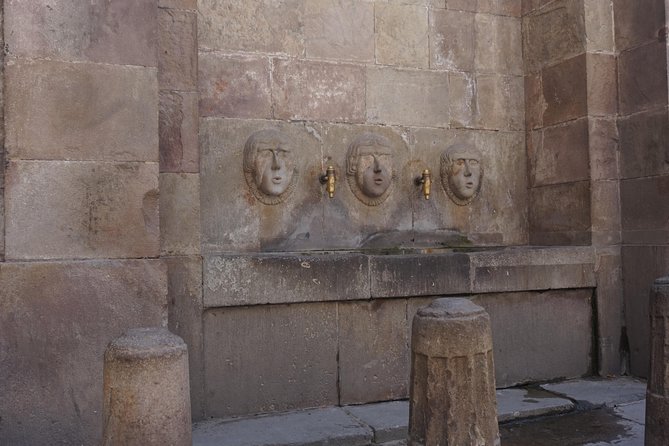
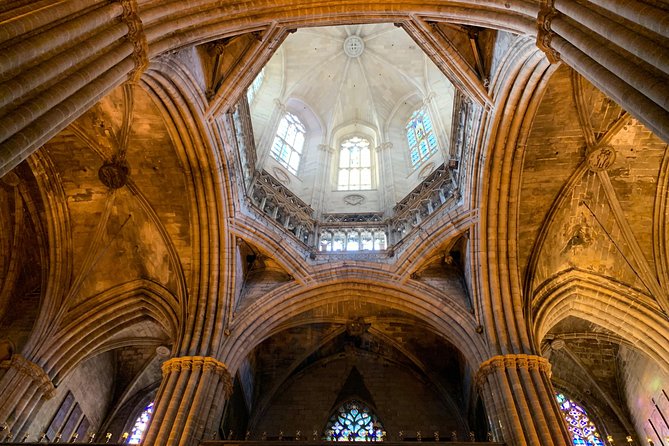
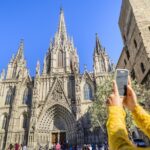
From Plaça Nova you move into the Gothic Quarter’s architecture vibe fast. The next stop is the Catedral de Barcelona. Go for the interior details: the nave, the chapels, and the calmer cloister space with its fountain. It is the kind of place where looking up pays off, especially with Gothic lines doing all the heavy lifting.
Not far away is Casa de l’Ardiaca, a historic ecclesiastical residence. What makes it interesting is the mix of eras. The building evolved over centuries, including early 16th-century changes that connected it to the dean’s residence and added a central courtyard, plus Renaissance-style decoration in a flamboyant Gothic overall feel. There is also a staircase leading toward an upper terrace that’s often described in Romeo and Juliet terms, which gives you a quick taste of balcony-drama Catalan style.
One consideration: some interiors require paid admission while others are free. Plan on bringing a bit of cash or card readiness for what is ticketed so you do not lose time.
Medieval power in stone: Plaça del Rei and Plaça Sant Jaume
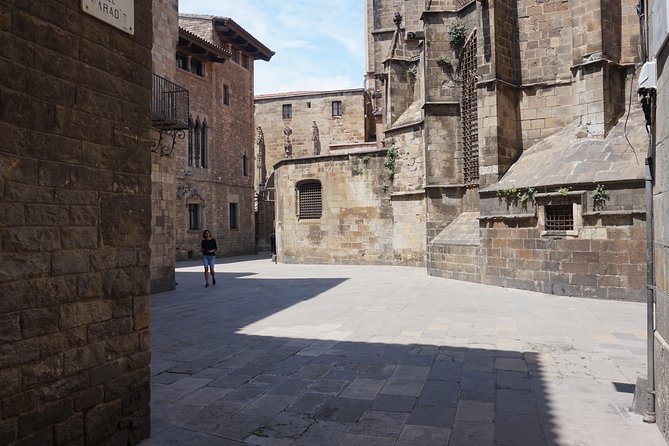
Next you hit two squares that feel like the city running on medieval autopilot. Plaça del Rei is part of a monumental ensemble where the Palau Reial Major and surrounding buildings enclose a peaceful medieval interior space. It is one of those places where you can actually hear your own footsteps, even in a busy area.
Then comes Plaça de Sant Jaume, the political heart of Barcelona for centuries. Today it is an open public square, but it still works like a stage. The City Hall and the Palau de la Generalitat anchor the square, so you get that sense of power and administration without needing a history lecture for every corner.
I find these stops helpful even if you do not love medieval details. They train your eye. After a few minutes here, the Gothic Quarter stops looking random and starts looking organized, like a living map of old Barcelona.
More Barcelona tours and experiences for the shortlist




The Jewish Quarter story: Sinagoga Major and the medieval calls
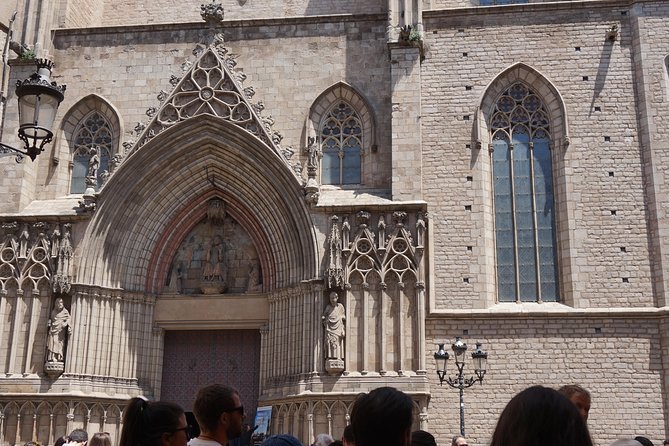
You continue into the Jewish Quarter area, focused on the Sinagoga Major de Barcelona. This restored synagogue is one of Europe’s oldest, and it matters historically because Barcelona had a sizeable Jewish community roughly from the 9th to the 14th century.
The tour also connects geography to language. You will hear about the “calls,” narrow street neighborhoods tied to the Hebrew word kahal, meaning community or congregation. Even if you only spend a short time here, it changes how you walk the area afterwards. You start noticing the street patterns and how they shaped daily life.
This stop is usually quick, so make sure you slow down for the key facts. The payoff is in what it adds to the overall Barcelona picture: Gothic plus Roman plus Modernisme plus the city’s Jewish heritage, all in one day.
La Rambla to Boqueria: watch life happen, then eat
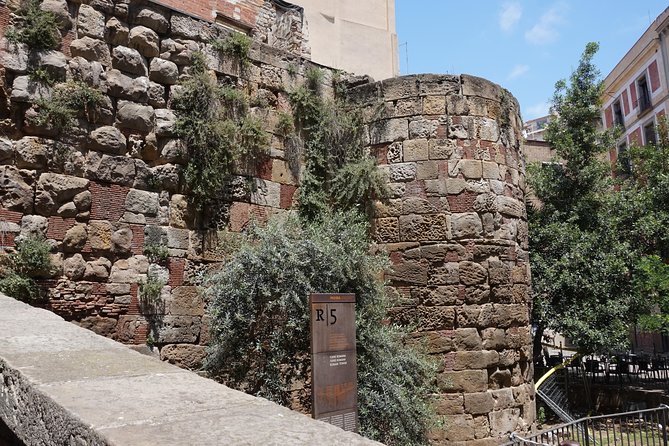
Then the route shifts gears. La Rambla is the long pedestrian spine, about 1.2 kilometers, shaped out of older medieval walls lines. It is where locals used to stroll and socialize across different social classes, so it has always functioned as a meeting place, not just a tourist walkway.
From there you reach Mercat de la Boqueria. If you like food markets, this is where you get to see Barcelona as a living kitchen. It is described as a human river of color and motion, with the history of peddlers turning into a modern, lively market experience.
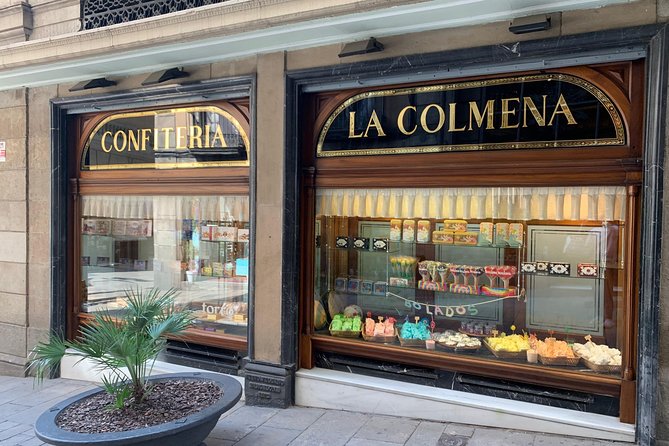
This is also where food tastings can fit into your day so they do not feel like a random detour. The tour includes local flavors, including traditional nougat at Planelles Donat in at least one common version of the route, plus the market stop itself is a natural place for small bites and a quick reset.
Modernisme on Passeig de Gràcia: Casa Batlló and La Pedrera
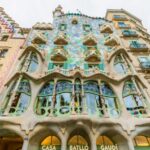
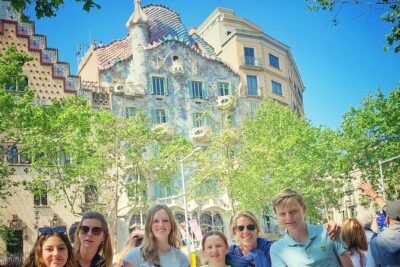
Once you step onto Passeig de Gràcia, the city gets theatrical. You visit Casa Batlló first, one of Gaudí’s masterpieces. It started as a remodel and Gaudí reworked it in 1904. The nickname Casa dels ossos, House of Bones, hints at the skeletal, organic feel people associate with the façade.
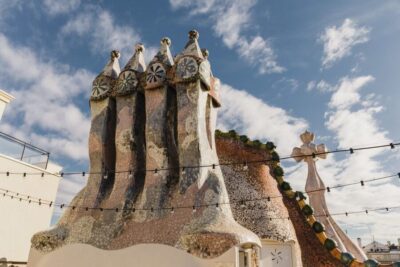
Look for the details that make it distinctly Gaudí: irregular oval windows, flowing sculpted stone work, and trencadís mosaic made from broken ceramic tiles. The roof is arched and often likened to a dragon or dinosaur back, with a nearby feature connected to Saint George symbolism in common interpretations.
Then it is on to La Pedrera, also called Casa Milà. It was Gaudí’s last private residence project, built between 1906 and 1912. It was controversial at the time because the façade undulates and the wrought-iron balconies twist. The terrace is the surprise finish, and the building’s innovations include a self-supporting stone façade and a free-plan interior layout.
Important practical note: admission for Casa Batlló and La Pedrera is not included in the basic tour pricing shown here. If you want interior time, you’ll likely need tickets on the day, so plan your budget accordingly.
Sagrada Família after 4 pm: your calm hour inside Gaudí’s masterpiece
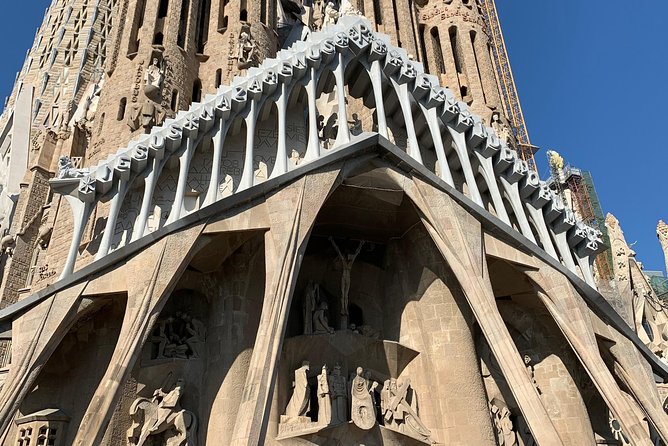
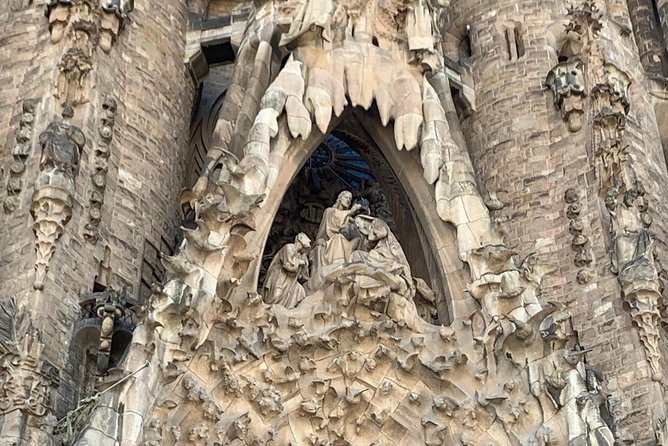
This is the big closer. The tour ends at Basilica de la Sagrada Família with an evening start around 4 pm when visitor flow typically decreases. The point is simple: you should be able to see the interior without fighting a crowd in every room.
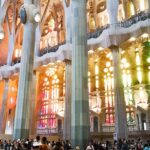
You get about one hour inside. That hour is where the value shows. Sagrada Família is the kind of place where you need time for scale and detail, and this timing makes it easier to focus on the columns, light, and design elements rather than just the main photo angles.
Admission is included for Sagrada Família, so you are not scrambling for tickets or splitting your group. If your day is already packed, this timing also helps you avoid the worst stress, because you end your day with a strong experience instead of starting it.
Tapas and tastings: where the food fits your day
Even with architecture heavy hitters, this tour keeps food in the mix. The name includes tapas, and the experience style includes local cuisine tastings rather than just standing around with a drink.
One common flow ends with a tapas meal at Orio, described in guide-led experiences as a chain known for pintxos, plus wine and beer. The practical advantage for you is that you finish your sightseeing with food that feels tied to place, not like a random tourist trap.
The tour also includes breaks for refreshments. In a one-day plan, that matters because you need a mental reset. It also keeps the day from turning into a strict stamina contest, which can happen when you try to cram too much into one afternoon.
Price and preparation: what you are really paying for
At $264.34 per person for roughly 5 hours, this is not a cheap “walk around with a poster” tour. The value is in three areas:
- You get a private guide for your group, which reduces wasted time and improves pacing.
- Sagrada Família admission is included, and that attraction is not small or inexpensive.
- The day includes tastings and tapas, plus scheduled breaks so you can keep moving without constant stops to figure things out.
What can feel steep is that you may still need to pay for certain paid attractions like the cathedral interior and the Gaudí houses. That is not bad, it is just something you should budget for upfront if you plan on going inside those buildings.
Preparation matters too. One guide-led experience included about 12,000 steps in around five hours, so wear comfortable shoes and bring a water bottle if you tend to get thirsty.
Should you book this Barcelona in One Day tour?
Book it if you want a focused day that strings together the Gothic Quarter, Gaudí on Passeig de Gràcia, and Sagrada Família with smart crowd timing, and you like having a guide translate what you are looking at. It is also a good fit if you are the type who wants your stops to feel connected, not random.
Skip it or rethink it if you hate walking, or if you only want free outdoor sights and dislike paying entry fees for interiors. This plan is timed to avoid peak crowds, but it is still an active day.
If you do book, pick guides like Olga, Carla, or Valentina if they are offered, based on the guide feedback you have access to. The vibe from those names is consistently friendly, informative, and patient, which is exactly what you want when your day is packed.
FAQ
How long is the Barcelona in One Day: Gaudí, Gothic Quarter & Tapas private tour?
It runs for about 5 hours.
Is this tour private or shared with other travelers?
It is a private tour/activity, so only your group participates.
What language is the tour offered in?
The tour is offered in English.
Where does the tour start and end?
It starts at Av. de la Catedral, 7, Ciutat Vella, 08002 Barcelona, Spain and ends back at the meeting point.
Is admission to Sagrada Família included?
Yes. Admission ticket for Basilica de la Sagrada Família is included.
Are tickets included for other sights like Casa Batlló, La Pedrera, or the Cathedral of Barcelona?
Admission is not included for the Cathedral of Barcelona, Casa Batlló, and La Pedrera, based on the listed admission details for those stops.
What time does the tour visit Sagrada Família?
The plan proposes an evening visit starting at 4 pm, when visitor flow usually decreases.
What is the cancellation policy?
You can cancel for a full refund up to 24 hours in advance. If the experience is canceled due to poor weather, you are offered a different date or a full refund.
Is the tour dependent on weather?
Yes, the experience requires good weather, and poor weather can trigger a cancellation with rescheduling or a refund.
More Private Tours in Barcelona
More Tours in Barcelona


More Tour Reviews in Barcelona
Not for you? Here's more nearby things to do in Barcelona we have reviewed








More Barcelona Gaudi Tours worth opening.
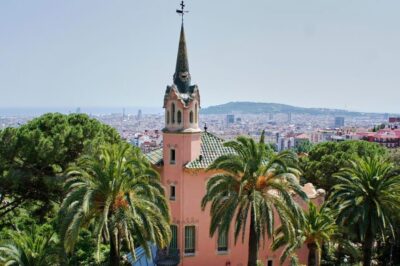 ★ 4.5Park Güell and Gaudí House Museum Entry TicketFrom $336,326 reviews
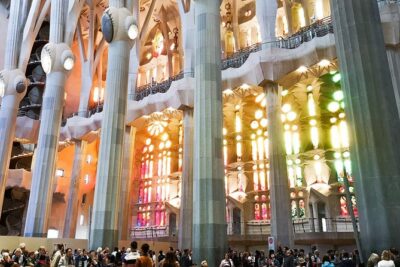 ★ 4.5Sagrada Familia & Gaudi Tour Private or Small Group with TicketsFrom $901,188 reviews
 ★ 5.0Complete Gaudi Tour: Casa Batllo, Park Guell & Sagrada FamiliaFrom $1621,152 reviews
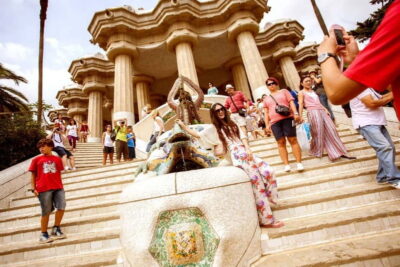 ★ 4.1Park Güell: Guided Tour with Optional Gaudí Experience EntryFrom $35832 reviews
 ★ 5.0Barcelona e-Bike Tour: Gaudí & Old Town Small GroupFrom $38769 reviews
 ★ 5.0Ramblas, Old Town, Gothic and Gaudi Architecture Walking TourFrom $35723 reviews
 ★ 4.5Gaudi´s Casa Vicens Skip the Line Ticket with AudioguideFrom $26685 reviews
 ★ 4.8Discover Gaudí, Sagrada Familia, and Park GüellFrom $158651 reviews
Continue by place or experience