
REVIEW · BARCELONA BIKE TOURS
Barcelona | StreetArt Bike Tour Moco Museum
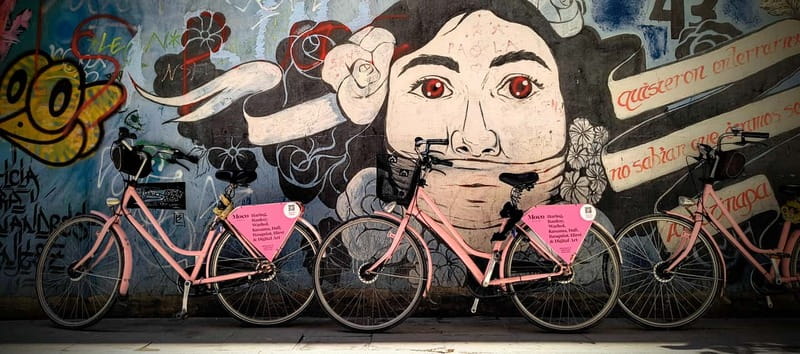
Murals and wheels make Barcelona easier to love. This 2.5 hour street art ride strings together famous walls and newer tags, with expert English storytelling and electric bike help as you zip between neighborhoods. If you cannot comfortably ride a bike, this is the wrong kind of Barcelona tour for you.
I also like the guide led energy, one reviewer highlighted Eirini for being both enthusiastic and knowledgeable, and even adding smart food recommendations afterward. You’ll feel the point of the route, it is not random photos, it is a moving map of how Barcelona talks through art across the city.
Key things that make this Moco street art bike tour worth your time
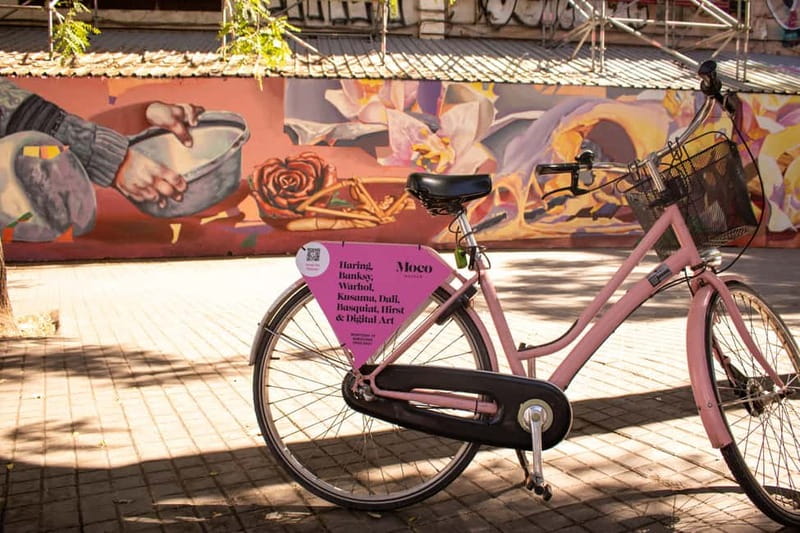
- Named artworks in multiple neighborhoods, including a Keith Haring mural, Picasso street work, and early graffiti references
- Electric bike pacing that keeps you seeing more without turning the day into a workout test
- Story driven stops where the guide explains what the artists were saying, not just what you are looking at
- Purpose built photo stops and a handlebar bag so you can carry less
- Rain or shine touring, with a free poncho so your plans do not evaporate
Why this Barcelona street art bike tour works even if you only have one afternoon
Barcelona has street art in layers, old graffiti habits beside gallery style works, plus big names and local voices all talking at once. What I like about this tour is that it gives you a way to read that visual language while you are still moving. You are not stuck staring at a single wall and wondering what it means. You see how the city’s messages shift as you ride from one area to the next.
The route also gives you something practical. Street art is scattered, and Barcelona traffic can be chaotic on your own. With an organized bike plan, you can make steady progress and still slow down when a mural deserves your attention. The guide adds context, so the art feels connected instead of random.
You can also read our reviews of more cycling tours in Barcelona
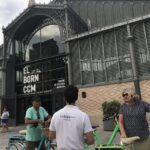

A note on the vibe
This is not an art history lecture. It is a street level tour with real world context, the kind that makes you notice details you would normally walk past.
Getting set up at Carrer dels Tallers 45, then rolling with confidence
The tour begins at Carrer Dels Tallers 45, in the passage area near the team. You will want to arrive about 10 minutes early so the safety chat does not cut into your time. There is a short safety briefing at the start, and helmets are a real thing here.
Helmets matter most for kids up to age 16, the tour states helmets are mandatory for them, provided free of charge for children. Adults can request a helmet in advance for an additional cost if you want that extra layer of peace of mind.
You also get a practical kit. You receive a bike per person, a handlebar bag for belongings, and a bottle of water. Photo stops are built in, which means you can take pictures without sprinting to catch up. And yes, it runs rain or shine, with a free poncho if the weather turns.
From CCCB energy to MACBA edge, how the route starts shaping your street art lens
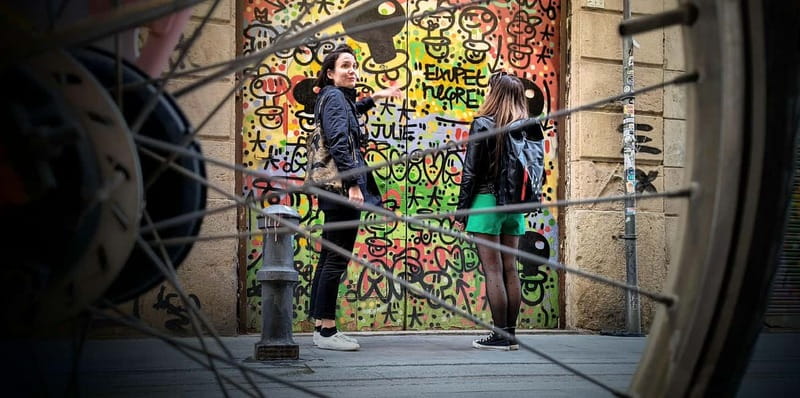
Right away, the tour leans into Barcelona’s contemporary culture. You head to the Centre de Cultura Contemporània de Barcelona for a photo stop and guided look. This matters because it trains your eyes for what you will see next. The guide helps you understand the tone behind street work, playful at times, political at times, always tied to the city.
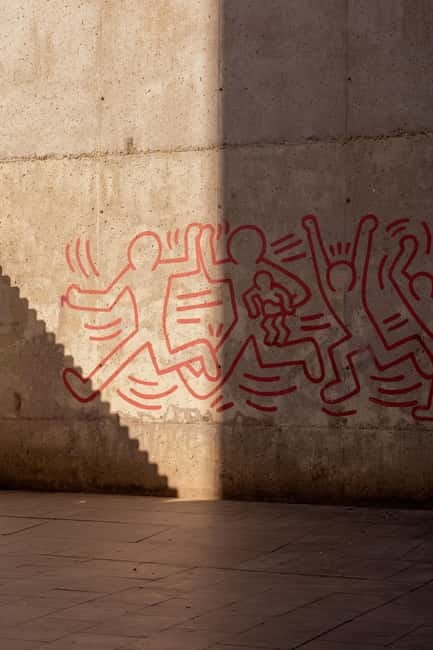
Then you move toward the Barcelona Museum of Contemporary Art area. The highlight here is the Keith Haring mural, plus a stop that references Colp One Dog. Haring’s work often shows up as instantly recognizable iconography, but the tour’s value is in the explanations around why it appears where it does and what that message is doing in public space.
If you tend to think of street art as just decoration, this part is a turning point. It frames street art as contemporary dialogue, not just visual noise.
Keith Haring mural, Negrelab graffiti, and learning to read tags without feeling lost
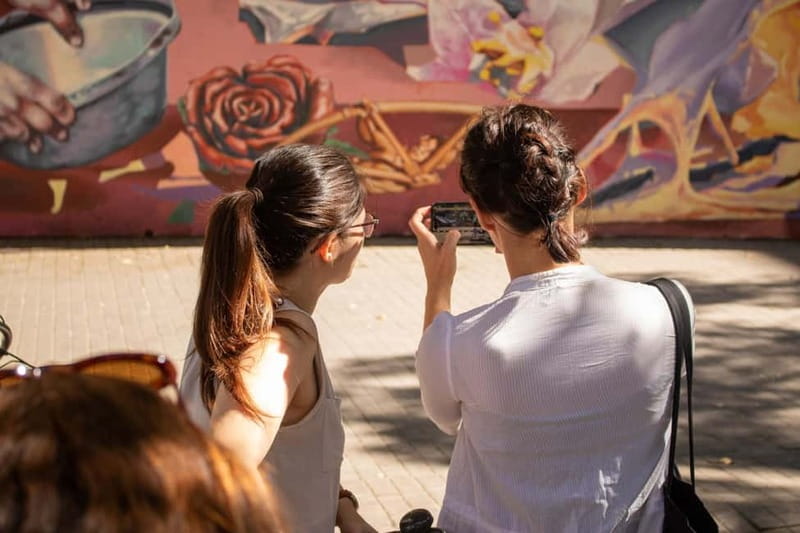
The stops around the Keith Haring mural and the nearby street art pieces are where you get the clearest sense of the guide’s job. The point is not only to see the art, it is to learn the story methods behind it.
You will also encounter works tied to Barcelona’s graffiti history, including Xupet Negre (Negrelab), described as one of the city’s earlier graffiti works. That label is important. Early graffiti in a big city often sets the template for what later artists can build on, and it changes how locals see new work. You start noticing repetition, style cues, and the way certain locations become stages over time.
And then there are other pieces that broaden the mix, like Birdie Al Awan. The tour does not stay locked on one style. It shows how messages can be made with different visual languages, from sharp graphic figures to more character driven street iconography.
You can also read our reviews of more museum experiences in Barcelona

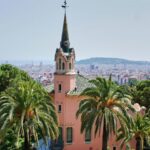
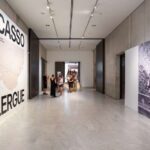

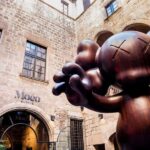
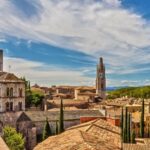
Raval area stops, from feminist wall messages to Space Invader play
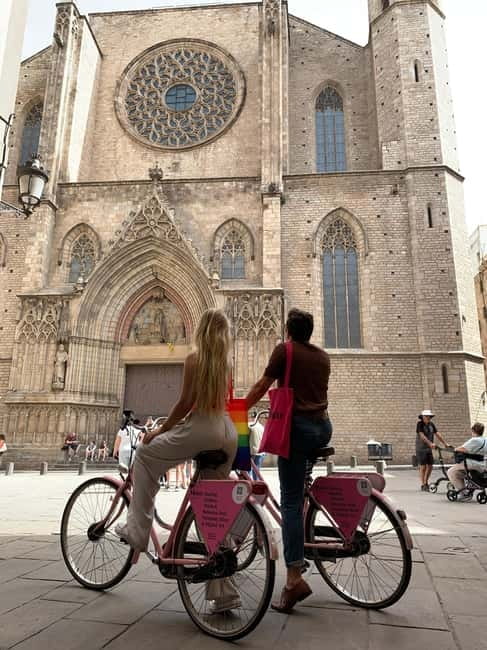
As you ride toward the Rambla del Raval area, the street art theme turns more social. You will look for pieces tied to identity, strength, and community, including the Feminist wall and works like Space Invader.
Space Invader is especially fun because it blends internet era pop culture with real street placement. It is the kind of work that makes people stop, smile, and then look closer. The guide’s role here is helpful because it keeps the focus from becoming only about the novelty. You start to understand why these pieces stick around in public memory and why the city tolerates, repeats, or protects certain styles while others fade.
You will also see contributions linked to Ana Eliza, which keeps the tour grounded in contemporary voices rather than only famous names.
Ágora Benítez and the industrial mood at Jardins de les Tres Chimeneies
One of the smartest choices on this tour is including the route’s industrial side. Barcelona is often sold as architecture, beaches, and big museums, but the city’s urban machine still shows in areas with older structures. The ride brings you to Carrer de l’Aurora to see Ágora Benítez’s masterpieces. This helps you understand that street art can feel monumental, not just quick.
Then you roll toward Jardín de las Tres Chimeneas on Av/ Paralelo. The tour frames this as a place surrounded by older industrial surroundings, where Barcelona’s transformation is visible. That shift matters because it changes how you interpret street art. The city’s art does not sit in a vacuum, it appears in neighborhoods with their own timeline, and the murals reflect what is happening in that moment.
If you love photos, you’ll appreciate the contrast. Modern graphics look different when the background is aged brick and old industrial geometry.
Mariscal’s Gamba, BCNs Head, and the playful side of public art
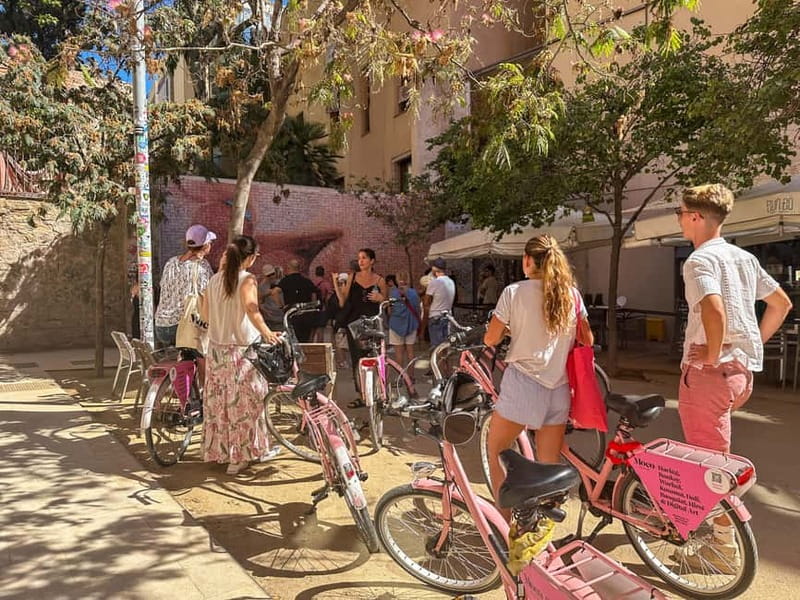
Not all street art in Barcelona is solemn. A key moment on this ride is when you reach La Gamba by Mariscal. Public art like this can be funny, a little weird, and memorable in a good way. It is also a reminder that street creativity is not only about protest or critique, sometimes it is about giving the city a personality.
You also get another named stop connected to Barcelona’s head imagery, BCNs Head by Leinceshtain. The value here is balance. The tour does not tip only toward one mood. You move between messages, styles, and emotional tones, so you finish the ride with a more complete sense of the city’s creative range.
Moving into the Gothic Quarter orbit, El mural del petó and Picasso street work
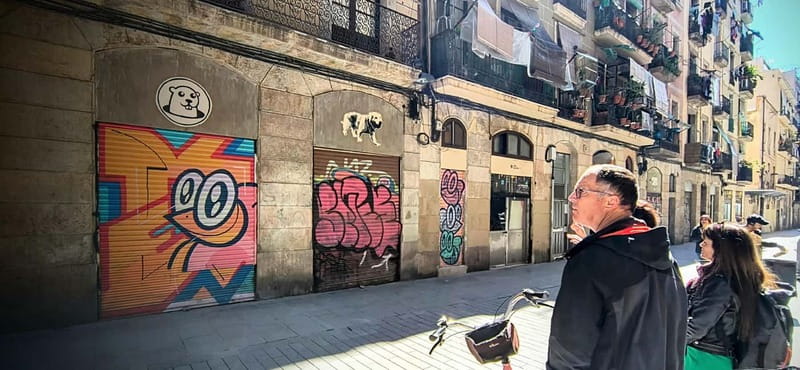
As you head toward the Cathedral area, the street art switches from neighborhood street walls toward a more historic setting. At Plaza de la Catedral, you will see El mural del petó and a Picasso mural reference. This is one of the reasons I like tours like this in Barcelona. You get to see how modern expression can sit next to old stone without feeling out of place.
Picasso’s presence in this part of the city also helps you zoom out. Street art in Barcelona often references the city’s broader artistic identity, including the major names that made Barcelona famous for visual creativity. The guide helps connect that thread so it feels coherent instead of random.
Passeig de Gracia and Casa Batlló, when the city’s big names meet street creativity
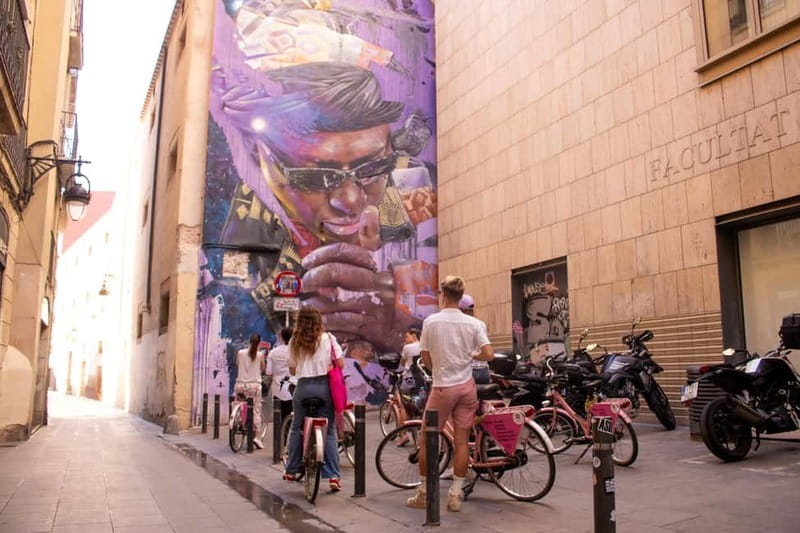
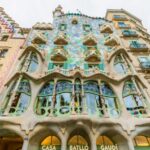
The ride finishes with a stronger landmark feel as you move toward Passeig de Gracia, with photo stops and passes that include Theatre Arnau, Columbus Monument, El Cap de Barcelona, Palace of Catalan Music, and finally Casa Batlló.
You are not being asked to do museum time. This is a street level way to connect neighborhood creativity to Barcelona’s iconic architectural personality. On the bike, the city moves fast, but the art moments create a rhythm. One minute you are thinking about a mural’s message, the next you are looking at a famous facade and seeing how visual storytelling can happen at every scale.
Then you circle back to Carrer dels Tallers 45 to wrap up.
Price and what you actually get for $34 per person
$34 for a 2.5 hour guided bike tour is usually a fair value if you count the basics and the guidance. Here’s what you are paying for in concrete terms: an English speaking guide, a bike per person with electric assistance elements across the ride, a bottle of water, a handlebar bag, and planned photo stops that keep you from wasting time.
Where value shows up is in how the guide’s explanations change the experience. Street art can feel like a scavenger hunt if nobody tells you what to watch for. With story driven pacing, you get more meaning per minute, which is exactly what you want on a short Barcelona afternoon.
Timing, weather, and the “can I do this?” checklist
This tour runs about 2.5 hours. The starting point is at 11 am, and you should check availability for starting times, since times can vary.
It takes place rain or shine. If the weather turns, you get a free poncho. That detail matters because it keeps the tour dependable. You are not left scrambling for a plan B when clouds show up.
A few practical rules to keep in mind:
- You need comfortable clothing and weather appropriate gear
- Bring sunglasses, sunscreen, and a hat if you burn easily
- Bring a charged smartphone and your ID or passport (copy accepted)
- The tour says headphones are not allowed
Also, it is not suitable for wheelchair users and it is not suitable for people who cannot ride a bike.
Who this street art bike tour is best for
This is a strong choice if you want:
- A short, guided way to see major street art names plus local characters
- An electric assisted bike option that covers more ground than walking
- Explanations in English that help you understand the messages behind the walls
- Built in photo stops so you can get pictures without missing the story
It is not the right choice if you:
- Cannot ride a bike comfortably
- Need wheelchair access
- Want a quiet, personal audio guided experience (headphones are not allowed)
One of the reviews also noted it worked well for kids, which suggests the guide can keep the pace friendly and the stops understandable.
Should you book the Barcelona StreetArt Bike Tour with the Moco theme?
I’d book it if you want a city afternoon that feels like art class meets street theater. The named murals like the Keith Haring wall and Picasso street work help you anchor the experience, and the guide’s story focus turns the route from sightseeing into understanding.
Skip it if your day plan is mostly about indoor museums and you hate riding bikes for any distance. Also skip if rain ruins your mood, even with a poncho, because you’ll still be outdoors in a working city.
If you want the easiest way to get street art context without getting lost, this tour is a good bet for value, pacing, and the kind of guided details that make Barcelona feel like it has a point of view.
FAQ
Where does the tour meet?
The meeting point is Carrer Dels Tallers 45, in the passage where the team will attend you, by the palm tree.
What time does the tour start?
The tour starts at 11 am, and you should check availability to see starting times.
How long is the street art bike tour?
It runs about 2.5 hours.
Is the guide available in English?
Yes, the live tour guide speaks English.
What is included in the price?
You get a bike per person, an English speaking guide, a free bottle of water, a handlebar bag for belongings, and picture stops.
What should I bring with me?
Bring sunglasses, sun hat, sunscreen, weather appropriate clothing, a charged smartphone, and passport or ID card (a copy is accepted). Comfortable clothes are also recommended.
Do I need a helmet?
Helmets are mandatory for children up to age 16, and helmets are provided free of charge for kids. Adults can request a helmet in advance for an additional cost.
What happens if it rains?
The tour runs rain or shine, and a poncho rain coat is provided for free.
Is it suitable for wheelchair users or people who cannot ride a bike?
No. It is not suitable for wheelchair users, and it is not suitable for people who cannot ride a bike.
More Cycling Tours in Barcelona


More Tours in Barcelona


More Tour Reviews in Barcelona
Not for you? Here's more nearby things to do in Barcelona we have reviewed



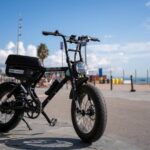



More Barcelona Bike Tours worth opening.
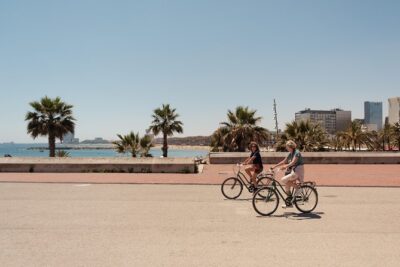 ★ 5.0Barcelona 3-hour Bike or E-Bike Tour: Highlights and Hidden GemsFrom $321,429 reviews
 ★ 4.6E-Bike Tour with Montjuic Cable Car & Boat RideFrom $191817 reviews
 ★ 5.0Barcelona e-Bike Tour: Gaudí & Old Town Small GroupFrom $38769 reviews
 ★ 5.0Barcelona Off the Beaten Track Bike TourFrom $47676 reviews
 ★ 4.9Unusual Barcelona Bike Tour in FrenchFrom $35463 reviews
 ★ 4.8Montjuic Hill E-Bike TourFrom $48386 reviews
 ★ 5.0Historical and Modernist Bike Tour BarcelonaFrom $43262 reviews
 ★ 4.7Barcelona Historical 3-Hour Bike TourFrom $42222 reviews
Continue by place or experience