
REVIEW · GIRONA DAY TRIPS
Girona Walking Tour + Main Monuments
Girona’s stones speak fast. This 3-hour walk through the old town connects medieval monuments with the surviving Jewish quarter and Arab Baths, plus a view from the top of the old walls.
You also get a real guide-led storyline, not a random stroll, so the streets make sense as you move.
Two things I like a lot are the small group size (up to 10) and having entry tickets ready for the big sights, including skip-the-ticket-line access. The one consideration is simple: you cover a lot in a short time, so plan on steady walking and bring comfortable shoes.
If you have limited time in Girona but still want the main highlights, this format is a practical way to get oriented fast, then linger where you feel curious.
Key things you should look forward to
- A 3-hour, monument-focused route that still gives room for questions
- El Call, Girona’s medieval Jewish quarter, with the story of the Aljama and Kabbalah
- Banys Àrabs (Arab Baths) and what you’ll notice on a guided visit
- Girona Cathedral and Basilica of Sant Feliu with entry tickets handled for you
- Old walls viewpoints plus the Onyar river bridges, including the Eiffel-designed bridge
How Girona’s layers make sense on a guided walk
Girona feels like a city built on top of itself. The streets are medieval, but the walk also traces older tracks, including Roman, Carolingian, and medieval walls. That matters, because without context, you can see impressive buildings and still miss why they’re there.
This tour is designed to connect those dots. You’ll get the history and legends tied to each stop, then you’ll walk through the neighborhoods that still reflect those eras in the stone and street pattern. It is an efficient way to learn what you’re looking at, especially if Girona is a stop on a larger Catalonia trip.
The pacing is also built for understanding. It is not just “see it, move on.” You’ll be guided between monuments and neighborhoods, with guided time at the major interiors (Cathedral, Arab Baths, Basilica) so you can actually absorb what you came for.
You can also read our reviews of more walking tours in Girona

Starting at Plaça de Sant Feliu and getting your bearings in Barri Vell

The tour begins at Plaça de Sant Feliu, near River Cafe. This is a great starting point because it puts you right in the old-town flow from the get-go. From Girona Train Station, it is about a 20-minute walk to the meeting point, so if you are arriving by train, give yourself a little buffer to reach on time.
Once you’re in Barri Vell, you’ll move through the historic center with a guided focus on how Girona developed. This early part is your orientation. You learn what to notice as you go, like how the old quarter reads like a map of different periods.
One more practical point: the tour runs rain or shine. So if you are traveling in shoulder season or spring, pack a compact rain layer. The shoes you choose should handle cobblestones, because this part of town rewards footwear that does not slide.
The medieval Jewish quarter, El Call, and the Kabbalah story
The highlight here is the medieval Jewish footprint in Girona, centered on the quarter known as El Call. The Jewish community in Girona traces back to the 9th century, and at one point it became a major part of the city, reaching about 10% of the population. You’ll hear how the Aljama became an important hub for religious and cultural life.
What you’ll experience on the ground is a labyrinth of cobbled alleys that still feels preserved from the late medieval period. A key detail in the story is that the alleys and neighborhood layout are still intact since the year 1492, when Jews were expelled from Spain. Even if you know Spanish history broadly, this is one of those moments where history becomes physical.
You’ll also get names and concepts that make the neighborhood’s legacy easier to follow. The tour connects notable figures in Girona, including Nahmanides, linked with Kabbalah teachings. That guidance helps you move through El Call without feeling like you’re just walking past plaques.
From Via Augusta to medieval walls, Gothic and Romanesque you can actually spot
After the Jewish quarter area, the route shifts into a broader “how Girona grew” story. You’ll cross the Via Augusta, and you’ll see references to Roman, Carolingian, and medieval walls. The point is not memorizing dates. It is learning how the city’s layout and defenses shaped daily life over centuries.
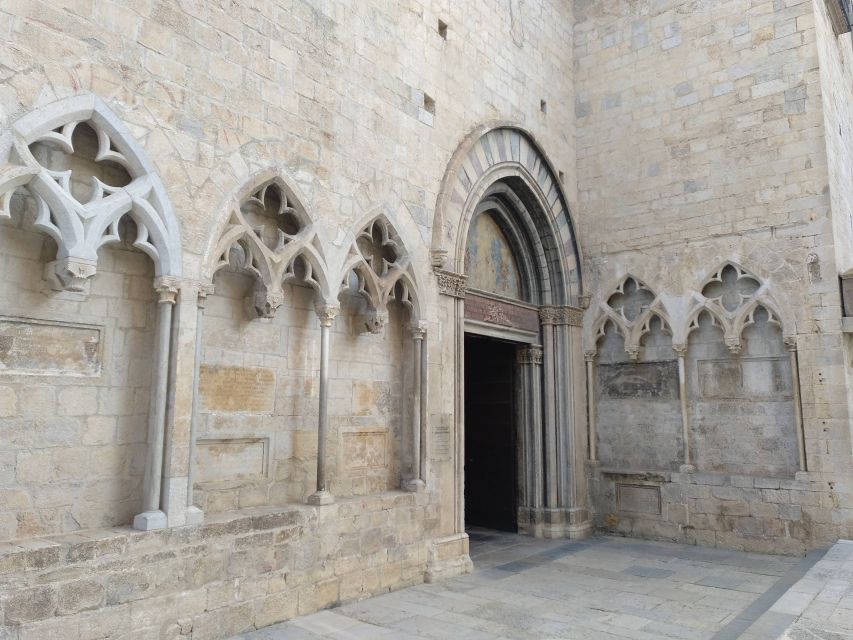
This is where you start noticing architectural differences instead of just admiring them. The tour mentions Gothic palaces and Romanesque monasteries as part of the medieval splendor, and you’ll get a guide to point out what those styles mean in context. Without that, it is easy to see beautiful stonework and move on without understanding what makes it different.
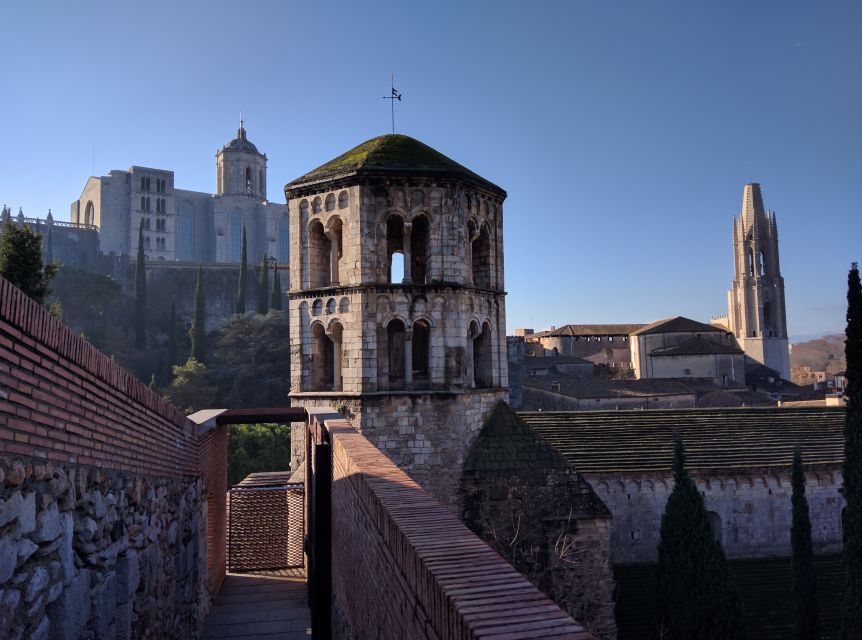
There is also a climb to the old walls for a city view. That climb is more than a photo stop. You see how the old quarter sits within Girona and how the streets link back toward the monuments you visited. If you like skyline views, this is the moment that pays off.
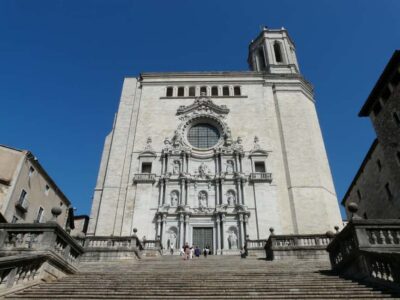
Girona Cathedral of Santa Maria: what you’ll focus on during the guided interior
One of the included stops is the Girona Cathedral of Santa María. The visit is guided, with time set aside inside so you are not just getting the outside postcard view.
You’ll also get context for why the cathedral matters within Girona’s layered timeline. Since the walk connects older walls and older city life to later religious architecture, the cathedral becomes a natural next chapter, not a random big building.
Practically, you should like this approach if you enjoy “seeing with a guide.” Entry tickets are included, and the tour includes skip-the-ticket-line access. That saves time when you arrive, and time in Girona is valuable because you will likely want to explore on your own afterward.
If you’re the type who reads every corner of a church interior, you’ll have just enough guided direction to know what to look for first, then you can continue at your own pace once the guided segment ends.

Basilica of Sant Feliu and the church details that change your perspective
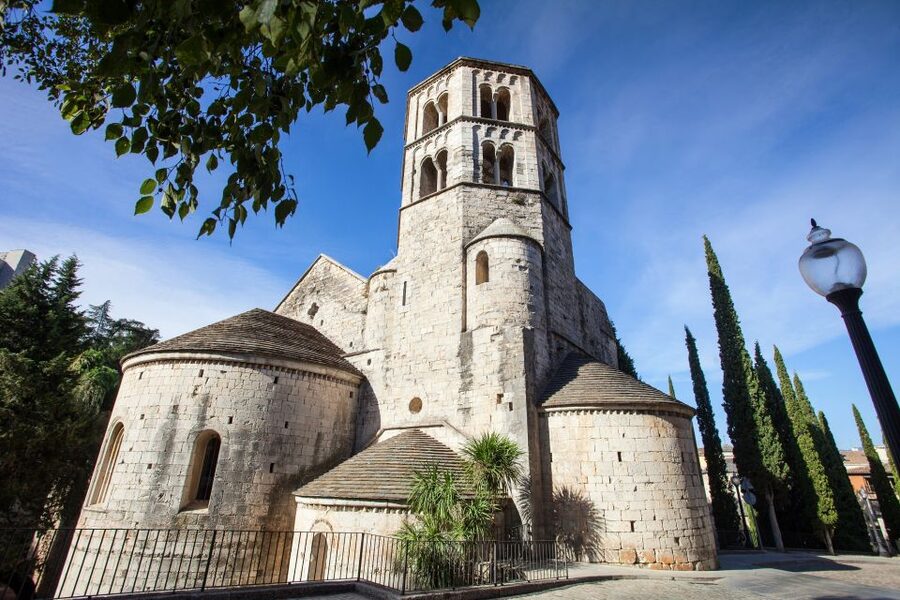
Another included interior visit is the Basilica of Sant Feliu, often referred to as the Church of San Félix. This stop works as a balance to the cathedral. The cathedral is a major landmark, but Sant Feliu helps you understand Girona’s religious architecture as part of the everyday city rhythm.
The guide’s job here is to make small details feel meaningful. Even in a short visit, you can learn how to interpret what you’re seeing, instead of treating every stone carving as decoration with no story. If you like legends and curiosities, this is also a good place for them to connect local tales to the building itself.
This part of the tour is also ticketed and guided, so you can relax into it. You are not juggling logistics while trying to take it all in, and you’ll still be walking toward more scenic stretches afterward.
Banys Àrabs (Arab Baths): a guided stop that feels different from churches
The Banys Àrabs, or Arab Baths, are included with entry tickets and a guided visit. This is one of the stops that adds real variety to a walking tour full of medieval Christian landmarks.
On a guided visit, you’ll get help understanding what you’re looking at. Arab Baths are not just another historic building. They represent a different cultural layer in Girona, tied to a time when multiple traditions shaped daily life across Catalonia.
The tour gives you time inside, around 30 minutes, which is important. It is long enough to get oriented and notice the details that catch your eye, but short enough to keep the whole 3-hour loop moving at a smart pace.
If you usually find museum interiors hard to absorb, this one may click because it is not just art. It is architecture tied to a practical routine, and the guide’s explanation helps you picture how the space worked.
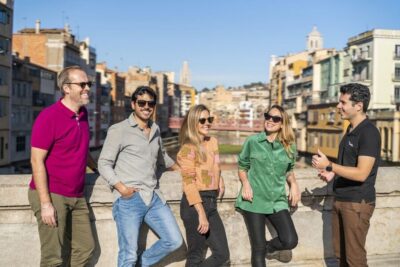
The Onyar river bridges, including the Eiffel-designed icon
After the monument interiors, you shift toward the Rambla area and the iconic Onyar river. This is where Girona turns photogenic in a big way.
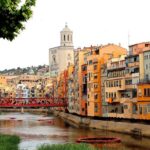
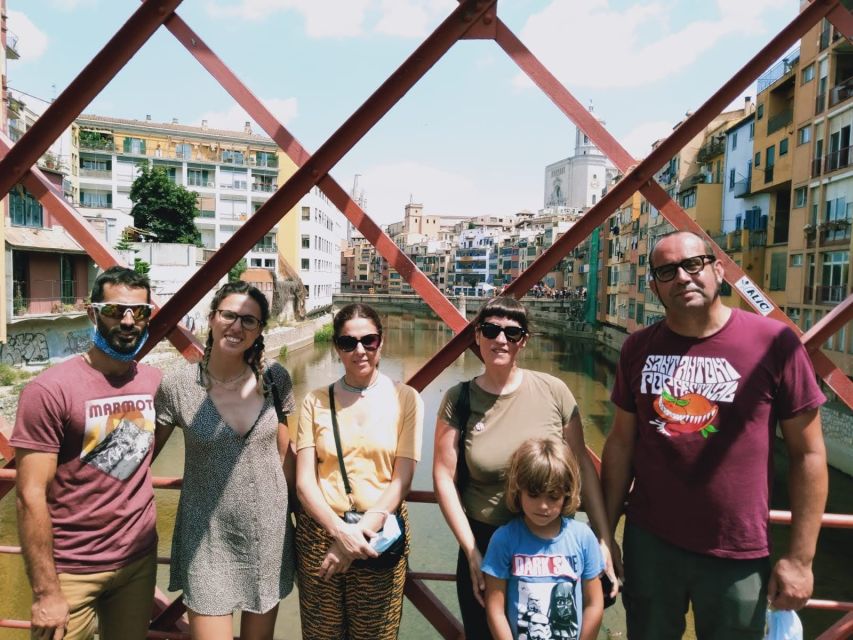
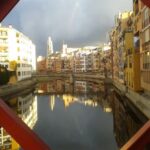
You’ll see the famous bridges over the Onyar, and one in particular stands out as the bridge designed by Gustave Eiffel. Even if you have seen it in photos already, it is worth seeing it in person because you can understand the river’s curve and how the bridges connect the city’s sides.
This segment also helps you cool down mentally. The earlier parts of the walk focus on walls, quarters, and architecture. Now the guide’s narrative transitions into the city’s modern identity, with space for you to look around and just take it in.
Finishing in Plaça de la Independència, where it’s easy to keep exploring
The tour ends in Plaça de la Independència, a major meeting place filled with restaurants and terraces. This is a smart finish because you leave with momentum, not fatigue.
If you want to plan your next step, this plaza helps. It is a natural hub for snacks, lunch, and a relaxed walk afterward. I like ending here because you are not deposited somewhere quiet and confusing. You have options immediately.
Also, because the tour covers the core monuments and the historical storyline, you can spend the rest of your day picking one or two areas to return to. Maybe you want to linger in the old streets, or maybe you want more time near the river views.
Price and what you get for $113 in 3 hours
At $113 per person for a 3-hour small group tour, the value is mostly in the mix. You get guided history from an expert, plus entry tickets included for the Cathedral of Santa María, the Arab Baths, and the Basilica of Sant Feliu.
You also get skip-the-ticket-line access. That is not just convenience. It can be the difference between “we arrived too late” and “we actually got to enjoy the interiors without stress.”
Finally, you get a group cap of 10 participants. In a town like Girona, that matters. It keeps the tour feeling personal enough that you can ask questions and still move at a decent pace.
If your goal is to see the main monuments without building your own route and checking ticket timing yourself, this is a practical deal. If you already have a full day and prefer completely self-paced exploring, you might decide to go solo with a map. But if you want the city explained while you walk, this package is set up for that.
Who should book this Girona walking tour
This tour fits best if you want:
- A 3-hour crash course that still feels structured
- The key interiors: Cathedral, Arab Baths, and Sant Feliu
- The story of El Call and Girona’s Jewish legacy
- A scenic finish by the Onyar river and Plaça de la Independència
It is especially good for people in Girona for a short stay. It is also a nice match if you like history and legends but do not want to spend your limited time figuring out routes and ticket logistics.
One note: it is not suitable for people with mobility impairments and it is not for wheelchair users. Plan other options if accessibility is a concern.
Should you book Girona Walking Tour + Main Monuments?
I’d book it if you are trying to make Girona click quickly. The combination of guided history, ticketed monument visits, and the walking route through different layers of the city is exactly what helps Girona go from “pretty old town” to “I understand what I’m seeing.”
I’d skip it if you hate walking, if you need wheelchair-friendly access, or if you prefer to spend hours at a single site rather than moving through several major ones. In that case, a slower plan might suit you better.
If you do book, bring comfortable shoes and come prepared for rain or shine. Then treat the tour as your foundation. Once you reach Plaça de la Independència, you’ll know where you want to spend more time.
FAQ
How long is the Girona Walking Tour + Main Monuments?
It lasts 3 hours.
Where do I meet for the tour?
You meet at Plaça Sant Feliu, beside The River Cafe.
How much does the tour cost?
The price is $113 per person.
What sights are included with entry tickets?
Entry tickets are included for the Cathedral of Santa Maria of Girona, the Arab Baths of Girona, and the Basilica of Sant Feliu.
Does the tour help me avoid ticket lines?
Yes, it includes skip-the-ticket line access.
What languages is the tour offered in?
The live guide offers English and Spanish.
How big is the group?
The group is small, limited to 10 participants.
Is it suitable for wheelchair users or people with mobility impairments?
No, it is not suitable for people with mobility impairments or wheelchair users.
How do I get there from Girona Train Station?
There is about a 20-minute walk from Girona Train Station to Plaça Sant Feliu.
What is the weather like during the tour?
The tour takes place rain or shine.
More Walking Tours in Girona
More Tours in Girona
More Tour Reviews in Girona
Not for you? Here's more nearby things to do in Girona we have reviewed



More Girona Day Trips worth opening.
 ★ 5.0Girona & Costa Brava Small-Group Tour with Pickup from BarcelonaFrom $1206,955 reviews
 ★ 5.0Montserrat, Girona & Costa Brava Guided Day Trip from BarcelonaFrom $1335,128 reviews
 ★ 5.0Girona & Dali Museum Small Group Tour with Pick-up from BarcelonaFrom $1202,965 reviews
 ★ 4.7From Barcelona: Girona, Figueres, Dalí Museum, and CadaquésFrom $701,928 reviews
 ★ 4.7From Barcelona: Girona and Dalí Museum Small-group Day TourFrom $841,592 reviews
 ★ 4.7Montserrat, Girona & Costa Brava Guided Day TripFrom $1291,455 reviews
 ★ 4.5Girona & Costa Brava Small Group Tour From Barcelona with Paella!From $1391,098 reviews
 ★ 4.5Girona and Dali Museum Full Day tour from BarcelonaFrom $102996 reviews
Continue by place or experience