
REVIEW · GOTHIC QUARTER TOURS
Discover Barcelona’s Gothic Quarter | Private & Semi-Private
Barcelona’s Old Town can feel like a maze.
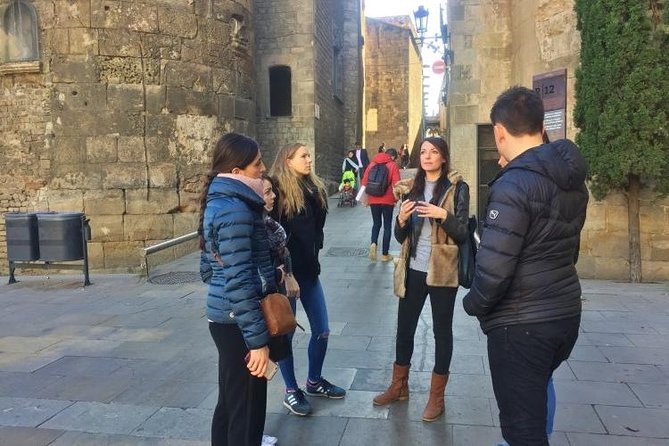
This small-group tour turns the Gothic Quarter into a clear, doable route, with a real expert guiding the story of how Ciutat Vella grew and changed. I like that you get both the big names and the quieter corners, and you also spend meaningful time inside Barcelona Cathedral (including access to the top).
My favorite part is how the tour keeps things practical, you are not just looking at buildings, you understand why they are there. One thing to consider: it is a walking tour through a dense area, and places of worship require shoulders and knees covered.
Key things to look forward to
- Just 6 people, so your guide can pace the route and answer questions without crowd noise
- Barcelona Cathedral with top access, for strong photo angles and a sense of the scale of the quarter below
- The Well of Geese cloisters, with the story of 13 white geese tied to St. Eulalia
- Plaza Sant Felipe Neri, a lesser-visited church with a survival and restoration story linked to the Spanish Civil War
- Roman to medieval waypoints, including the Temple of Augustus and the civic heart at Place de Sant Jaume
- Stops that fit first-time visitors, all in about 2 hours with a tight itinerary
Why this Gothic Quarter route makes sense in about 2 hours
If you only have a short window in Barcelona’s Ciutat Vella, it is easy to wander in circles and come away with a head full of streets and a vague blur of stone. This tour is designed to solve that problem. You walk a focused path that hits the quarter’s most recognizable landmarks, then adds a few spots that help you connect the dots.
What makes it work is the pacing. You are not trying to cover every alley, instead you hit places that explain Barcelona’s layers: early city life, Roman influence, the medieval city, and later civic power. Even if you are not a hardcore history person, you will start to see patterns, like how Roman foundations gave later generations convenient building blocks.
It is also ideal when you want personal attention. With a maximum of 6 people, the tour does not feel like a conveyor belt. You get a guide who can slow down at the interesting moments and speed up when you are already clocking the architecture.
You can also read our reviews of more private tours in Barcelona



Small-group touring: what 6 people changes for you
A lot of city walking tours say small, but this one stays small in a meaningful way: only 6 travelers maximum. That changes the experience in practical ways.
First, you tend to get closer to the key details. In the Gothic Quarter, the important stuff is often up close, carving, angles, inscriptions, and the shape of spaces. With fewer people, you spend more time actually seeing rather than stopping every ten feet for someone to catch up.
Second, questions land better. If you are the type who wonders why a square looks the way it does, or why a building has a certain feature, a small group helps your guide answer without cutting the next person off mid-thought.
Finally, the tour remains flexible. Even though the route is structured, your guide can manage small pace differences. That matters on uneven streets and when cathedral interiors shift from bright to dim light.
Stop 1 at Barcelona Cathedral: Gothic drama, St. Eulalia, and the geese story
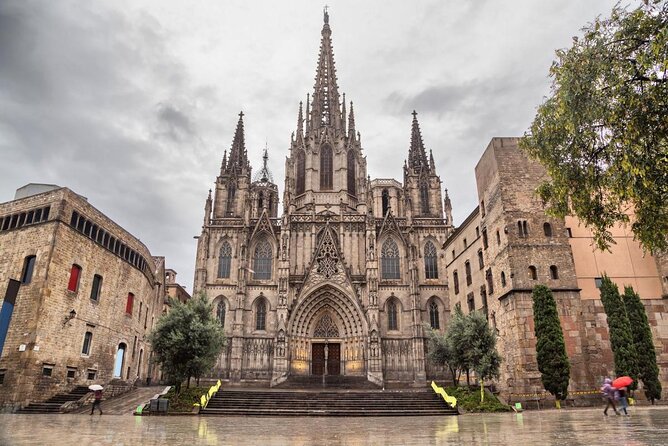
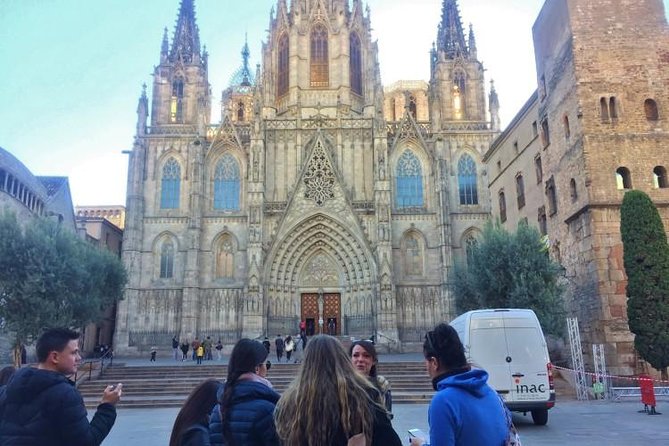
Your tour begins at Plaça Nova, 5, in the Ciutat Vella area. From there, you head straight into the heart of Gothic Barcelona with Catedral de Barcelona, also known as the Cathedral of St. Eulalia.
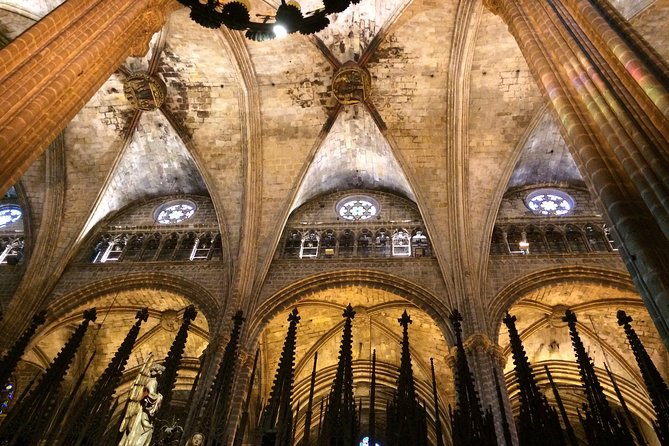
This is not just a beautiful exterior moment. You get into the cathedral, where the Gothic architecture does its job, it makes you feel tiny in a good way. The cathedral is tied to Barcelona’s patronage story through St. Eulalia, and your guide uses that connection to keep the stop from turning into random facts.
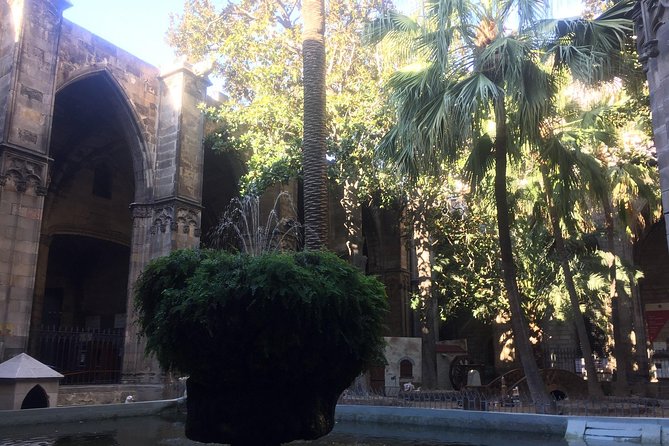
One of the most distinctive pieces here is the cloisters and the Well of Geese. Inside the courtyard, there are 13 white geese connected to the years of St. Eulalia’s life. The story includes how she was taken by the Romans, and that is where the architecture, religion, and local legend start to feel tied together rather than listed separately.
You also get a timing benefit: this cathedral stop is around 45 minutes and includes the admission ticket. That makes it one of the most “worth it” blocks of the whole itinerary because you are paying attention in a place that usually eats time on your own.
Going up top: why the cathedral views are worth the ticket
A big value point is included with your ticket: you can visit the top of the Cathedral, which is where the views do the heavy lifting.
From above, you can see how tight the Gothic Quarter is. You get a better sense of why the neighborhood feels medieval without needing to guess. Rooflines, the way streets funnel toward squares, and the scale of the buildings help you understand what you are walking through at ground level.
This is also where photo opportunities are better managed. Instead of fighting for one angle at street level, the vantage from the top lets you frame the skyline with more control.
The time commitment is already built into the tour, so you do not have to decide whether it is worth it. In a two-hour experience, that matters.
Plaza Sant Felipe Neri: a church that survived the Spanish Civil War
After the cathedral, you keep walking through the Old Town and stop at Plaza Sant Felipe Neri, home to Iglesia de Sant Felipe Neri. This is a spot many visitors miss because it is not the loudest attraction on the map.
The appeal here is the human story attached to the building. Your guide explains how the church survived the Spanish Civil War and how it was restored afterward. Even without getting overly technical, you come away understanding that the city’s history is not only ancient, it is also very recent in a political and cultural sense.
This stop is also a good palate cleanser. The cathedral is big and dramatic, while Sant Felipe Neri offers a quieter feel. If you like architecture that carries scars and repairs, this one hits.



Practical note
Because it is a place of worship, plan to cover up. The rule is shoulders and knees covered, no tank tops or short dresses. If you are arriving from the beach or lounging in summer clothes, adjust before the tour.
Place de Sant Jaume: where Roman Barcino became civic Barcelona
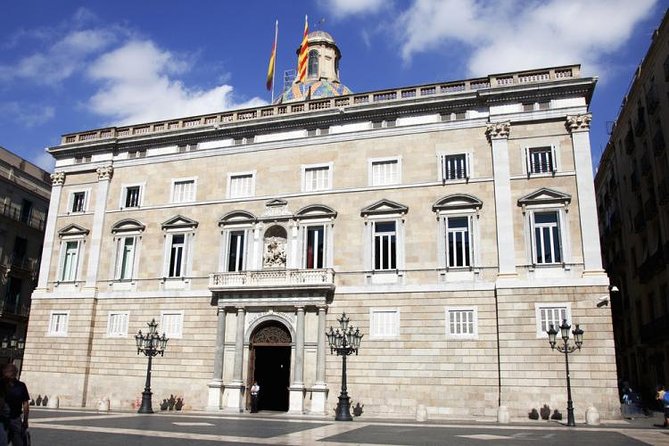
Next comes Place de Sant Jaume, a key square that your guide frames as the heart of different eras. It begins in the context of the Roman city of Barcino, then moves forward into later identity, when it became the administrative center for Barcelona and the Catalonia region.
This is where you see how power sits in public space. The square is home to the Barcelona City Hall and the Generalitat de Catalunya. Those buildings bring the story into focus, because they represent governance and continuity, not just tourism scenery.
If the Gothic Quarter sometimes feels like it is all about stone and dates, this stop gives it a pulse. It helps you understand why people kept returning to the same civic center even as the city changed around it.
Temple of Augustus: 30-foot columns that connect you to the city’s base
From the civic square, you walk by the Temple of Augustus, a Roman site dedicated to the emperor whose name it carries. This is one of those moments where the guide’s job matters, because Roman architecture can be easy to overlook if you only look for obvious ruins.
Here, the details are the story. The columns, described as reaching about 30 feet, are treated as a highlight of Roman architecture and are considered as old as the city itself. Whether you read that as literal age or symbolic continuity, the point remains: you are standing close to what feels like Barcelona’s foundation layer.
If you are the type who likes your tours to connect ancient and medieval without long speeches, this is a strong example of that. You get the Roman anchor point, then you feel the transition forward as the route keeps moving.
Plaza del Dei and the Columbus handshake that changed the world
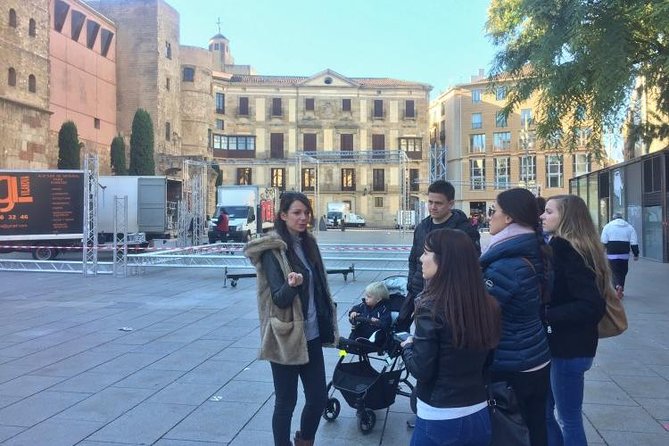
Then you reach Plaza del Dei, where your guide points out that Christopher Columbus met King Ferdinand and Queen Isabella after his first journey to the New World.
That is a huge historical claim, and the benefit of putting it into a walking route is that it stops history from floating away as trivia. You see the square as a place where world events intersected with local power and public life.
Today, the square functions as a small social stop, with cafés, cocktail bars, and restaurants around it. So even though the story is big, you can treat the stop as practical too. If you want a pause, this is a good place to take a breath before you end back near where you started.
Price and value: is $130.97 per person fair for what you get?
The price is $130.97 per person, and at first glance that may feel steep for a 2-hour walking tour. The value question is really about what is included and how the tour handles time.
Here is what you get for that cost:
- A professional local expert guide
- A structured tour focused on one of the oldest parts of Barcelona
- Small group size (max 6), which tends to reduce time wasted and increase quality of answers
- Entrance tickets to Barcelona Cathedral, including top access
- A walking route that strings together multiple key landmarks without long transfers
That cathedral ticket and top access are a big part of the value math. If you were to plan that alone, you would spend more time coordinating entry and figuring out the best viewing option, especially in a tight tourist schedule.
Also, the tour offers a private upgrade option. That can make the price make more sense if you are traveling with someone who wants a tailored pace or you prefer your own group dynamic.
One extra thing to keep in mind: it is commonly booked about 53 days in advance. That usually means it is a popular slot. If your dates are set, booking ahead is a smart move.
How to prepare: walking comfort and dress code in Ciutat Vella
This is a walking tour in and around Ciutat Vella, so you should prepare like it is a half-day stroll, even if it lasts about 2 hours.
Bring comfortable walking shoes. The streets in the Gothic Quarter can be uneven, and you will be standing in churches and squares where you want stable footing.
Most importantly, watch the church dress requirements. Places of worship have strict rules: shoulders and knees covered. That means no tank tops, no short dresses. If you forget, you might still be able to enjoy the exterior parts, but entry can become a problem, and you do not want that stress during a paid tour.
The tour is in English, and it is near public transportation, so you should be able to reach the start point without a long commute. You meet at Plaça Nova, 5, in the vestibul area.
Who should book this tour (and who might skip it)
This tour is a great match if:
- You are a first-time Barcelona visitor and you want a tight route
- You have limited time and want the Gothic Quarter without aimless wandering
- You like your history guided by a person who can explain how spaces changed over time
- You prefer small-group attention rather than being lost in a big crowd
You might hesitate if:
- You dislike walking tours and want a mostly seated experience
- You do not want to follow dress code rules for church entry
- You are the kind of traveler who wants a self-paced deep research schedule, because the route is structured and time-bound
A nice clue for what kind of guiding you will get comes from the reviews and the guide name Pabelo. The feedback highlights him as interesting and well-informed, with a knack for explaining what the Gothic area was about and how it evolved over the years. If you like stories with clear cause-and-effect, that is a good sign.
Should you book the Gothic Quarter tour with cathedral top access?
Yes, if you want a high-effort, efficient route. This is the kind of experience that reduces decision fatigue. In two hours, you hit cathedral interiors, Roman architecture cues, civic squares, and even a church story tied to the Spanish Civil War, all while staying in a manageable walking loop.
Book it if:
- You value small-group size
- You want included cathedral access with top views
- You plan to visit the Gothic Quarter anyway and want someone to make the connections for you
Skip it if:
- You already know you only want to see exteriors and skip entrances
- You cannot realistically meet the dress code requirements
FAQ
How long is the Gothic Quarter walking tour?
It runs for about 2 hours.
Where does the tour start?
The meeting point is Plaça Nova, 5, vestibul, Ciutat Vella, 08002 Barcelona, Spain. The tour ends back at the meeting point.
How big is the group?
The maximum group size is 6 travelers.
Is the tour offered in English?
Yes, it is offered in English.
What is included in the cathedral visit?
Your ticket includes a visit to the Cathedral of Barcelona and includes access to the top of the cathedral for views.
Is a mobile ticket provided?
Yes, the tour includes a mobile ticket.
What should I wear for church stops?
Places of worship have strict dress requirements. You need shoulders and knees covered, so no tank tops or short dresses.
Is there free cancellation?
Yes. You can cancel up to 24 hours in advance for a full refund.
Is gratuities included?
No, gratuities are not included.
More Private Tours in Barcelona

More Tour Reviews in Barcelona
Not for you? Here's more nearby things to do in Barcelona we have reviewed









More Gothic Quarter Tours worth opening.
 ★ 5.0Barcelona Gothic Quarter Tapas & Taverns Food & Wine TourFrom $1311,470 reviews
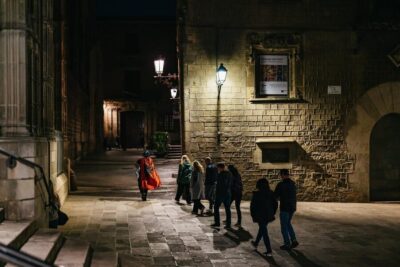 ★ 4.7Gothic Quarter Ghosts and Legends Walking TourFrom $191,443 reviews
 ★ 4.8Old Town and Gothic Quarter Walking TourFrom $211,393 reviews
 ★ 5.0Barcelona Old Town & Gothic Quarter Small Group TourFrom $221,308 reviews
 ★ 4.8El Born and Gothic Quarter Wine & Tapas Bar TourFrom $81674 reviews
 ★ 5.0Kids and Family Gothic Quarter Walking Tour in BarcelonaFrom $25465 reviews
 ★ 4.5Barcelona Gothic Quarter Walking TourFrom $33456 reviews
★ 4.9Gothic Quarter Walking TourFrom $212383 reviews
★ 4.5Barcelona Gothic Quarter Walking TourFrom $33456 reviews
★ 4.9Gothic Quarter Walking TourFrom $212383 reviews
Continue by place or experience