
REVIEW · GOTHIC QUARTER TOURS
Private Barcelona Highlights: Gothic Quarter with a Local Guide
Gothic streets, fewer wrong turns. This 2-hour walking tour ties together Barcelona’s Barri Gòtic with a local guide, so you get the big buildings and the small stories that make them make sense. You’ll move between squares, bridges, and sacred sites, plus a couple of quick photo stops that locals love for a reason.
I especially like how the pace is tight and practical, with just enough time at each stop to understand what you’re looking at. I also love the way the route layers eras, from the Roman leftovers at Casa de l’Ardiaca to the Jewish neighborhood at MUHBA – El Call, then into the later squares of Catalonia’s civic life.
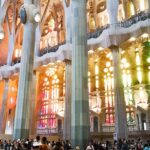
One drawback to plan around: Barcelona Cathedral and Santa Maria del Mar are not marked as admission included, so if you want to go inside, you may need extra time or tickets. And if your priority is Sagrada Família, this route stays focused on the old-city core rather than that area.
Key highlights you will feel right away
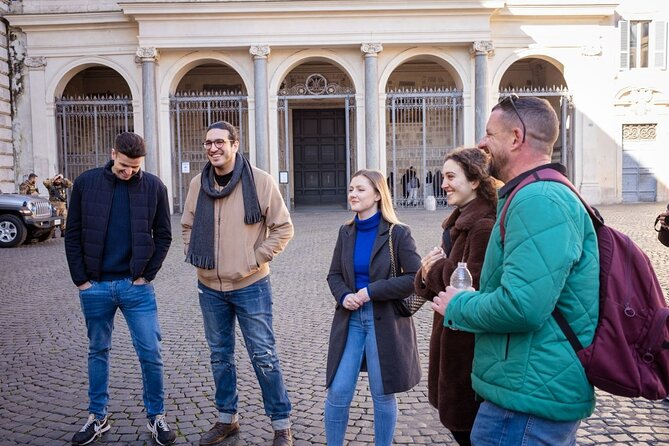
- Small group up to 20 people so questions stay possible and the guide can keep everyone together
- 6:00 pm start for an easier evening walk through narrow streets
- Els 4 Gats in Casa Martí gives you a fast hit of Barcelona’s art-and-café culture
- MUHBA – El Call adds context about the city’s former Jewish quarter and synagogue site
- Roman to neo-Gothic in one loop via Casa de l’Ardiaca and Pont del Bisbe
- Guides like Mariah, Darren, Lindsay, and Craig have earned strong marks for storytelling and engagement
Getting bearings fast: the 6:00 pm walk through Ciutat Vella
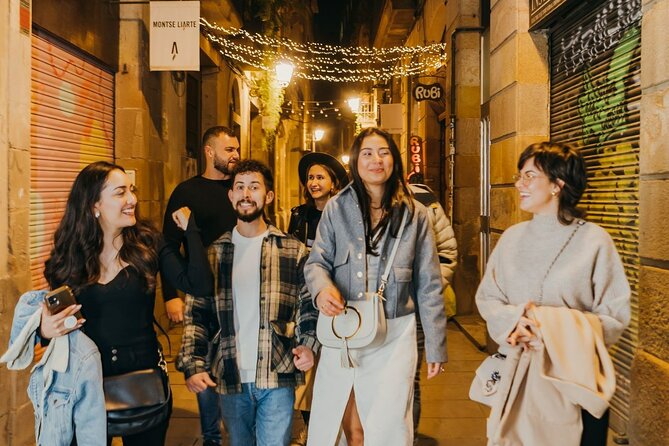
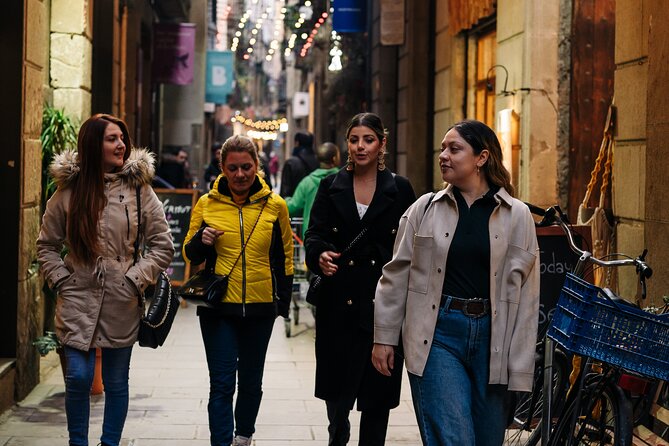
The meeting point is Plaça del Vuit de Març in Ciutat Vella, a part of town where streets fold and twist. Starting at 6:00 pm is a smart time choice because you usually get cooler walking weather and fewer midday crowds. It also means your landmarks feel more “alive” as the evening starts to settle in.
The tour is built for people who want to see a lot without playing map-chess for two hours. You get the guide’s route logic, so you spend your energy looking up at façades and reading the details, not trying to figure out which alley you’re in.
Also note the ending point: Basilica de Santa Maria del Mar, Pl. de Santa Maria 1, Ciutat Vella. That finish matters. It places you close to the El Born area, so you can keep exploring after the walk instead of returning back the same way.
You can also read our reviews of more guided tours in Barcelona
Where to stand at each stop, and what to notice

This is a highlights walk, but it’s not just a checklist. The guide’s job is to help you look with intention, so each stop has a hook, a reason it matters, and one or two details worth catching before you move on.
Most stops are quick, around 10 minutes, which is perfect for a first pass. It also means you should come with comfortable shoes, because you will be on foot through narrow lanes and uneven sidewalks.
If you’re the type who likes to take photos while still listening, you’re in luck. The route includes a couple of “pause and shoot” moments, without derailing the whole group.
Els 4 Gats and El Mon Neix En Cada Besada: art culture before the cathedrals
Your first stop is Els 4 Gats, in the iconic Art Nouveau building Casa Martí. This place is famous for more than food. It has a deep cultural footprint, and the story runs through the kinds of artists Barcelona attracted over time, including Pablo Picasso and Antoni Gaudí.
What I like here is that the guide starts with a human scale. You’re not yet surrounded by massive stone. You’re thinking about cafés, sketching, conversation, and how creative culture grows in plain sight.
Next you’ll hit El Mon Neix En Cada Besada, the photo mural often associated with The World Begins With a Kiss. It’s a quick stop, but it works because it shifts your focus from architecture to symbolism. You’ll also get the connection to a notable Catalan day, which makes the scene feel less random and more rooted in local identity.
Practical tip: if you want photos, stand in a spot where you can see the mural and the street context behind it. Many people rush just the art, then later realize they missed the way the neighborhood frames the scene.
Barcelona Cathedral area: why Barri Gòtic feels like a living textbook
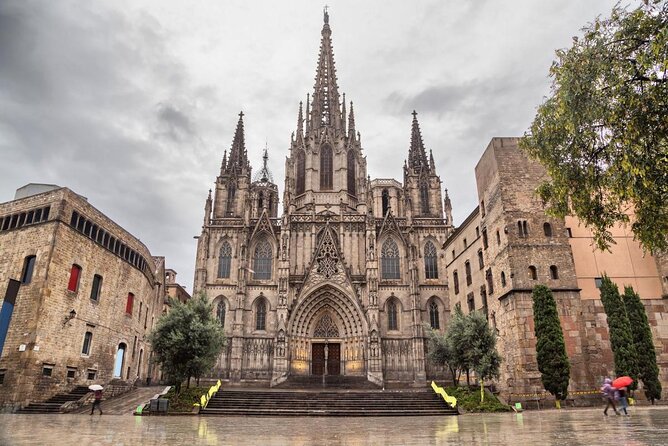
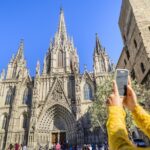
Catedral de Barcelona is the heartbeat of Barri Gòtic in this route. The main point is the story behind the sacred space, including the focus on Eulalia, Barcelona’s patron saint. When a guide connects the saint’s narrative to the cathedral’s role in the neighborhood, the whole area clicks.
One thing to plan: the cathedral’s admission is not included in the tour details you’re working with. So your experience may be more exterior viewing unless you decide to purchase entry separately.
That said, you can still get a lot from what’s outside when you know what to look for. Gothic façades reward slow glances. If you only walk past them, they feel like set dressing. With context, they start reading like history written in stone.
Casa de l’Ardiaca: Roman Barcino you can almost touch
Casa de l’Ardiaca takes you back to Barcelona’s Roman past, when the city was known as Barcino. This stop is special because it connects layers: you’re in medieval Gothic streets, but the guide points to Roman-era remnants, including ruins of the Roman wall and arcades tied to aqueducts that helped bring water into the city.
I love this kind of stop because it turns Barcelona into a time machine without needing a museum ticket for the whole experience. You learn that the city’s foundations are still there, just wrapped in later architecture.
Admission here is listed as free, which is helpful for keeping the tour’s budget under control. Even if you do not go far into anything interior, the point is to see the physical evidence of how the city kept reinventing itself.
You can also read our reviews of more private tours in Barcelona


Pont del Bisbe and the legend angle: Gothic drama in a short span
Pont del Bisbe, Bishop’s Bridge, is neo-Gothic and small enough to be missed if you are speeding. It’s famous for a legend, and that legend hook is what turns a bridge into a story checkpoint.
This stop works well in a highlights walk because it’s quick. You get a memorable visual, then you move on before the group gets restless. If you are the type who enjoys myths that are tied to real places, this is your kind of moment.
Practical note: bridges can be busy for photos. If you want your shot, wait for a gap, then keep moving. The lane is not wide, and it’s better to be efficient than to block others while your phone does its thing.
Placa Sant Felip Neri: the square that remembers
Placa Sant Felip Neri is one of those small squares that looks calm until you hear what happened here. The tour frames it around scars from Barcelona’s Spanish Civil War past.
This is where a guide’s tone matters. A good guide keeps it clear and grounded. You get the weight without turning it into melodrama. Even in a short 10-minute stop, you should leave with a better sense of how 20th-century events still echo in city spaces.
If you prefer upbeat history over heavy history, this might be the emotional downshift in the route. It’s also one of the reasons the tour feels real instead of postcard-only.
MUHBA – El Call: Jewish neighborhood context and the synagogue site
MUHBA – El Call is the stop that adds real depth for many people. The El Call was the former Jewish neighborhood, and the site helps you understand that part of Barcelona’s history, including the presence and memory of an ancient synagogue.
I like how this transforms your understanding of the Gothic Quarter. It’s easy to label old streets as medieval and call it a day. This stop shows you the neighborhood was a multi-community place, with culture and faith shaping daily life.
Admission for this stop is listed as free, which keeps it accessible in a cost-aware way. You will likely get a quick orientation so the area does not feel like random ruins. It turns into a location with human meaning.
One more practical thought: if you are a photo person, this is a great place to keep your pictures respectful and brief. Narrow historic areas can feel crowded fast.
Catalan power squares: Plaça de Sant Jaume and Plaça del Rei
Plaça de Sant Jaume is where civic identity shows up. The seat of Catalan government and City Hall are part of what you’re seeing, and the guide ties it to the story of a beloved saint. Even if you only stay for a few minutes, you get a sense that this quarter is not just religious and artistic. It’s political.
Then comes Plaça del Rei, King’s Square. Here the tour points toward the Royal Palace and the darker chapters tied to the Spanish Inquisition. It’s a reminder that big stone buildings were often tied to real power and real fear.
These two squares are valuable because they help you read the layout of old Barcelona. Once you understand where people made decisions, where they prayed, and where they traded, the whole neighborhood feels more coherent.
Plaça de l’Àngel and Saint Eulalia procession lore
Plaça de l’Àngel is connected to grain trading in the past, which helps explain why markets and public spaces were so important in a city before modern supermarkets and malls. The story here also involves a heavenly apparition connected to a procession of Saint Eulalia.
Even if you are not deep into saint legends, this stop is worth it because it ties urban function to religious storytelling. It explains why a place that seems ordinary today could have been the center of an important daily rhythm long ago.
Admission is listed as free, so it fits neatly into the tour’s overall cost pattern. It’s also an ideal “quick reset” stop after the heavier Inquisition context of the prior square.
Basilica de Santa Maria del Mar in El Born: finishing with the maritime lens
You wrap up at Basilica de Santa Maria del Mar, located in El Born. The tour frames it as evidence of Barcelona’s maritime history, which makes the finish feel purposeful. It’s not just one more Gothic church. It’s a visual clue to how the city earned its power through the sea.
Admission is listed as not included, so you may need to pay extra if you want to go inside. Even without entry, the exterior and the sense of place can be strong, especially when you are walking in from the older lanes of Barri Gòtic.
I like that the route ends here instead of looping back to the start. After your guided time ends, you are positioned to keep exploring the streets where people still shop, eat, and linger.
Value check: is $180.22 for 2 hours worth it?
For $180.22 per person, you’re paying for a live guide and a route that compresses a lot of context into about two hours. The tour is small group size, up to 20, which helps keep it from turning into a rushed cattle drive.
Where the value shows up for me:
- You skip the trial-and-error of finding the right spots in a maze of old streets.
- You get explanations that connect monuments to the people and events behind them, from Eulalia to El Call to Spanish Civil War scars.
- Many stops are listed as free admissions, so the tour’s core experience stays predictable.
Where you should be realistic:
- Two major sites, Catedral de Barcelona and Basilica de Santa Maria del Mar, are not marked as admission included. If you plan to go inside both, factor that into your time and budget.
- It’s a walking tour with short stops. If you want long, slow chapel time, this isn’t built for that.
Compared to a solo wandering day, I think it’s a solid deal if you are short on time or new to Barcelona. If you already know the Gothic Quarter well and can self-guide confidently, it may feel pricey for two hours.
Guide matters: what the best-guided versions feel like
This tour can live or die based on the guide, and the pattern in the guide feedback you provided is pretty clear. The strongest experiences are the ones where the guide keeps the group engaged, answers questions, and shares stories that make the streets feel personal.
You might get guides like Mariah, Darren, Lydia, Craig, or Lindsay, and those names are repeatedly linked with clear, engaging storytelling and a fun, human tone. Some guides also add practical extras, like tips for where to eat in the area, or accommodating a needed bathroom stop so the walk stays comfortable.
One caution from the feedback you shared: one person felt the guide’s humor and language were not appropriate for the presence of children. That is not something you can fully predict, but if you are bringing kids or you want strictly family-friendly tone, it’s smart to set expectations early and pay attention to the guide’s vibe from the first few minutes.
Audio can also matter. If you have trouble hearing in outdoor streets, bring a small pair of earplugs as a safety net. One participant specifically noted that the mic setup could make things hard at times.
Who this walking tour is best for
This works best if you:
- Are seeing Barcelona for the first time and want your bearings fast in Barri Gòtic
- Want a history-and-place orientation without spending all day in museums
- Prefer short stops with stories, rather than long ticket lines and deep museum dives
- Like getting a route you can trust, especially around narrow streets and packed squares
It may not be the best match if you:
- Want a heavy focus on Sagrada Família, since the route is centered on the Gothic Quarter and surrounding old-city landmarks
- Need lots of time inside churches, since admission for key interiors is not included
Should you book this tour?
Book it if you want a smart, guided introduction to Barcelona’s oldest layers in about two hours. The price makes sense when you factor in the live guide, the small group size, and the way the route helps you actually understand what you’re seeing instead of just taking pictures.
Skip it or double-check expectations if your top priority is cathedral interiors or a different neighborhood focus. Also, if you are traveling with kids and prefer a strictly family-friendly tone, arrive with that preference in mind and watch how the guide communicates early.
If you like walking, short stories, and getting your bearings fast in Ciutat Vella, this is a strong choice.
FAQ
How long is the Barcelona highlights walking tour?
It runs for about 2 hours.
What is the price per person?
The price is $180.22 per person.
What language is the tour offered in?
The tour is offered in English.
Where do we meet, and where does the tour end?
You meet at Plaça del Vuit de Març, Ciutat Vella, 08002 Barcelona, Spain. The tour ends at Basílica de Santa Maria del Mar, Plaça de Santa Maria, 1, Ciutat Vella, 08003 Barcelona, Spain.
Are tickets for Barcelona Cathedral and Santa Maria del Mar included?
No. Admission for Catedral de Barcelona and Basilica de Santa Maria del Mar is listed as not included, while several other stops are listed as free.
How large is the group?
The tour has a maximum of 20 travelers.
What is the cancellation policy?
You can cancel for a full refund up to 24 hours before the experience’s start time. If you cancel less than 24 hours before, you will not get a refund.
More Private Tours in Barcelona
More Guided Tours in Barcelona

More Tour Reviews in Barcelona
Not for you? Here's more nearby things to do in Barcelona we have reviewed








More Gothic Quarter Tours worth opening.
 ★ 5.0Barcelona Gothic Quarter Tapas & Taverns Food & Wine TourFrom $1311,470 reviews
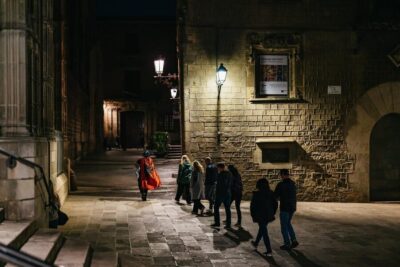 ★ 4.7Gothic Quarter Ghosts and Legends Walking TourFrom $191,443 reviews
 ★ 4.8Old Town and Gothic Quarter Walking TourFrom $211,393 reviews
 ★ 5.0Barcelona Old Town & Gothic Quarter Small Group TourFrom $221,308 reviews
 ★ 4.8El Born and Gothic Quarter Wine & Tapas Bar TourFrom $81674 reviews
 ★ 5.0Kids and Family Gothic Quarter Walking Tour in BarcelonaFrom $25465 reviews
 ★ 4.5Barcelona Gothic Quarter Walking TourFrom $33456 reviews
★ 4.9Gothic Quarter Walking TourFrom $212383 reviews
★ 4.5Barcelona Gothic Quarter Walking TourFrom $33456 reviews
★ 4.9Gothic Quarter Walking TourFrom $212383 reviews
Continue by place or experience