
REVIEW · GOTHIC QUARTER TOURS
Barcelona Gothic Quarter From Roman Walls to Hidden Courtyards
Roman walls show up where you least expect.
This guided walk through Barcelona’s Gothic Quarter is a smooth way to connect the city’s layers, from early Roman traces to church courtyards and medieval legends. I especially like the local guide commentary that keeps the story straight, and the good-luck moments like the thirteen white geese and the lucky turtle at Casa de l’Ardiaca. One thing to consider: it’s a fast, stop-and-go format, with short visits (often around 10 to 20 minutes), so you may feel rushed if you want long, slow photo sessions.
You’ll also be walking through the center on a schedule that depends on weather, and it helps to show up ready to move. For many people it’s a great fit, capped at up to 20 travelers for a more personal feel.
Key things to know before you go
- Roman walls plus Gothic landmarks in the same route, so early Barcelona makes sense fast
- Frequent legends and lucky-charm stops, including geese, a lucky turtle, and a hidden skull story
- Jewish Quarter streets and an old synagogue, tied to everyday medieval life
- Movie-location detail at Saint Philip Neri, with shrapnel marks from the Spanish Civil War
- Short, efficient sightseeing blocks, about 2 to 3 hours total
A guided Gothic Quarter walk, with the story in the right order
The Gothic Quarter is one of those neighborhoods where you can wander for hours and still feel like you’re only seeing the surface. This tour solves that problem in a practical way: you get a guide, in English, who ties each location to the next chapter of Barcelona’s past.
You’ll get a lot of “this used to be…” and “this is why it matters…” explained in plain terms. That’s especially useful with places that are physically close but historically far apart, like a medieval political square beside Roman remains and later religious sites.
I also like that the tour leans into the human side. Yes, you see churches, synagogues, and grand civic buildings, but you also hear legends tied to miracles, relics, luck, and even darker folklore. If you like your travel history with a little drama and a lot of context, this format works.
You can also read our reviews of more tours and experiences in Barcelona.
Where you meet: Roman Aqueduct area near Carrer de Santa Llúcia
The tour starts and ends back at the meeting point, which keeps things simple. You meet near the Roman Aqueduct area at Carrer de Santa Llúcia, 1, Ciutat Vella (by La Casa de l’Ardiaca).
You’ll want to plan for public transit access since it’s near public transportation. And since the total time is only about 2 to 3 hours, arriving a few minutes early helps you start on time.
If you’re the type who hates hunting for group leaders, this is another plus: a single meeting point, and the tour brings you back there at the end.
Stop 1: Barcelona Cathedral, Roman wall traces, and thirteen white geese
Your first stop sets the tone: Barcelona Cathedral sits on the site of an earlier Christian basilica. The guide’s job here is to help you read the building, not just look at it.
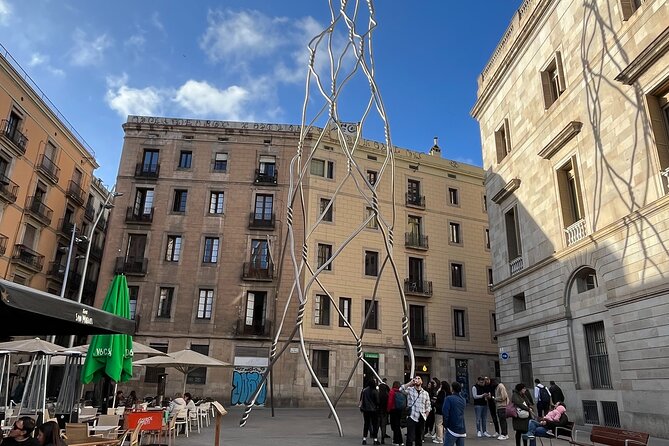
What you’ll notice is the combination of old stone and layered meanings, plus a visible segment of the Roman wall that connects to the city’s earliest origins. Instead of treating Rome and the Gothic era like separate museums, you get a direct bridge between them.
Then the tour adds a legend that’s very Barcelona. In the courtyard with thirteen white geese, you’ll hear the story behind that symbol and how it ties to local lore. You also get time for photos against the ancient stones of the Roman wall, and the stop is designed to be quick, around 15 minutes.
Why it’s worth your time: early on, you establish the big picture of how Barcelona grew, so the later stops land better.
Possible drawback: if you’re hoping to linger for a long cathedral interior visit, this stop is more about orientation and story than extended entry time.
Stop 2: Placa del Rei, royal power, and underground Barcino remains
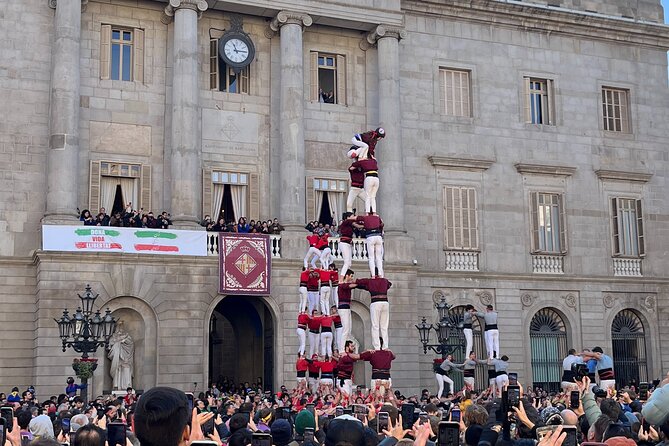
Next up is Placa del Rei, the Royal Palace area once linked to the Counts of Barcelona and the Kings of Aragon. Even if you’re not a “royal history” person, this stop makes sense because it explains what that power looked like at street level.
The highlight here is the way you connect royal life to what’s underneath. The area includes a museum showcasing underground Roman remains of Barcino, Barcelona’s earlier Roman settlement. You’ll hear historical events tied to Catalonia’s rulers, plus tales of the lavish feasts held in this spot.
In other words, you’re not only learning dates. You’re learning the vibe of a seat of power, right where you’re standing.
This stop runs about 15 minutes with no separate admission ticket required in the tour plan.
Good to know: since the visit is brief, focus on the big “why this place mattered” points, not trying to read every detail.
Stop 3: Antigua casa del verdugo Municipal, medieval Barcelona’s executioner
If you want Barcelona’s history with an edge, this stop delivers. You’ll see the Antigua casa del verdugo Municipal, a building that’s endured from the era when Barcelona had an official executioner and public punishments.
The guide commentary here is centered on dark legends and city folklore about the executioner’s role. The point is not to sensationalize it, but to show how harsh realities were part of everyday medieval life.
This is a different kind of “architecture lesson.” You’re looking at a structure tied to public order and fear, not just religion or government.
The stop is short, around 15 minutes, with admission not required.
Why I think it works: it reminds you that old cities weren’t only pageantry and cathedrals. They were also punishment, control, and social discipline.
Consideration: if you prefer strictly upbeat stories, you might want to mentally switch gears here.
Stop 4: Placa de Sant Jaume, Ajuntament and Catalonia’s governing square
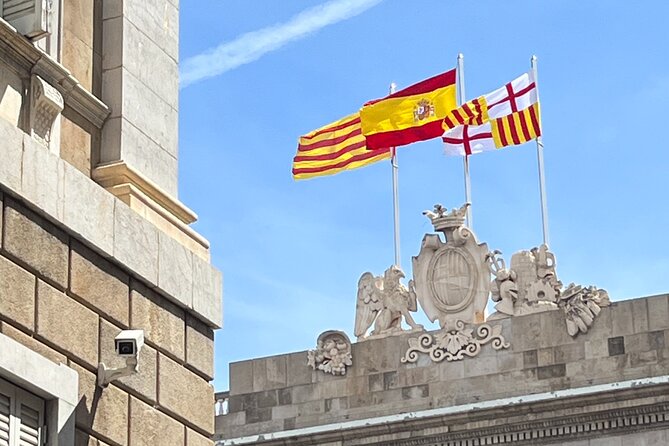
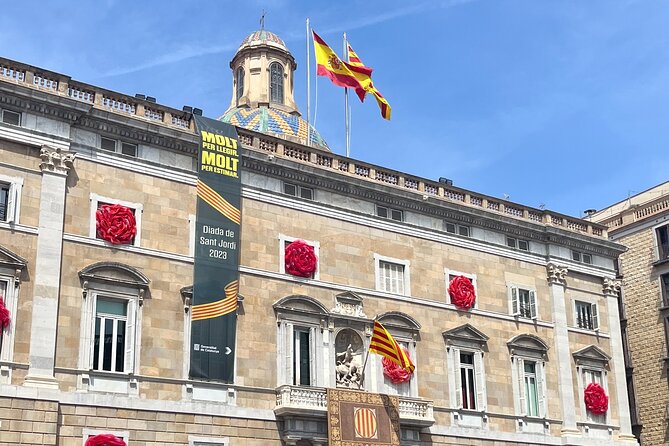
Now you shift from legends and earlier eras into the region’s political heart: Placa de Sant Jaume. This is Barcelona’s main political square, with the Ajuntament (city hall) and the Palau de la Generalitat (Palace of the Government of Catalonia).
You’ll learn how the city maintains its unique culture, and the guide explains Catalonia’s autonomous status in a way that helps you connect the political idea to the actual physical setting.
This is also a chance to simply feel the square as a working civic space. You’ll get brief time to take it in, and the stop is about 15 minutes.
Why it matters for your trip: understanding Catalonia’s identity helps you read signage, cultural references, and even the way locals talk about the region.
Stop 5: The Jewish Quarter, narrow medieval lanes, and an old synagogue
Next comes one of the most historically important segments of the walk: the Jewish Quarter. You’ll move through narrow streets tied to the former Jewish community and visit one of the oldest surviving synagogues in Europe.
The tour focuses on everyday customs and trade, plus stories of the people who lived here. If there are commemorations or events happening at the historical site, you may also witness them during your visit.
The stop is about 15 minutes and planned with no admission ticket cost listed in the tour schedule.
Why this stop is special: it’s not only about a building. It’s about the daily rhythm of a medieval community and how those lives shaped the neighborhood.
Stop 6: Church of Saint Philip Neri, war shrapnel marks, and film scenes
The pace gets more quiet at the Church of Saint Philip Neri. You’ll notice a secluded square atmosphere, and the walls still bear shrapnel marks from the Spanish Civil War.
This stop adds a detail I always appreciate when I’m traveling: links to modern culture. The square has been used as a filming location for movies such as Perfume and Vicky Cristina Barcelona, and the guide helps you notice how that cinematic layer fits on top of real wartime history.
You’ll spend about 20 minutes here, which is slightly longer than most stops, giving you time to absorb the mood and take photos.
Why it’s a smart inclusion: it shows how Barcelona preserves scars and then repurposes the spaces in public memory and pop culture.
Stop 7: Pont del Bisbe, neo Gothic details, and the hidden skull legend
At Pont del Bisbe, you get one of the most photo-friendly symbols of the Gothic Quarter. It’s a neo Gothic bridge that connects the government building area to a neighboring Episcopal structure.
The guide highlights the ornate design, and you’ll hear a legend tied to a hidden skull in the bridge’s decoration. You’ll have about 10 minutes for photos and legend listening.
This stop is short, but it’s memorable because it’s both visually distinct and story-driven.
Practical tip: if you care about getting crisp photos, position yourself as soon as the guide starts describing the bridge details. It’s easy for the best angles to be taken over by other groups once people realize it’s the photo point.
Stop 8: Casa de l’Ardiaca courtyard, oldest palm tree, and lucky turtle
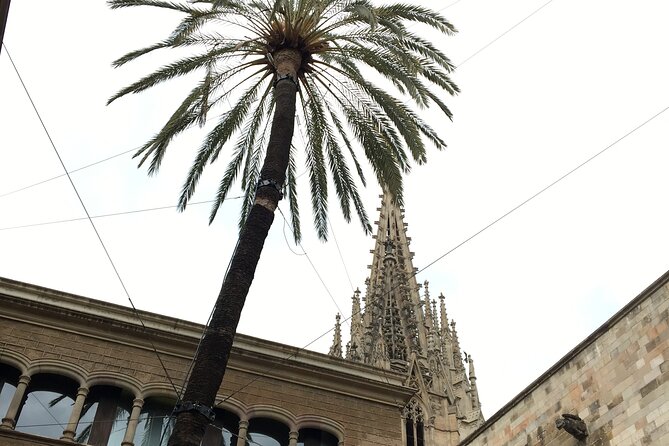
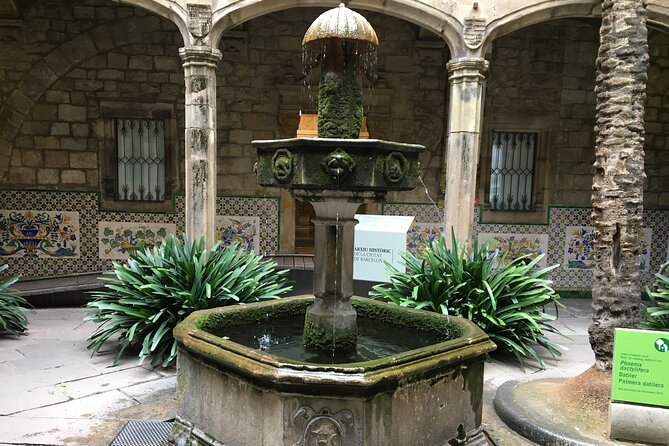
The final stop is where the tour turns playful, in the best way. At Casa de l’Ardiaca, you’ll see a historic building with a courtyard that includes a fountain and what’s described as Barcelona’s oldest palm tree.
The courtyard also features a small stone turtle, described as a traditional lucky charm. As part of the experience, you’ll be encouraged to touch the ancient palm tree and rub the turtle sculpture on the fountain for good luck.
The guide also explains the house’s connections to both church and secular authorities, along with why locals associate it with peace and prosperity.
You’ll spend about 15 minutes here, and it’s a great ending because you leave with a ritual you can repeat in your head, plus images that feel uniquely Barcelona.
How long it really feels: short stops that still add up
This tour runs about 2 to 3 hours, with most stops around 15 minutes. That timing matters. The good side is you cover a lot of key landmarks without exhausting yourself. The tradeoff is you won’t have a “museum pace” at each site.
That makes this tour ideal if you:
- want a guided route through the Gothic Quarter without getting tangled in the streets
- enjoy legends and symbolism alongside architecture
- like a first pass that gives you names and connections, so you can explore later on your own
It’s less ideal if you:
- want long interior time at major monuments
- hate fast transitions and prefer sitting with one place for an hour
What’s included, and why the guide adds value
You get a local guide and the tour is offered in English. You also get a mobile ticket, which is convenient and cuts down on friction at check-in.
Even better for value, the tour plan lists admission ticket free for each stop. So you’re mainly paying for the guide, the route, and the story context, not for entrance fees at multiple places.
This is where the pricing starts to make sense. At $29.57 per person for roughly 2 to 3 hours, you’re essentially buying:
- a curated itinerary across major Gothic Quarter highlights
- explanations that help you understand what you’re seeing
- practical navigation help so you spend less time guessing
And for what it’s worth, the tour has a strong rating at 4.6 from 5 reviews, with one standout comment praising Victoria for her knowledge of the area and interesting history.
Who this tour suits best
This is a great fit for first-time visitors who want to understand the neighborhood quickly, without relying on a map and guesswork. It’s also a strong option if you like history that includes local legends, not just big-name dates.
A few details that help you decide:
- It’s limited to a maximum of 20 travelers, so it’s not a chaotic crowd.
- Most travelers can participate, and there’s a height requirement of at least 150 cm.
- Service animals are allowed.
- It runs in good weather, since weather can affect whether it operates.
If you’re traveling as a couple, solo, or with friends who want to see a lot without splitting up, this format usually works well.
Should you book this Gothic Quarter walk?
If you want your Gothic Quarter visit to feel organized and meaningful, I’d book it. The biggest win is the way the stops connect: Roman wall traces, royal squares, darker medieval corners, a historic Jewish quarter, war-scarred church walls, and then the good-luck courtyard rituals that give you a memorable ending.
I’d skip it only if your priority is slow, long visits inside major sites, or if short stops frustrate you. Otherwise, this is a smart way to get oriented, learn the stories that local people still repeat, and walk away with names you can use when you explore on your own.
FAQ
How long is the Barcelona Gothic Quarter tour?
It lasts about 2 to 3 hours.
What is the price per person?
The price is $29.57 per person.
Is the tour offered in English?
Yes, the tour is offered in English.
Do I need to bring tickets, or is it mobile?
You’ll receive a mobile ticket.
Is there a limit on group size?
Yes, the tour has a maximum of 20 travelers.
Where do I meet for the tour?
The start point is listed near the Roman Aqueduct area at Carrer de Santa Llúcia, 1, Ciutat Vella, Barcelona, Spain, and the tour ends back at the meeting point.
Are the site entries included?
The itinerary lists admission ticket free for each stop.
Is the tour dependent on weather?
Yes. The experience requires good weather, and if it’s canceled due to poor weather you’ll be offered a different date or a full refund.
Are service animals allowed?
Yes, service animals are allowed.
More Tour Reviews in Barcelona
Not for you? Here's more nearby things to do in Barcelona we have reviewed








More Gothic Quarter Tours worth opening.
 ★ 5.0Barcelona Gothic Quarter Tapas & Taverns Food & Wine TourFrom $1311,470 reviews
 ★ 4.7Gothic Quarter Ghosts and Legends Walking TourFrom $191,443 reviews
 ★ 4.8Old Town and Gothic Quarter Walking TourFrom $211,393 reviews
 ★ 5.0Barcelona Old Town & Gothic Quarter Small Group TourFrom $221,308 reviews
 ★ 4.8El Born and Gothic Quarter Wine & Tapas Bar TourFrom $81674 reviews
 ★ 5.0Kids and Family Gothic Quarter Walking Tour in BarcelonaFrom $25465 reviews
 ★ 4.5Barcelona Gothic Quarter Walking TourFrom $33456 reviews
★ 4.9Gothic Quarter Walking TourFrom $212383 reviews
★ 4.5Barcelona Gothic Quarter Walking TourFrom $33456 reviews
★ 4.9Gothic Quarter Walking TourFrom $212383 reviews
Continue by place or experience